The Best HTV for Hats and Caps
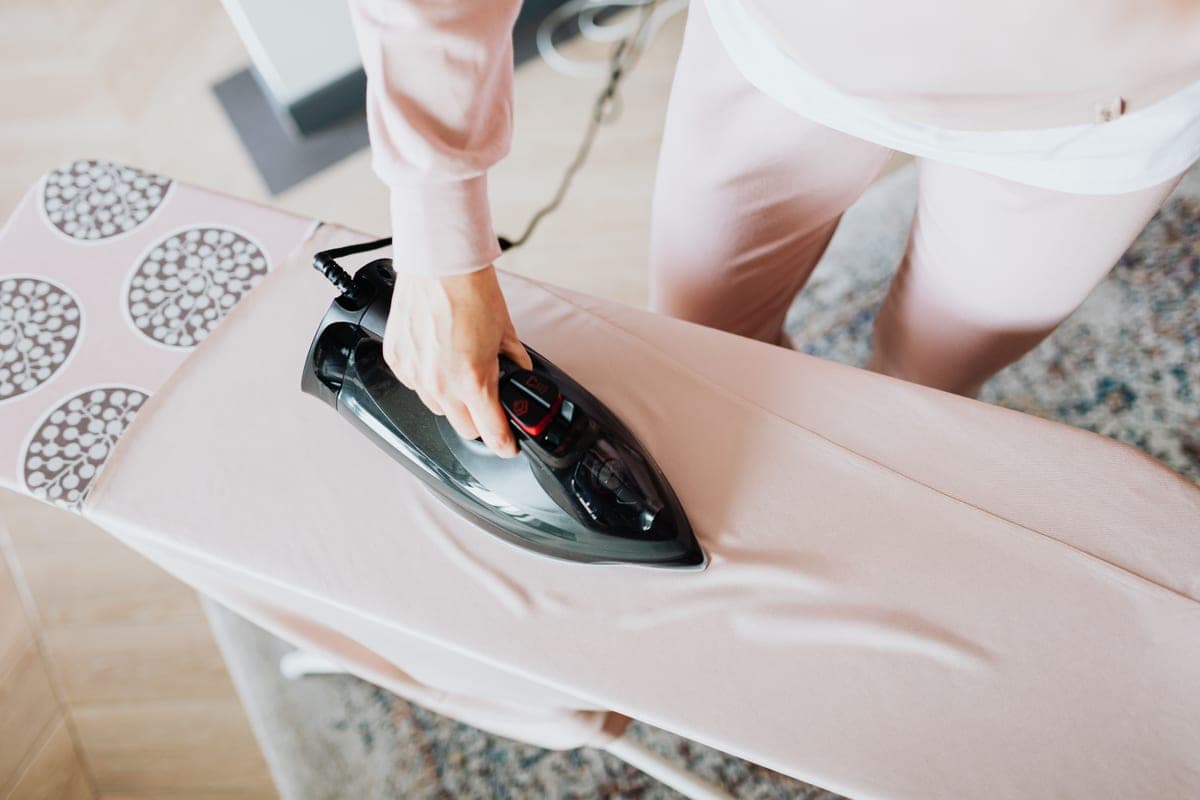
On a hat the vinyl is rarely the problem. Getting even heat and pressure onto a curved, seamed panel is.
Heads up: Mat & Blade earns a commission from qualifying purchases made through the links on this page, at no extra cost to you. It never changes which products we recommend or how we rank them. Read the full disclosure.
For hats, buy stretch-formulated HTV and solve the heat source before you worry about the film. Siser EasyWeed Stretch is the pick because it conforms to a curved panel instead of bridging it, which is why hat transfers lift at the edges; standard EasyWeed is fine on a genuinely flat-front structured cap and weeds better on small detail. The real constraint is reach and pressure: a full-size flat plate cannot touch a curved panel evenly, so either a Cricut EasyPress Mini (cheap, fiddly, works) or a curved hat press (expensive, correct) is what turns the project from a gamble into a repeatable result.
How we picked
Hats are the project where the usual criteria matter less than two unusual ones. We have no lab; every compatibility claim here is the manufacturer's own published statement.
- Ability to conform to a curve. The deciding criterion. A film that will not follow the panel shape puts all the stress on the design edges.
- Published rating for twill, canvas and poly mesh. Caps are not jersey. The material has to be rated for what a cap is actually made from.
- Weeding on small detail. Hat designs are small, so a larger share of the design is fine detail. A material that tears thin strokes costs you the whole transfer.
- Reach of the heat source. This is not a vinyl criterion at all, and it is the main reason hat projects fail. We include the two heat sources that can genuinely do it.
- Tolerance of uneven pressure. Seams, buckram stiffener and brim stitching all mean parts of a hat design get less pressure. Some films cope better than others.
- Honest downside. Every pick carries its real cons, including the ones that make it the wrong choice for some readers.
Why hats fail when shirts do not
The vinyl is usually blameless. Three features of a hat work against you, and none of them exist on a t-shirt.
The panel is curved
A flat plate on a curved panel makes contact in a band across the middle and leaves the top and bottom of the design under-pressed. Those are exactly the areas that peel. You can work around it with a small plate and several passes, or remove it with a curved platen, but you cannot talk a flat plate into following a curve.
There is often a seam in the middle
Most six-panel caps have a center seam running vertically through the front. Pressing a design across it leaves a ridge, and the vinyl either bridges the ridge or gets a visible crease along it. The practical answer is design placement: put the artwork to one side of the seam, or use a design with a natural gap where the seam falls.
Structured caps have a stiffener
The buckram or fused stiffener behind a structured front panel does not like sustained heat and can deform, which shows up as a dented or rippled front after pressing. Shorter presses at the lowest setting the vinyl supports are safer, and that is another argument for a material with a low published application temperature.
Our picks in full
1. Best for curved panels and anything that has to conform
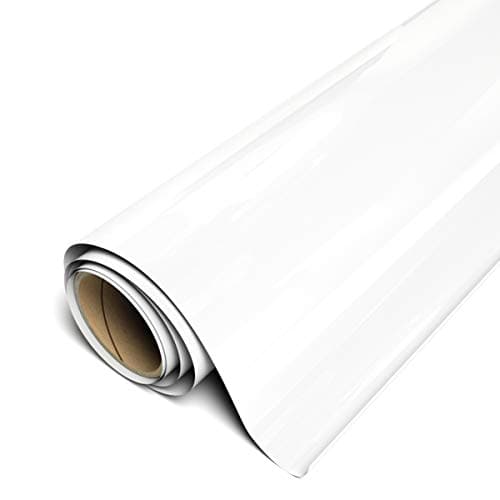
Siser EasyWeed Stretch HTV
Siser · Prior generation · Verified 2026-10-08
A hat panel is not flat, and a film that cannot conform bridges the curve instead of following it — which is why hat transfers lift at the edges long before they fail in the middle. Stretch-formulated HTV has the give to sit down into a curve, so the adhesive makes contact across the whole design rather than only where the panel happens to be flattest. Siser rates it for 100% polyester, cotton and blends, which covers the twill, canvas and performance mesh that caps are made from. It costs more than standard film and that premium is doing real work here.
What works
- Stretches with knit polyester instead of cracking when the garment does
- Thin and light enough that a tank top or onesie does not feel patched
- Weeds as cleanly as standard EasyWeed on fine detail
- Sold in both single sheets and rolls, so you can test one color first
What does not
- Discontinued by Siser — EasyWeed EcoStretch is the current stretch film
- Costs more per square inch than standard EasyWeed or budget roll HTV
- Needs 320°F and firm pressure, which is hotter than thin polyester likes
- Matte only — there is no gloss or glitter in the Stretch line
- Overkill, and an unnecessary expense, on a rigid cotton tee
Not for you if
Everything you press is standard cotton t-shirts. Standard EasyWeed is cheaper and the stretch does nothing for you there.
Key specs
- Type
- Heat transfer vinyl (HTV) — stretch formulation
- Fabric compatibility
- Siser rates it for 100% polyester, 100% cotton, poly/cotton blends and leather
- Application
- Siser lists 320°F for 20 seconds at firm pressure
- Thickness
- Siser published 85 microns / 3.35 mils — thinner than standard EasyWeed
- Peel
- Hot or cold — the carrier is forgiving either way
- Finish
- True matte
Price as of November 12, 2026
#ad · affiliate link · we never show a price we cannot verify

2. Best for flat-front structured caps and small simple designs
Siser EasyWeed HTV
Siser · Currently sold · Verified 2026-09-27
On a structured cap with a genuinely flat front panel — trucker and five-panel styles especially — standard EasyWeed is rated for the same fabrics and weeds more cleanly, which matters because hat designs are small and small designs are mostly fine detail. It is the cheaper, easier material when the geometry is on your side. Where it loses is on a curved six-panel cap or anything knit, because the film will not follow the shape and the edges carry all the stress.
What works
- Weeds more cleanly than almost anything else at this price
- Thin enough that a layered design does not feel like a plastic patch
- Siser publishes clear time and temperature guidance for it
- Sold in single sheets, so you can try three colors without buying three rolls
What does not
- Matte only — no gloss, glitter or specialty finish in the base line
- Sheets cost more per square inch than buying a roll
- Still needs real heat and pressure; a household iron gives mixed results
Not for you if
You want a glitter or holographic finish. That is a different Siser product line, not EasyWeed.
Key specs
- Type
- Heat transfer vinyl (HTV) — for fabric
- Fabric compatibility
- Siser rates it for cotton, polyester and cotton/poly blends
- Thickness
- Siser published 90 microns / 3.5 mils
- Application
- Siser lists 305°F for 10-15 seconds at medium pressure
- Carrier
- Pressure-sensitive clear carrier sheet
- Finish
- Semi-gloss — EasyWeed Matte is a separate Siser line
Price as of November 12, 2026
#ad · affiliate link · we never show a price we cannot verify
3. Best for reaching a seam or a curve with the heat source you can afford
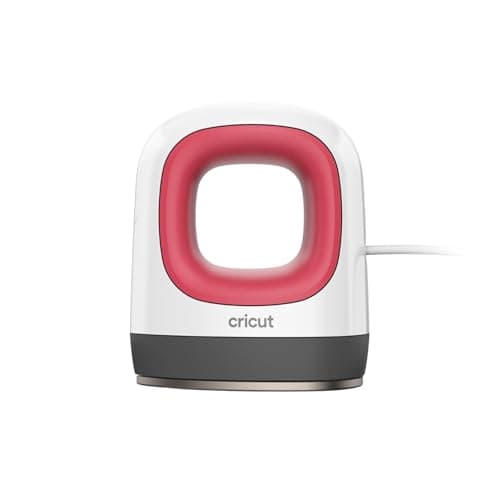
Cricut EasyPress Mini
Cricut · Currently sold · Verified 2026-09-27
The cheap route to hats. The Mini's small pointed plate gets into the curve of a panel and up against a center seam in a way no full-size plate can, which is the actual blocker on hat projects. It is a specialist and not a first press: it cannot press a shirt design in an acceptable number of passes, and its three preset heat levels are coarser than a temperature dial. For hats specifically that is a reasonable trade, because you are pressing a few square inches at a time anyway.
What works
- Reaches into seams and curves no full-size plate can touch
- Makes hats and shoes genuinely possible
- Very cheap relative to a full press
What does not
- Far too small to press a shirt front in one go
- Preset heat levels rather than a precise temperature
Not for you if
This is your only heat source. It cannot press a normal shirt design in an acceptable number of passes.
Key specs
- Type
- Miniature handheld heat press
- Plate
- Small, with a pointed tip for corners and seams
- Typical use
- Hats, shoes, pockets, seams, small patches
- Heat settings
- Three preset levels
#ad · affiliate link · we never show a price we cannot verify
4. Best for hats and caps as a repeating job
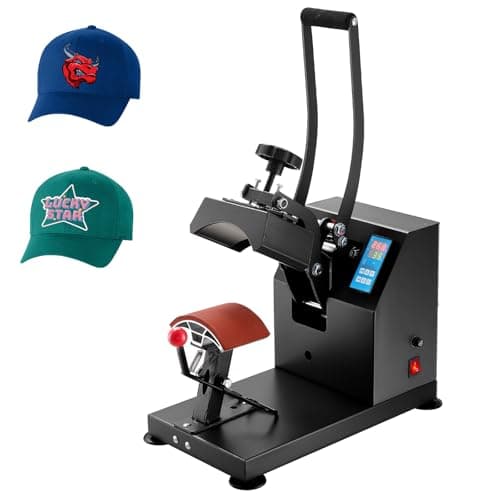
VEVOR Curved Hat Heat Press
VEVOR · Currently sold · Verified 2026-09-27
A curved platen built for the shape of a cap, which removes the entire problem rather than working around it. It applies even pressure across a curved panel in one close, so you are not making four overlapping passes with a small plate and hoping the overlaps do not show. If hats are a product line rather than an occasional favor, this is what makes them repeatable. It does one thing only, so it is hard to justify for a single project.
What works
- Even pressure across a curved cap front, which nothing flat achieves
- Much faster and more reliable than an EasyPress Mini on hats
- Relatively cheap for a dedicated tool
What does not
- Single-purpose — it presses hats and nothing else
- Another permanent item on the bench
Not for you if
You make one or two hats a year. An EasyPress Mini will get you through that without a second machine.
Key specs
- Type
- Curved-platen cap press
- Platen
- 6 x 3.75 in, curved to match a cap crown
- Typical use
- Baseball caps, beanies with a flat front panel
- Flat items
- No — this presses caps and nothing else
Price as of November 12, 2026
#ad · affiliate link · we never show a price we cannot verify
The picks side by side
| Pick | What it is | Published rating / reach | Best for | Main limit |
|---|---|---|---|---|
| Siser EasyWeed Stretch | Stretch HTV film | 100% polyester, cotton, blends, leather | Curved and knit cap panels | Costs more than standard film |
| Siser EasyWeed | Standard HTV film | Cotton, polyester, poly/cotton blends | Flat-front structured caps | Will not follow a curve |
| Cricut EasyPress Mini | Miniature handheld press | Small pointed plate, three preset levels | Getting heat into a curve cheaply | Coarse heat settings, many passes |
| Curved hat heat press | Purpose-built curved platen | Even pressure across a cap panel in one close | Hats as a repeating job | Does nothing else |
How to press a cap, in order
1Pick the design around the seam, not in spite of it
Decide where the center seam falls before you cut anything. A design that straddles it will show a ridge. Keep artwork to one side, or split it.
2Work out the fabric and the stiffener
Cotton twill, poly mesh and knit all behave differently, and a structured front has a stiffener behind it that dislikes long presses. Use the lowest setting the vinyl supports.
3Get the panel as flat as it will go
A hat press form does this properly. Without one, stuff a rolled towel or a pressing pillow inside the crown so the front panel is tensioned and supported from behind.
4Pre-press briefly
A few seconds to drive out moisture and flatten the weave. Keep it short on a structured cap — you are not trying to compress the stiffener.
5Press in sections with firm pressure, keeping clear of the brim
With a small plate, press overlapping sections and accept that the middle gets pressed twice. Keep the plate off the brim and off any plastic snap closure.
6Peel as the carrier instructs, then re-press the edges
The edges are where a curved press fails. A short second press on the edges through a cover sheet is worth the extra minute.
The mistakes that get blamed on the vinyl
- Using a full-size flat plate. It contacts a band across the middle of the panel and nothing else. The design will peel top and bottom.
- Designing across the center seam. No material fixes a ridge. This is a layout decision, not a pressing one.
- Nothing supporting the panel from behind. Without a form, a towel or a pillow inside the crown, you are pressing fabric into thin air.
- Long presses on a structured cap. The stiffener deforms and the front ripples permanently. Short presses at the lowest viable setting.
- Letting the plate touch the brim. A plastic-cored brim will deform, and on a trucker cap it is very close to the pressing area.
- Standard rigid film on a curved panel. It bridges rather than conforms. If the panel curves, pay for the stretch material.
Which heat source, honestly
If hats are a curiosity, the EasyPress Mini is the sensible purchase: it is cheap, it reaches into the curve, and it is useful afterwards for seams, pockets and shoes — our EasyPress Mini review covers exactly what it can and cannot do. If hats are a product line, a curved hat press pays for itself in consistency alone — the failure rate on hand-pressed caps is high enough that the wasted blanks add up. The best hat heat press is the full comparison, including what the cheap end of the market gets wrong.
Either way, a full-size flat clamshell is the wrong tool. It is excellent for shirts and useless on a curve, which is the one case where more platen does not help. If you are choosing a first heat source and hats are only part of the plan, read EasyPress versus heat press first and treat hats as a separate, later purchase.
Koozies present the same curved, compressible problem in a different material — neoprene foam that deforms with too much heat. The best HTV for koozies covers the settings and why a small press beats a big one there too.
For the hardware side of the same project, the best Cricut for hats covers which machine to buy, and why the press matters more than any of them.
Common questions
What HTV works best on hats?
Can you press a hat with a normal heat press?
Why does vinyl peel off hats at the edges?
Can you put HTV over the seam on a cap?
What temperature do you press HTV on a cap?
Sources
- Siser North America — HTV product range — Confirmed EasyWeed and EasyWeed Stretch are current named Siser HTV lines and that Siser publishes an HTV reference chart - checked 10 October 2026
- Cricut Heat Guide — Per-material, per-press settings referenced for published-figure claims; EasyPress Mini is listed among Cricut's current heat sources - checked 10 October 2026
How we picked
We verify every product is currently sold by reading the manufacturer's own catalog, compare published specifications rather than marketing copy, and rank on what a first-time buyer has to decide. We do not run lab tests and we do not claim to, and commission never affects the order.
Read this next
The Best Heat Press for Hats
Why caps need a curved platen, which presses do it, and the cheap compromise for occasional hats.
The Best HTV Vinyl for Beginners
Which heat transfer vinyl weeds cleanly and presses forgivingly — and which to switch to later.
The Best Heat Transfer Vinyl for Polyester
Which heat transfer vinyl actually holds on 100% polyester and performance fabric, the heat ceiling that stops it scorching, and what dye migration does to a colored shirt.
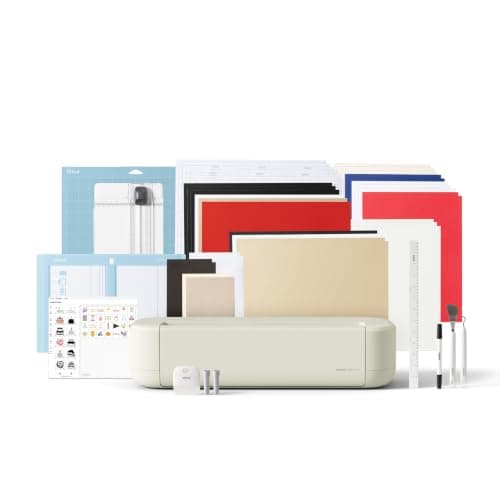
The Best Cricut for Making Shirts
Which machine suits shirt making, why cut width decides it, and the gear that matters more than the machine.
How to Use HTV
The full HTV process from cut to peel, plus a troubleshooting section for when it does not stick.
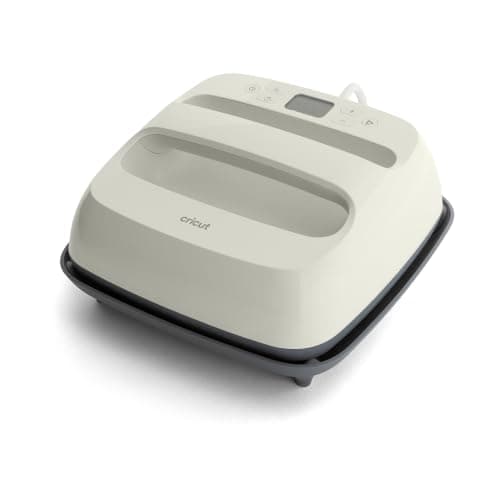
Cricut EasyPress Mini vs a Full-Size Press
What the EasyPress Mini is actually for, why it cannot be your only heat source, and how it compares to a full-size EasyPress and a clamshell press.
Cricut EasyPress Mini Review
An honest look at Cricut's smallest press: what the pointed tip solves, the published heat settings, and why it is a second press rather than a first one.
Back to Vinyl & Materials.