Cricut EasyPress Mini vs a Full-Size Press
One of these can press a shirt. The other can reach into a cap seam. They are not competing for the same job.
Heads up: Mat & Blade earns a commission from qualifying purchases made through the links on this page, at no extra cost to you. It never changes which products we recommend or how we rank them. Read the full disclosure.
Buy the full-size press first. The Mini is a second purchase, not a cheaper first one. A full-size EasyPress or a clamshell can press a shirt design in a single press with even contact; the EasyPress Mini has a plate a few inches across and three preset heat levels, and it is designed to reach places a flat plate cannot — the curve of a cap, a shoe, a pocket seam, a small patch. Using a Mini as your only heat source means pressing a shirt design in overlapping passes, and the overlaps show. Using a full-size plate on a cap means pressing a band across the middle of the panel and watching the edges peel.
What each one physically is
The specification sheets make these look like two sizes of the same product. They are not.
| Cricut EasyPress Mini | Full-size EasyPress (SE line) | Budget clamshell | |
|---|---|---|---|
| Plate | Small, with a pointed tip for corners and seams | Flat, up to 12 x 10 in in the SE line | Flat, commonly 12 x 15 in and up |
| Heat control | Three preset levels | Set precisely and held | Set precisely and held |
| Pressure | Your hand, on a small area | Your body weight through the plate | Mechanical, through a lever |
| Can press an adult shirt design | Not in one go | Yes | Yes |
| Can press a cap panel | Yes | Not evenly | No |
| Storage | Drawer | Shelf or cupboard | Permanent bench space |
The decision, in one question
What is the first thing you intend to press? If the answer is a t-shirt, a tote bag or a hoodie, you need a full-size plate and the Mini would be an actively frustrating purchase. If the answer is a cap, a pair of shoes, a onesie or a patch on a pocket, the Mini is the correct and much cheaper tool, and it is the only one of the two that will do the job at all.
Most people arrive at the Mini second, after a full-size press, when a project turns up that the flat plate cannot reach. That is the natural order and it is worth following rather than trying to make one tool do both.
The picks
1. Best for a first heat source, if you only buy one
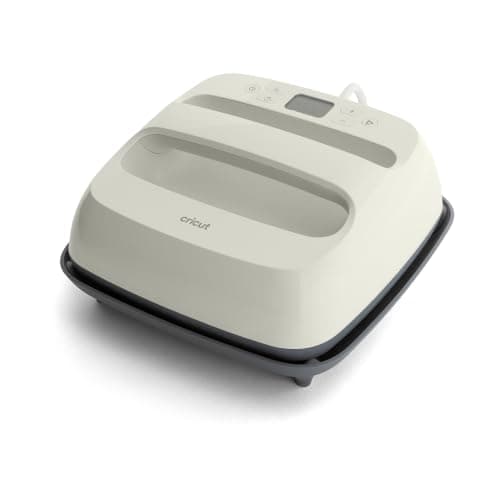
Cricut EasyPress SE
Cricut · Currently sold · Verified 2026-09-27
This is the one that can press a shirt, which makes it the first purchase in almost every case. The SE line holds a set temperature — the thing a household iron fundamentally cannot do — gives even plate contact across a whole design, has a built-in timer, and comes with named settings in Cricut's Heat Guide for each material. Plate sizes in the line run to 12 by 10 inches, which covers a normal adult shirt design in one press. The honest limits: you supply the pressure by leaning on it, and it costs more than a comparable clamshell.
What works
- Holds a set temperature, which a household iron does not
- Even plate contact across the whole design
- Cricut's Heat Guide gives exact settings for it by material
- Stores away, which matters more than people expect
What does not
- You supply the pressure by leaning on it, so results depend on your technique
- Costs more than a comparably sized clamshell press
- Small plates mean multi-press passes on a big design
Not for you if
You are pressing more than a handful of shirts a week. Leaning on a handheld press twenty times an evening gets old fast — buy a clamshell.
Key specs
- Type
- Handheld heat press
- Plate sizes
- 12 x 10 in and 9 x 9 in in the SE line
- Temperature
- Set precisely; holds it, unlike a household iron
- Timer
- Built in, with an audible finish
- Storage
- Shelf or drawer — no permanent bench space
Price as of November 12, 2026
#ad · affiliate link · we never show a price we cannot verify
2. Best for curves, seams and small areas no flat plate can reach
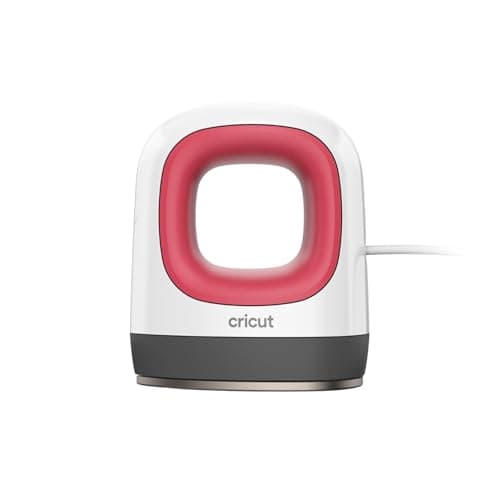
Cricut EasyPress Mini
Cricut · Currently sold · Verified 2026-09-27
A specialist and a very good one. The small pointed plate gets into a hat panel, up against a center seam, inside a shoe, around a pocket edge and onto a small patch — all places a 9-inch flat plate simply cannot make contact. For those jobs it is the cheapest solution that exists. Treat it as a second heat source: it has three preset heat levels rather than a temperature dial, and it cannot press a normal shirt design in an acceptable number of passes.
What works
- Reaches into seams and curves no full-size plate can touch
- Makes hats and shoes genuinely possible
- Very cheap relative to a full press
What does not
- Far too small to press a shirt front in one go
- Preset heat levels rather than a precise temperature
Not for you if
This is your only heat source. It cannot press a normal shirt design in an acceptable number of passes.
Key specs
- Type
- Miniature handheld heat press
- Plate
- Small, with a pointed tip for corners and seams
- Typical use
- Hats, shoes, pockets, seams, small patches
- Heat settings
- Three preset levels
#ad · affiliate link · we never show a price we cannot verify
3. Best for the flat-work alternative if you do not need portability
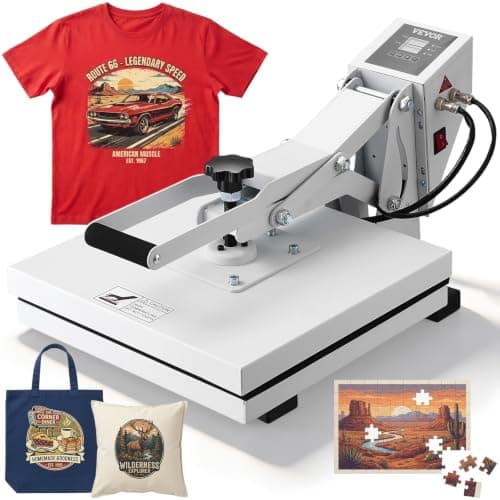
VEVOR Clamshell Heat Press
VEVOR · Currently sold · Verified 2026-09-27
Worth knowing about because it changes the comparison. A budget clamshell applies even mechanical pressure through a lever rather than your body weight, which is the one real weakness of every handheld plate, and it usually costs less than an EasyPress of similar platen size. What you give up is storage — it occupies permanent bench space — and build quality, including displays that do not always match the real plate temperature. If pressing is a frequent activity rather than an occasional one, this is the better flat-work tool.
What works
- Full-size plate and real clamp pressure for less than a handheld press
- Presses an adult design in a single pass
- Widely available with lots of community guidance
What does not
- Displayed temperature can differ from actual plate temperature — worth checking
- No auto-open, so a forgotten timer scorches the shirt
- Build quality is visibly budget
Not for you if
You want to set it and trust it. Check the plate temperature with an infrared thermometer before you trust the display.
Key specs
- Type
- Manual clamshell heat press
- Plate size
- Commonly 15 x 15 in
- Pressure
- Manual knob adjustment
- Auto-open
- No — it beeps, you lift
- Bench space
- Permanent
Price as of November 12, 2026
#ad · affiliate link · we never show a price we cannot verify
What the Mini is genuinely best at
- Hats and caps. The headline use. The pointed plate follows the curve of a panel and reaches up against the center seam. The best HTV for hats covers the material side of the same project.
- Shoes and trainers. There is no flat surface on a shoe. A small plate is the only thing that can apply heat to one.
- Pockets and seams. Pressing a design that crosses a pocket edge with a big plate means pressing the pocket too. The Mini goes around it.
- Baby and toddler clothes. A onesie front is smaller than most full-size plates, and the garment has seams and poppers everywhere.
- Small patches and labels. Faster to heat up than a full-size plate, which matters when the press itself takes fifteen seconds.
- Fixing a lifted corner. A single corner of a shirt design that has started to lift can be re-pressed with the Mini without re-pressing the whole design.
What the Mini is bad at, plainly
- Shirt fronts. Overlapping passes mean some areas get double the heat, and on most materials that shows as a visible rectangle or a gloss patch.
- Anything needing a precise temperature. Three presets is a coarse instrument.
- Even pressure over an area. You are pressing a few square inches by hand, so consistency across a larger design is down to how steady you are.
- Volume. Pressing twenty items an evening with a tool this small is unpleasant work.
- Thick garments. Fleece needs sustained firm pressure over the whole design, which is the opposite of what a small hand-held plate delivers.
If you are choosing a first press right now
The real first-press decision is not Mini versus full-size — it is handheld versus clamshell, and it comes down to how often you press and whether you have bench space. A handheld plate stores away and is pleasant for occasional work; a clamshell gives even mechanical pressure and is far better once pressing is a routine. EasyPress versus heat press is the full comparison, the best heat press for beginners is the roundup, and what size heat press do I need works through platen sizes against the garments you intend to make.
Then add the Mini when a curved or awkward project turns up. It is inexpensive, it stores in a drawer, and it does something nothing else in your workshop can do — which is a much better reason to own a tool than a vague sense that a smaller one might be handy. Our full EasyPress Mini review goes through its published heat settings, the jobs it genuinely solves, and where it falls short.
Common questions
Is the Cricut EasyPress Mini worth it?
Can you use an EasyPress Mini on a t-shirt?
What is the difference between the EasyPress Mini and a full-size EasyPress?
Which should you buy first, the Mini or a full-size press?
Can an EasyPress Mini press hats?
Sources
- Cricut Heat Guide — Named time, temperature and pressure settings by material and by Cricut press, and confirmation that the EasyPress Mini and the EasyPress SE line are both current Cricut heat sources - checked 10 October 2026
- Siser North America — HTV product range — Referenced for the point that vinyl manufacturers publish exact application temperatures, which a three-preset heat source can only approximate - checked 10 October 2026
How we picked
We verify every product is currently sold by reading the manufacturer's own catalog, compare published specifications rather than marketing copy, and rank on what a first-time buyer has to decide. We do not run lab tests and we do not claim to, and commission never affects the order.
Read this next
EasyPress vs Heat Press
Handheld or clamshell — the real trade-off between storage convenience and repeatable results.
The Best Heat Press for Beginners
Handheld or clamshell, which suits your volume and space, and when you need no press at all.
Cricut EasyPress SE Review
The current EasyPress: accurate temperature, easy storage, and pressure that depends on you.
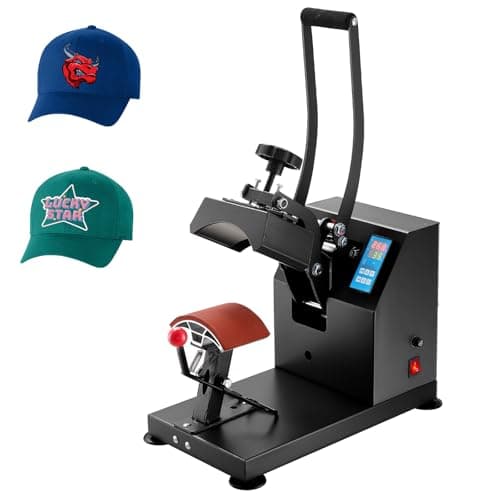
The Best Heat Press for Hats
Why caps need a curved platen, which presses do it, and the cheap compromise for occasional hats.
The Best HTV for Hats and Caps
Which HTV holds on a cap panel, why the curve and the seam decide the result, and the two heat sources that can actually press one.
What Size Heat Press Do I Need?
How press platen size maps to real projects, why 15x15 is the usual answer, and when to size up or down.
Cricut EasyPress Mini Review
An honest look at Cricut's smallest press: what the pointed tip solves, the published heat settings, and why it is a second press rather than a first one.
Back to Heat Presses.