
The Best Heat Transfer Vinyl for Polyester
Polyester is not a harder fabric to press than cotton. It is a different one — lower heat, and a surface that moves underneath the design.
Heads up: Mat & Blade earns a commission from qualifying purchases made through the links on this page, at no extra cost to you. It never changes which products we recommend or how we rank them. Read the full disclosure.
For polyester, buy a stretch-formulated heat transfer vinyl and press it cooler than you would press cotton. Siser EasyWeed Stretch is the pick for knit and athletic polyester because the film moves with the fabric instead of cracking across it; standard Siser EasyWeed is rated for polyester too and is the cheaper, cleaner-weeding choice on rigid poly and poly blends; HTVRONT rolls are the cost-per-shirt option once you are pressing in batches. The failure people blame on the vinyl is usually one of three things instead: too much heat, a fabric blend nobody checked, or dye migration on a colored shirt.
How we picked
This page has no lab behind it and does not pretend to. What it has is a short list of criteria that actually separate these materials on polyester specifically, applied honestly, with the manufacturer's own published rating as the source for every compatibility claim.
- Published polyester rating. The manufacturer has to state that the material is for polyester. Every pick here does. A vinyl that only lists cotton is not a candidate, no matter how well it weeds.
- Application temperature. Polyester has a lower heat ceiling than cotton, so a vinyl that demands 320°F or more is working against the fabric. Lower published settings are a genuine advantage here and nowhere else.
- Stretch behavior. Most polyester apparel is knit. A film that cannot stretch will crack on a knit garment eventually, which is a material property rather than an application error.
- Weeding. You still have to get the design off the carrier. A material that tears thin letters is a bad buy regardless of its fabric rating.
- Cost per square inch. Sheets are convenient and expensive, rolls are cheap and commit you to one color. Which one is right depends entirely on how many shirts you are making.
- Honest downside. Every pick below carries its real cons, including the ones that make it the wrong choice for some readers.
Why polyester behaves differently from cotton
Cotton is forgiving. It is a natural fiber with no meaningful upper temperature limit in the range a heat press reaches, it holds its dye, and a woven cotton tee barely moves. Polyester is a plastic, and all three of those statements change.
It has a real heat ceiling
Polyester fibers are synthetic and they soften, glaze and scorch at temperatures cotton shrugs off. The visible result is a shiny rectangle on the shirt exactly the size of your press plate, and it is permanent. This is why the better polyester vinyls advertise lower application temperatures rather than higher ones — a material that presses properly at 305°F gives you headroom on a fabric that is unhappy well before 340°F.
The practical consequence is that you should trust the vinyl manufacturer's published setting and not add heat to "make sure". If a transfer lifts, the fix is almost always pressure or time, not temperature. The heat press temperature guide has the settings laid out by material.
It migrates dye
Dye migration is the polyester problem nobody warns beginners about. The dye in colored polyester is sublimation dye — it turns to gas under heat and travels. Press white vinyl onto a red polyester shirt and the red can come up through the white, so a design that looked perfect when you peeled the carrier turns pink over the following hours or after the first wash.
No heat transfer vinyl on this page prevents that, and any page claiming one does is selling you something. The real mitigations are: use white or light polyester blanks, press as cool and as briefly as the vinyl allows, or buy a vinyl specifically sold as dye-blocking if you must press onto a saturated color. Dye migration is also why sublimation only works on white and light polyester — the same physics, viewed from the other side.
It stretches
Most polyester garments are knit, and knit fabric moves. A standard HTV film has very little give, so every wear cycle flexes the bond at the edges of the design. On a rigid cotton tee this barely matters. On a performance tee or a pair of leggings it is the main thing that will eventually kill the design, and it shows up as hairline cracks across letters rather than as peeling corners.
Our picks in full
1. Best for polyester jersey, athletic wear and anything that stretches
Siser EasyWeed Stretch HTV
Siser · Prior generation · Verified 2026-10-08
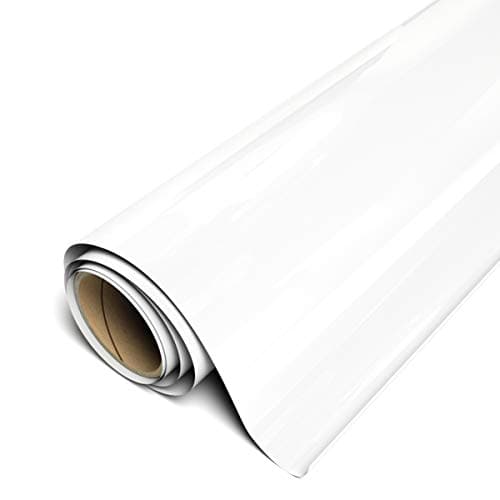
The specific answer to the specific problem. Polyester apparel is mostly knit — tees, jerseys, leggings, onesies — and knit fabric stretches when the body inside it moves. A rigid vinyl film laid across a stretching knit gives up at the edges first, then cracks through the middle, and no amount of extra press time prevents that because the failure is mechanical rather than thermal. EasyWeed Stretch is built on a film that moves with the garment, which removes the failure mode entirely. Siser lists it at 320°F for 20 seconds at firm pressure and rates it for 100% polyester, 100% cotton, blends, leather and Lycra/spandex, so it is not a polyester-only material you end up with half a roll of. Worth knowing before you buy: Siser has since retired this film in favor of [EasyWeed EcoStretch](/vinyl/siser-easyweed-vs-easyweed-stretch), which applies at a much cooler 250°F.
What works
- Stretches with knit polyester instead of cracking when the garment does
- Thin and light enough that a tank top or onesie does not feel patched
- Weeds as cleanly as standard EasyWeed on fine detail
- Sold in both single sheets and rolls, so you can test one color first
What does not
- Discontinued by Siser — EasyWeed EcoStretch is the current stretch film
- Costs more per square inch than standard EasyWeed or budget roll HTV
- Needs 320°F and firm pressure, which is hotter than thin polyester likes
- Matte only — there is no gloss or glitter in the Stretch line
- Overkill, and an unnecessary expense, on a rigid cotton tee
Not for you if
Everything you press is standard cotton t-shirts. Standard EasyWeed is cheaper and the stretch does nothing for you there.
Key specs
- Type
- Heat transfer vinyl (HTV) — stretch formulation
- Fabric compatibility
- Siser rates it for 100% polyester, 100% cotton, poly/cotton blends and leather
- Application
- Siser lists 320°F for 20 seconds at firm pressure
- Thickness
- Siser published 85 microns / 3.35 mils — thinner than standard EasyWeed
- Peel
- Hot or cold — the carrier is forgiving either way
- Finish
- True matte
Price as of November 12, 2026
#ad · affiliate link · we never show a price we cannot verify

2. Best for rigid polyester and poly blends that do not stretch
Siser EasyWeed HTV
Siser · Currently sold · Verified 2026-09-27
Standard EasyWeed is rated for polyester as well, and on a woven or stable poly blend it is the better buy because you are not paying the stretch premium for stretch you will never use. Tote bags, poly-blend crew tees, bunting, drawstring bags and sublimation-grade poly shirts that happen to be getting vinyl instead all fall here. It weeds more cleanly than anything else at the price, which matters more on a fine script design than any fabric rating does. The thing it will not do is survive being stretched repeatedly, so keep it off leggings and athletic knits.
What works
- Weeds more cleanly than almost anything else at this price
- Thin enough that a layered design does not feel like a plastic patch
- Siser publishes clear time and temperature guidance for it
- Sold in single sheets, so you can try three colors without buying three rolls
What does not
- Matte only — no gloss, glitter or specialty finish in the base line
- Sheets cost more per square inch than buying a roll
- Still needs real heat and pressure; a household iron gives mixed results
Not for you if
You want a glitter or holographic finish. That is a different Siser product line, not EasyWeed.
Key specs
- Type
- Heat transfer vinyl (HTV) — for fabric
- Fabric compatibility
- Siser rates it for cotton, polyester and cotton/poly blends
- Thickness
- Siser published 90 microns / 3.5 mils
- Application
- Siser lists 305°F for 10-15 seconds at medium pressure
- Carrier
- Pressure-sensitive clear carrier sheet
- Finish
- Semi-gloss — EasyWeed Matte is a separate Siser line
Price as of November 12, 2026
#ad · affiliate link · we never show a price we cannot verify
3. Best for cost per shirt once you are pressing batches
HTVRONT HTV Rolls
HTVRONT · Currently sold · Verified 2026-09-27
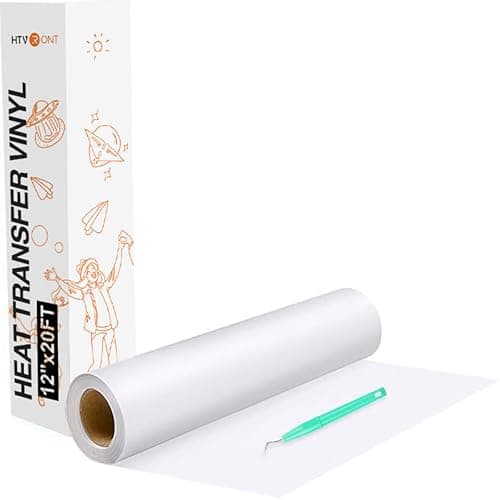
The honest budget answer. HTVRONT rates its standard HTV rolls for cotton, polyester and blends, and buying by the roll rather than the sheet is a large step down in cost per square inch — which is the whole argument for it. What you give up is weeding behavior on fine detail and batch-to-batch consistency, both of which are more annoying on polyester than on cotton because you have less thermal headroom to compensate with. Press a test piece from every new roll before you commit a run of shirts to it.
What works
- Far cheaper by area than sheet-format premium HTV
- Wide color and finish range including glitter and holographic
- Rolls mean you stop rationing material and start practicing
What does not
- Fine detail weeds less cleanly than Siser EasyWeed
- Batch-to-batch consistency is less predictable
- You are committing to a whole roll of one color
Not for you if
Your first project is a very fine script design. Learn to weed on EasyWeed first, then switch to save money.
Key specs
- Type
- Heat transfer vinyl (HTV)
- Format
- Rolls, typically 12 in wide
- Fabric compatibility
- Rated for cotton, polyester and blends
- Finish
- Matte, plus glitter and specialty lines
- Value
- Lowest cost per square inch of the three HTVs here
Price as of November 12, 2026
#ad · affiliate link · we never show a price we cannot verify
4. Best for letting the heat guide pick the setting for you
Cricut Everyday Iron-On
Cricut · Currently sold · Verified 2026-09-27
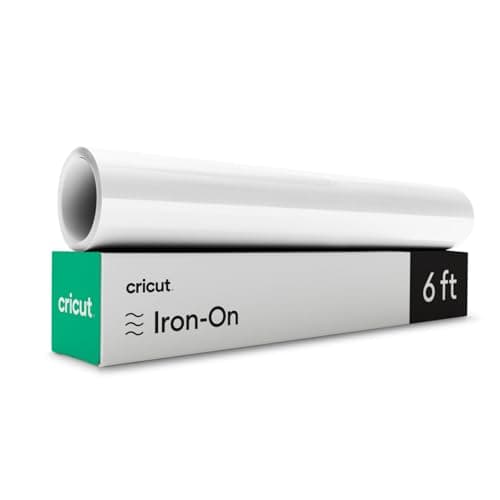
Included for one reason: Cricut publishes a named setting for this material against each of its own presses, and polyester is exactly the fabric where guessing the temperature costs you a shirt. If you own an EasyPress and you do not want to work out your own time-temperature-pressure combination, looking up "Everyday Iron-On" and "polyester" in the Heat Guide is the shortest route to a result. It costs noticeably more per square inch than third-party vinyl, and the convenience is the settings lookup rather than the film itself.
What works
- Cricut's Heat Guide gives you a precise, named setting instead of a guess
- Sold in the same shops as the machine, so it is easy to restock
- Consistent weeding behavior across colors
What does not
- Costs more per square inch than third-party HTV
- The convenience is mostly about the settings lookup, not the material itself
Not for you if
You are pressing a lot of shirts and cost per shirt matters. Third-party rolls are meaningfully cheaper.
Key specs
- Type
- Heat transfer vinyl (HTV)
- Fabric compatibility
- Cricut rates it for cotton, polyester, blends, canvas
- Settings source
- Listed in Cricut's own Heat Guide by press and material
- Format
- Rolls and sheets
- Finish
- Matte
Price as of November 12, 2026
#ad · affiliate link · we never show a price we cannot verify
5. Best for knowing what fabric you are actually pressing
Polyester Blank Shirts
Joyclub · Currently sold · Verified 2026-09-27
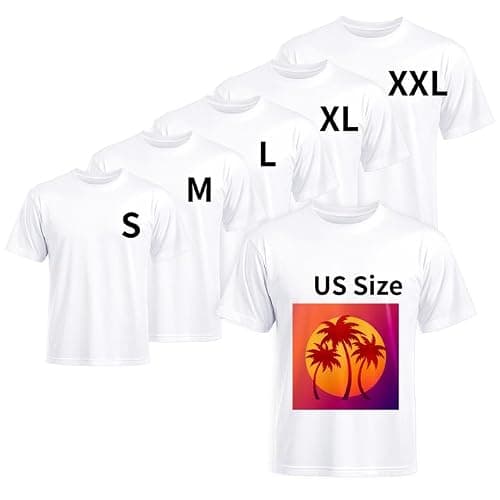
The variable people skip. Half of the "HTV will not stick to polyester" reports are really a blend nobody checked the composition of, because a 50/50 shirt and a 100% polyester shirt take heat very differently. Buying blanks that state the fiber content means your press settings stay reproducible from one batch to the next. White and near-white poly blanks also avoid dye migration entirely, which is the one polyester problem no vinyl choice can fix.
What works
- The only fabric sublimation genuinely bonds to
- Result has no hand feel at all — the design is in the fabric
- Will not crack or peel the way a vinyl transfer can
What does not
- White or near-white only — this is a hard physical limit
- 100% polyester feels different from a cotton tee
- Blends fade the design, which you may or may not want
Not for you if
You want a soft cotton shirt or a dark shirt. Use heat transfer vinyl instead — it works on both.
Key specs
- Fabric
- 100% polyester, or a high-polyester blend
- Color
- White or very light — dark fabric will not work
- Why polyester
- Sublimation ink bonds to polymer, not to cotton fiber
- Blend behavior
- A 65/35 blend gives a faded, vintage-looking result
Price as of November 12, 2026
#ad · affiliate link · we never show a price we cannot verify
The picks side by side
| Material | Format | Published polyester rating | Stretch | Best for |
|---|---|---|---|---|
| Siser EasyWeed Stretch | Sheets and rolls | 100% polyester, cotton, blends, leather | Yes — the point of the material | Athletic and knit polyester |
| Siser EasyWeed | Sheets and rolls | Cotton, polyester, poly/cotton blends | No | Rigid poly and poly blends |
| HTVRONT HTV rolls | Rolls, typically 12 in wide | Cotton, polyester, blends | No | Cost per shirt in batches |
| Cricut Everyday Iron-On | Rolls and sheets | Cotton, polyester, blends, canvas | No | A named setting in Cricut's Heat Guide |
Settings: start here, then test
Published settings are a starting point, not a guarantee, because your press, your pressure and your blend are all variables. The sensible order of operations is to start at the manufacturer's number, press a test piece, and adjust time and pressure before you ever adjust temperature.
| Fabric | Where to start | What to adjust first | What to avoid |
|---|---|---|---|
| 100% polyester, white or light | The vinyl's published setting — 320°F / 20s / firm for EasyWeed Stretch | Pressure, then time | Adding temperature to force adhesion |
| 100% polyester, colored or dark | The same setting, shortest viable time | Shorter press, cooler if the vinyl allows | Long presses — they drive dye migration |
| Poly/cotton blend | The vinyl's polyester setting | Time, in small increments | Assuming the cotton setting is safe |
| Anything with elastane or spandex | The lowest setting the vinyl supports | A test press on a hem, every time | Standard cotton settings — the fiber will glaze |
If your heat source is a household iron, polyester is the fabric where that stops working. An iron cannot hold a temperature and cannot deliver even pressure, and polyester punishes both. Do you need a heat press covers when the upgrade is genuinely necessary rather than merely nice.
The mistakes that get blamed on the vinyl
- Too much heat. The single most common cause of a scorched, shiny patch on a poly shirt, and the one thing people reach for when a transfer lifts. Add pressure or seconds instead.
- Pressing a blend at cotton settings. A 50/50 shirt is not a cotton shirt. Use the polyester figure and work up.
- Expecting white vinyl to stay white on a red shirt. That is dye migration, not a defective roll.
- Skipping the pre-press. Three to five seconds of heat on the blank before you lay the design drives out moisture and flattens the fabric. On polyester it also tells you immediately whether the fabric can take the temperature at all.
- Peeling at the wrong time. Cold-peel materials peeled hot lift the design with the carrier. The carrier states which it is; EasyWeed Stretch is forgiving either way.
- Using adhesive vinyl by mistake. Oracal 651 and similar permanent vinyls are for hard surfaces. HTV versus adhesive vinyl explains why one goes on fabric and the other does not.
Stretch HTV or sublimation for performance wear?
It is a fair question, because sublimation loves polyester for the same reason polyester is awkward for vinyl — the ink bonds into the polymer itself. Sublimation has no hand feel at all, cannot crack, and cannot peel, which on athletic wear is a real advantage.
The catch is that sublimation only works on white and very light polyester, needs a printer and ink before it makes anything, and is a larger first investment than a roll of vinyl. Stretch HTV works on dark shirts, works today with the press you already own, and is the only one of the two that handles cotton as well. Sublimation versus HTV is the full comparison if you are weighing the two routes rather than just buying vinyl.
What to buy if you are only buying one thing
Buy a small quantity of stretch HTV in one color and press it on the actual blank you intend to sell or wear. That one test tells you more than any specification table, because it tests your press, your pressure and your blend together. If the design survives a wash and a stretch, you have your material; order the roll then.
If polyester is only an occasional job and cotton is your normal work, standard EasyWeed covers both at a lower price and you can add stretch material when a knit project actually turns up. There is no reason to stock a stretch roll for a tote bag.
Performance jerseys are the hardest case in this category — thin stretch polyester, often with mesh panels, washed after every use. The best HTV for jerseys covers that specific job, including why a design should never sit over a mesh panel.
Common questions
What heat transfer vinyl works best on polyester?
What temperature do you press HTV on polyester?
Why does my HTV peel off polyester?
What is dye migration on polyester?
Can you use regular iron-on vinyl on 100% polyester?
Is sublimation better than HTV for polyester?
Sources
- Siser North America — EasyWeed Stretch product page — Fabric compatibility (100% polyester, cotton, blends, leather), 305°F / 15 second / medium pressure application setting, hot or cold peel, ultra-matte finish — checked 8 October 2026
- Swing Design — Siser EasyWeed Stretch listing — Confirmed EasyWeed Stretch is a current, stocked product in sheet format, 8 October 2026
- Cricut Heat Guide — Named time, temperature and pressure settings for Everyday Iron-On by material and press, checked 8 October 2026
How we picked
We verify every product is currently sold by reading the manufacturer's own catalog, compare published specifications rather than marketing copy, and rank on what a first-time buyer has to decide. We do not run lab tests and we do not claim to, and commission never affects the order.
Read this next
The Best HTV Vinyl for Beginners
Which heat transfer vinyl weeds cleanly and presses forgivingly — and which to switch to later.
Choosing HTV by Fabric Type
Which heat transfer vinyl suits each fabric, and the fabrics that resist adhesive regardless.
How to Use HTV
The full HTV process from cut to peel, plus a troubleshooting section for when it does not stick.
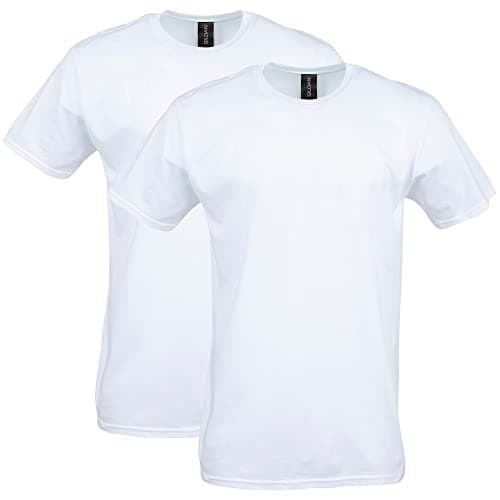
The Best Blank Shirts for HTV
Which blanks take heat transfer vinyl cleanly, and the fabrics that cause avoidable problems.
Heat Press Temperature Guide
Published time and temperature figures by material, sourced — plus the three variables that matter more.
Sublimation vs HTV
The category-defining comparison: what each technology can and cannot do, and which to start with.
Back to Vinyl & Materials.