The Best HTV for Denim
Denim is the easiest heavy fabric to press and the easiest to ruin, and the difference is one question: does the garment have stretch in it?
Heads up: Mat & Blade earns a commission from qualifying purchases made through the links on this page, at no extra cost to you. It never changes which products we recommend or how we rank them. Read the full disclosure.
Buy Siser EasyWeed for a denim jacket — rigid cotton twill takes heat well and a documented film is what lets you press near the top of its range deliberately. The moment the garment has stretch in it, which today means most jeans, switch to the stretch version: a rigid film on stretch denim cracks along the thighs and pockets whatever you do at the press. The budget pick is HTVRONT's multipack, which is the right call for practice and for large back panels where premium sheet film gets expensive. One question decides almost everything here.
Quick picks
| # | Product | Best for | Price |
|---|---|---|---|
| 1 | 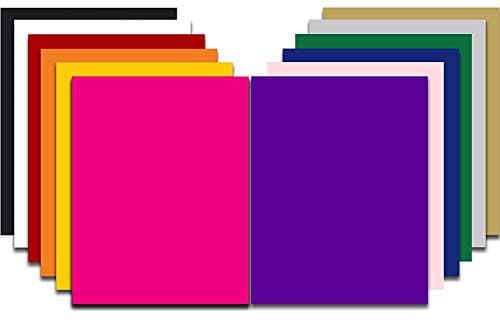 Siser EasyWeed HTVThe default heat transfer vinyl for beginners: it weeds cleanly, presses at a forgiving temperature, and is... | The film to buy for a denim jacket | $35.00 · View on Amazon Price as of November 28, 2026 #ad · affiliate link · we never show a price we cannot verify |
| 2 |  Siser EasyWeed Stretch HTVThe heat transfer vinyl built for fabric that moves — it stretches with a polyester jersey instead of crack... | Jeans, jeggings and any denim with elastane | $18.99 · View on Amazon Price as of November 28, 2026 #ad · affiliate link · we never show a price we cannot verify |
| 3 | 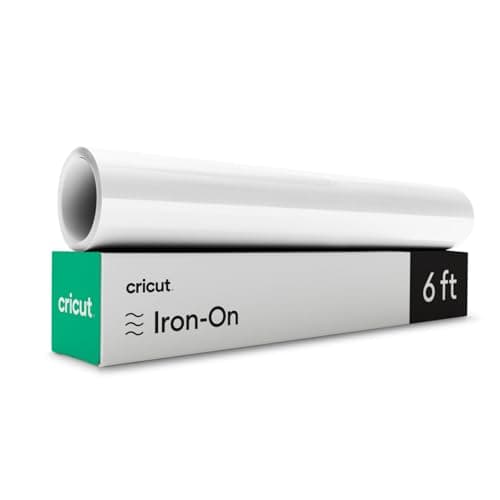 Cricut Everyday Iron-OnThe easiest HTV to get right on a Cricut, because Cricut's own heat guide lists exact settings for it again... | Cricut owners who want the setting looked up | $18.99 · View on Amazon Price as of November 28, 2026 #ad · affiliate link · we never show a price we cannot verify |
| 4 | 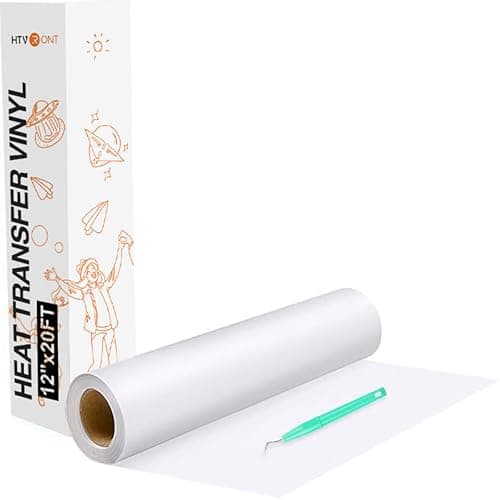 HTVRONT HTV RollsThe budget HTV that most people move to once they stop making one shirt at a time — noticeably cheaper by t... | The budget pick — practice film and big back panels | $12.74 · View on Amazon Price as of November 28, 2026 #ad · affiliate link · we never show a price we cannot verify |
| 5 | 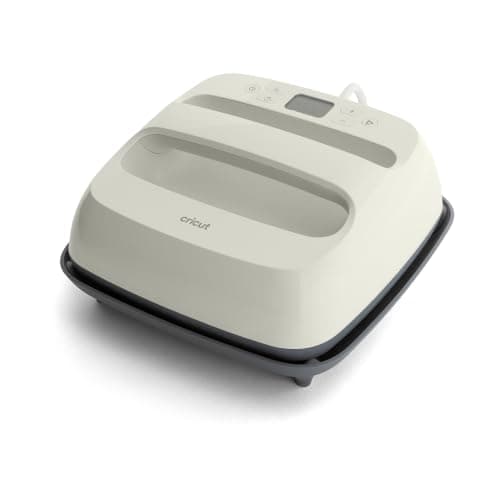 Cricut EasyPress SEThe current EasyPress and the easiest first heat source: controlled temperature, a flat even plate, and it ... | Holding the upper end of the range | $79.00 · View on Amazon Price as of November 28, 2026 #ad · affiliate link · we never show a price we cannot verify |
| 6 | 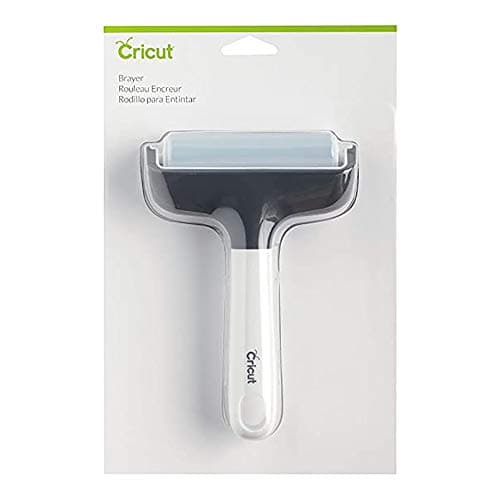 Cricut BrayerA small roller that presses material flat onto the mat — it prevents the lifted corner that ruins a cut hal... | Getting film to sit flat on twill before it is pressed | $23.72 · View on Amazon Price as of November 28, 2026 #ad · affiliate link · we never show a price we cannot verify |
Tap any row to jump to the full write-up. Prices come from Amazon on the date stamped on each button and can change after that — check the listing before you buy.
What we judged these films on
Denim shifts the criteria away from the ones that matter on a t-shirt. Softness on the hand barely registers on a jacket; three other things decide the result.
- Published settings, and a range with headroom at the top. Heavy twill absorbs heat and takes longer to bring the adhesive up to temperature than a thin knit. A film whose manufacturer publishes a temperature, a time, a pressure and a peel lets you push toward the top of the range on purpose instead of guessing.
- A stretch rating, where the garment needs one. This is not a nicety on jeans. It is the difference between a design that lasts and one that cracks across the thigh in a month.
- Enough area, affordably. Denim designs are big — jacket backs especially — so cost per square foot matters more here than in any other fabric category, and sheet-only products get expensive.
- Weeding behavior on bold shapes. Denim suits heavy lettering and solid graphics, so clean release on thick strokes matters more than fine-detail performance.
- What we did not judge on: finish and sparkle. Thick decorative films sit proud of a textured twill and stiffen a garment that flexes constantly at every seam — see the glitter HTV roundup for what that thickness does even on flat fabric.
1. Best for the film to buy for a denim jacket
Siser EasyWeed HTV
Siser · Currently sold · Verified 2026-09-27
The right default for denim, and the reason is that denim rewards a film with published numbers more than most fabrics do. Siser publishes EasyWeed's thickness, application temperature, press time, pressure and peel type, and on a heavy cotton twill you will be pressing at the upper end of that range with firm pressure — which is a deliberate adjustment only if you know the baseline. It is also thin enough to follow the weave rather than sit on top of it like a patch, and it weeds cleanly, which matters on the bold lettering most denim designs use. On a rigid 100 percent cotton jacket this is as close to a safe default as this category has. Honest cons: it costs more per square inch than the value brands; it is sold mostly by the color rather than in mixed packs; and it is the wrong film for anything with elastane in it, where you want the stretch version instead.
What works
- Weeds more cleanly than almost anything else at this price
- Thin enough that a layered design does not feel like a plastic patch
- Siser publishes clear time and temperature guidance for it
- Sold in single sheets, so you can try three colors without buying three rolls
What does not
- Matte only — no gloss, glitter or specialty finish in the base line
- Sheets cost more per square inch than buying a roll
- Still needs real heat and pressure; a household iron gives mixed results
Not for you if
You want a glitter or holographic finish. That is a different Siser product line, not EasyWeed.
Key specs
- Type
- Heat transfer vinyl (HTV) — for fabric
- Fabric compatibility
- Siser rates it for cotton, polyester and cotton/poly blends
- Thickness
- Siser published 90 microns / 3.5 mils
- Application
- Siser lists 305°F for 10-15 seconds at medium pressure
- Carrier
- Pressure-sensitive clear carrier sheet
- Finish
- Semi-gloss — EasyWeed Matte is a separate Siser line
Price as of November 28, 2026
#ad · affiliate link · we never show a price we cannot verify
2. Best for jeans, jeggings and any denim with elastane
Siser EasyWeed Stretch HTV
Siser · Prior generation · Verified 2026-10-08
The pick the moment the garment has stretch in it, which today means most jeans. A rigid film on a stretch fabric cracks along the stress lines no matter how well it was pressed, because the fabric moves and the film does not — and on jeans the stress lines are exactly where people put designs: thighs, back pockets, hems. A stretch-rated film moves with the garment instead of fighting it. Siser publishes its settings, and handling is close enough to standard EasyWeed that there is no new technique to learn. Honest cons: it costs more than the value films; on a rigid cotton jacket it buys you nothing; and stretch rating does not change the temperature ceiling that the elastane itself imposes, which is the real trap on this fabric.
What works
- Stretches with knit polyester instead of cracking when the garment does
- Thin and light enough that a tank top or onesie does not feel patched
- Weeds as cleanly as standard EasyWeed on fine detail
- Sold in both single sheets and rolls, so you can test one color first
What does not
- Discontinued by Siser — EasyWeed EcoStretch is the current stretch film
- Costs more per square inch than standard EasyWeed or budget roll HTV
- Needs 320°F and firm pressure, which is hotter than thin polyester likes
- Matte only — there is no gloss or glitter in the Stretch line
- Overkill, and an unnecessary expense, on a rigid cotton tee
Not for you if
Everything you press is standard cotton t-shirts. Standard EasyWeed is cheaper and the stretch does nothing for you there.
Key specs
- Type
- Heat transfer vinyl (HTV) — stretch formulation
- Fabric compatibility
- Siser rates it for 100% polyester, 100% cotton, poly/cotton blends and leather
- Application
- Siser lists 320°F for 20 seconds at firm pressure
- Thickness
- Siser published 85 microns / 3.35 mils — thinner than standard EasyWeed
- Peel
- Hot or cold — the carrier is forgiving either way
- Finish
- True matte
Price as of November 28, 2026
#ad · affiliate link · we never show a price we cannot verify
3. Best for cricut owners who want the setting looked up
Cricut Everyday Iron-On
Cricut · Currently sold · Verified 2026-09-27
Worth it if you own a Cricut press, for the Heat Guide rather than the film: it returns a named temperature and time for Cricut material on Cricut hardware, which removes the guesswork on a fabric where the right answer sits near the top of the range. The film weeds cleanly and presses predictably on cotton, which is what a classic jacket is. Honest cons: Cricut publishes far less hard specification than Siser, so there is no thickness figure to reason about; it costs more per square inch; the sheets are smaller than a value-brand roll, which matters for a jacket-back design; and the Heat Guide has no denim-specific entry, so the pressure and pre-press adjustments on this page are still yours to make.
What works
- Cricut's Heat Guide gives you a precise, named setting instead of a guess
- Sold in the same shops as the machine, so it is easy to restock
- Consistent weeding behavior across colors
What does not
- Costs more per square inch than third-party HTV
- The convenience is mostly about the settings lookup, not the material itself
Not for you if
You are pressing a lot of shirts and cost per shirt matters. Third-party rolls are meaningfully cheaper.
Key specs
- Type
- Heat transfer vinyl (HTV)
- Fabric compatibility
- Cricut rates it for cotton, polyester, blends, canvas
- Settings source
- Listed in Cricut's own Heat Guide by press and material
- Format
- Rolls and sheets
- Finish
- Matte
Price as of November 28, 2026
#ad · affiliate link · we never show a price we cannot verify
4. Best for the budget pick — practice film and big back panels
HTVRONT HTV Rolls
HTVRONT · Currently sold · Verified 2026-09-27
The cheapest credible film here and the sensible thing to use for two specific jobs on denim: learning, and covering area. Denim back panels are large, and a large design on premium sheet film gets expensive fast, while rolls and multipacks give you the square footage and a dozen colors for the cost of a couple of premium sheets. Your first attempt at a jacket back will also teach you something about pressure, and it is better to learn that on cheap film. Honest cons: published specifications are thin — HTVRONT's own guidance points you to the packaging for the authoritative setting, which arrives with the box rather than before you buy — batch-to-batch color consistency across a large multi-sheet design is not guaranteed, and no manufacturer certification is published.
What works
- Far cheaper by area than sheet-format premium HTV
- Wide color and finish range including glitter and holographic
- Rolls mean you stop rationing material and start practicing
What does not
- Fine detail weeds less cleanly than Siser EasyWeed
- Batch-to-batch consistency is less predictable
- You are committing to a whole roll of one color
Not for you if
Your first project is a very fine script design. Learn to weed on EasyWeed first, then switch to save money.
Key specs
- Type
- Heat transfer vinyl (HTV)
- Format
- Rolls, typically 12 in wide
- Fabric compatibility
- Rated for cotton, polyester and blends
- Finish
- Matte, plus glitter and specialty lines
- Value
- Lowest cost per square inch of the three HTVs here
Price as of November 28, 2026
#ad · affiliate link · we never show a price we cannot verify
5. Best for holding the upper end of the range
Cricut EasyPress SE
Cricut · Currently sold · Verified 2026-09-27
Denim is a fabric where a household iron most clearly falls short, because the press has to hold a temperature near the top of the film's range for a full dwell against a thick, heat-absorbing layer. A controlled flat plate does that, and its plate covers most jacket-back designs in a single press — which matters because repositioning on a thick seamed garment is where edges lift. It also lets you work around the awkward geometry denim is full of: yokes, pockets, button plackets, side seams. Honest cons: you are the pressure source, so consistency across a batch tracks your technique rather than a clamp; a jacket-back design larger than the plate needs two planned overlapping passes; and no flat plate helps with a curved blank.
What works
- Holds a set temperature, which a household iron does not
- Even plate contact across the whole design
- Cricut's Heat Guide gives exact settings for it by material
- Stores away, which matters more than people expect
What does not
- You supply the pressure by leaning on it, so results depend on your technique
- Costs more than a comparably sized clamshell press
- Small plates mean multi-press passes on a big design
Not for you if
You are pressing more than a handful of shirts a week. Leaning on a handheld press twenty times an evening gets old fast — buy a clamshell.
Key specs
- Type
- Handheld heat press
- Plate sizes
- 12 x 10 in and 9 x 9 in in the SE line
- Temperature
- Set precisely; holds it, unlike a household iron
- Timer
- Built in, with an audible finish
- Storage
- Shelf or drawer — no permanent bench space
Price as of November 28, 2026
#ad · affiliate link · we never show a price we cannot verify
6. Best for getting film to sit flat on twill before it is pressed
Cricut Brayer
Cricut · Currently sold · Verified 2026-09-27
A small tool that earns its place on this fabric specifically. Denim's twill weave is textured and a jacket is rarely flat, so film laid on it tends to tent slightly over seams and the weave itself — and a film that is not in contact before the press closes will not be in contact after. Rolling the design down with a brayer before pressing removes air and gets the adhesive touching the fabric across its whole area. On big back-panel designs it is the difference between even bonding and a patchy result. Honest cons: it is a single-purpose tool that spends most of its life in a drawer; it will not fix a design placed over a thick seam; and it is no substitute for pressure from the press itself.
What works
- Fixes lifted-corner cutting failures before they happen
- Doubles as a burnishing tool for transfer tape
- Very cheap
What does not
- A scraper does most of the same job
- One more tool to lose
Not for you if
You cut only matless Smart Materials. There is no mat to roll onto.
Key specs
- Purpose
- Rolls material flat onto the mat so it cannot lift mid-cut
- Also useful for
- Burnishing transfer tape onto a decal
- Size
- Small hand roller, usually rubber
Price as of November 28, 2026
#ad · affiliate link · we never show a price we cannot verify
The three things denim does that other fabrics do not
None of them is difficult once you know to expect it, and all three catch people out on a first jacket.
1It is thick, so it steals heat
A heavy twill layer takes heat out of the plate and takes longer to get the adhesive to temperature than a single-layer knit does. Press for the full published dwell, add a few seconds if a corner lifts on a test, and pre-press the garment first to drive out moisture — denim holds more of it than you would think, especially a garment that has been washed.
2It is seamed and uneven
Yokes, pockets, plackets, rivets and double-stitched side seams are all high spots that take pressure away from everything around them. Keep designs inside the flat panel, use a mat under or inside the garment so the high spots sink, and roll the film down with a brayer before the press closes.
3Indigo dye can move
Dark denim — raw or deeply dyed especially — can transfer color under heat and pressure, which shows up as a shadow at the edge of a light-colored design. Press a test on an inside hem or a seam allowance before committing a jacket, and wash a raw-denim garment once before decorating it. This is also why a cover sheet between the plate and the garment is worth using every time.
Jacket, jeans or denim fabric — three different jobs
| The garment | The film | Watch out for |
|---|---|---|
| Classic jacket, 100% cotton | Standard iron-on with published settings | Back panel is bigger than most plates — plan the passes |
| Jeans with elastane | A stretch-rated film, nothing else | The elastane caps your temperature; test on a hem first |
| Raw or very dark denim | Either, with a cover sheet | Dye migration showing as a shadow at the design edge |
| Denim tote or apron fabric | Standard iron-on; treat like heavy canvas | Multiple layers and handles stealing pressure |
| Distressed or patched denim | Standard iron-on, placed on sound fabric | Film will not bridge a hole or bond to a worn-thin area |
Design choices that suit the fabric
Denim is one of the few fabrics where the aesthetic advice and the technical advice point the same way: go bold. Heavy lettering, solid shapes and chunky graphics have the contact area to bond across a textured weave and they suit the garment. Fine script with hairline strokes has very little contact area and sits on a surface that is not smooth, which is why it is the first thing to lift.
- Place designs on flat panels. A jacket back, the straight part of a leg, the flat face of a tote. Not across a pocket edge, not over a rivet.
- Avoid layering on jeans. Each layer adds thickness and a second press on a fabric that already flexes hard at every seam — the layering guide covers why stacked film and flexible substrates fight each other.
- Think about laundry. Denim is washed cold and worn hard, which is kind to iron-on, but jeans also get tumbled and sat on constantly. Bold shapes survive that; thin outlines do not.
- Mind the weight. A full jacket-back design in a thick film stiffens the panel noticeably. Standard iron-on at a normal thickness is the right choice, not a speciality finish.
Can you sublimate denim instead?
No, and the reason is material rather than technique: sublimation bonds to polyester and polymer coatings, and denim is cotton. We go through the chemistry in can you sublimate on cotton. Dark denim also rules out sublimation twice over, because the process cannot print white and the blank supplies the base color — can you sublimate on dark shirts is the longer version. For denim, heat transfer vinyl is the honest answer.
Prices in the table above are read from Amazon automatically and each buy button carries the date its number was read, so nothing here quotes a figure that can go stale. For the wider category, the best HTV vinyl is the general roundup, HTV brands compared covers who publishes what, and most of these films sit inside the HTV under $25 bracket. If you still need the press itself, the best heat press under $100 is the entry bracket and covers what a handheld plate can and cannot do on a thick garment.
Common questions
Can you use iron-on vinyl on denim?
What is the best HTV for a denim jacket?
Why does vinyl crack on jeans?
What temperature do I press HTV on denim?
Will dark denim ruin my design?
How we picked
We verify every product is currently sold by reading the manufacturer's own catalog, compare published specifications rather than marketing copy, and rank on what a first-time buyer has to decide. We do not run lab tests and we do not claim to, and commission never affects the order.
Read this next
The Best HTV Vinyl for Beginners
Which heat transfer vinyl weeds cleanly and presses forgivingly — and which to switch to later.
The Best HTV Vinyl for Cotton Shirts
Which heat transfer vinyl to buy for 100% cotton tees, why cotton is the forgiving fabric, and the three things that actually ruin a cotton press.
The Best HTV for Towels
Films that bond to looped terry pile, ranked by thinness and published settings, plus the pressing technique that decides whether a towel design lasts.
The Best HTV Under $25
Every heat transfer film in our registry currently priced under $25, ranked by what each is actually for, with live prices and read dates.
How to Use HTV
The full HTV process from cut to peel, plus a troubleshooting section for when it does not stick.
Back to Vinyl & Materials.