Can You Sublimate on Dark Shirts?
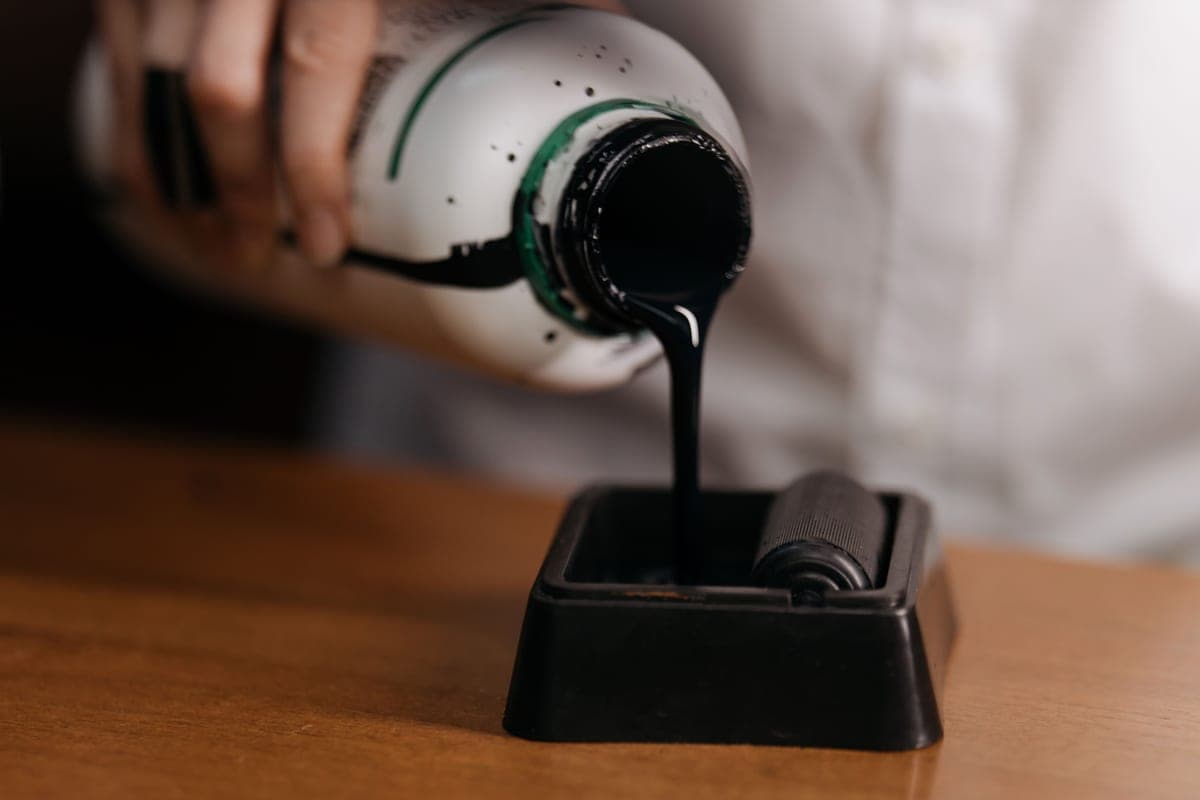
There is no white sublimation ink, and the dye is translucent. On a dark shirt that is the end of the conversation.
Heads up: Mat & Blade earns a commission from qualifying purchases made through the links on this page, at no extra cost to you. It never changes which products we recommend or how we rank them. Read the full disclosure.
No. Sublimation needs a white or very light substrate, and there is no workaround that keeps the sublimation. The reason is simple: sublimation dye is translucent and there is no white sublimation ink. The printer leaves unprinted areas blank and expects the substrate to supply the white, exactly as a desktop printer does on paper. On a black shirt the design effectively disappears, and a dark navy or red shirt swallows everything except the darkest parts of the artwork. For a dark garment, use heat transfer vinyl, which is opaque, or a printed transfer method such as DTF, which carries its own white underbase.
Why light substrates are not a preference
Two separate facts combine into a hard limit, and it helps to keep them apart.
The dye is translucent
Sublimation dye bonds into polyester and becomes part of the fiber, which is why there is no hand feel. The consequence is that whatever color the fiber already is shows through. Yellow dye on a white shirt is yellow; the same yellow on a red shirt is a muddy orange, and on black it is invisible. This is identical to the way a desktop inkjet behaves on colored paper, for the same reason.
There is no white ink
A four-color sublimation set is cyan, magenta, yellow and black. White is the absence of printing — the substrate showing through. That is also why a white logo in your artwork prints as nothing at all. Printing technologies that work on dark garments all solve this by laying down a white layer first, and sublimation has no mechanism to do that.
What the workarounds actually are
| Method | What it really is | Works on black? | Hand feel | Honest verdict |
|---|---|---|---|---|
| Sublimation on white polyester | True sublimation | No | None | What the technology is for |
| Sublimating onto white HTV, then pressing that | Sublimation plus a vinyl carrier | Yes | A vinyl film | Works; you are decorating with vinyl that happens to be printed |
| Sublimating glitter or specialty HTV | Same idea, textured carrier | Yes | Noticeable | A real technique, with a real thickness |
| Inkjet transfer paper for dark fabric | Pigment ink plus an opaque coating | Yes | Noticeable | Not sublimation at all |
| DTF transfers | Printed film with a white underbase | Yes | Light film | The technology designed for this job |
The sublimation-onto-white-HTV route deserves a fair hearing because it genuinely works: you print your design onto a sublimation-compatible white vinyl, press that vinyl onto the dark shirt, and you have a full-color design on black. What you have actually made is a vinyl transfer with a printed image on it, with a vinyl film's thickness and a vinyl film's eventual wear. It is a good answer for a small number of complex designs and a poor answer for a production line. Sublimation HTV versus DTF compares it directly with the printed-film route.
What to use instead

1. Best for bold and lettered designs on a dark shirt
Siser EasyWeed HTV
Siser · Currently sold · Verified 2026-09-27
The straightforward answer for dark garments. Heat transfer vinyl is an opaque film, so white vinyl on a black shirt is genuinely white — which is precisely the thing sublimation cannot do. Siser rates EasyWeed for cotton, polyester and blends, it weeds cleanly on fine detail, and it is the cheapest route to a dark-shirt design because no printer is involved. Each color is a separate cut layer, so this suits logos, lettering and flat-color artwork rather than photographs.
What works
- Weeds more cleanly than almost anything else at this price
- Thin enough that a layered design does not feel like a plastic patch
- Siser publishes clear time and temperature guidance for it
- Sold in single sheets, so you can try three colors without buying three rolls
What does not
- Matte only — no gloss, glitter or specialty finish in the base line
- Sheets cost more per square inch than buying a roll
- Still needs real heat and pressure; a household iron gives mixed results
Not for you if
You want a glitter or holographic finish. That is a different Siser product line, not EasyWeed.
Key specs
- Type
- Heat transfer vinyl (HTV) — for fabric
- Fabric compatibility
- Siser rates it for cotton, polyester and cotton/poly blends
- Thickness
- Siser published 90 microns / 3.5 mils
- Application
- Siser lists 305°F for 10-15 seconds at medium pressure
- Carrier
- Pressure-sensitive clear carrier sheet
- Finish
- Semi-gloss — EasyWeed Matte is a separate Siser line
Price as of November 12, 2026
#ad · affiliate link · we never show a price we cannot verify
2. Best for sublimating successfully by changing the blank
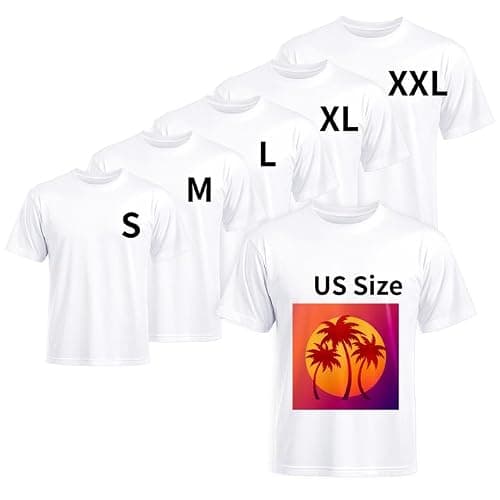
Polyester Blank Shirts
Joyclub · Currently sold · Verified 2026-09-27
If the output has to be sublimation, the blank has to be white or very light — so this is the pick that makes the method work rather than a workaround for the method failing. White polyester gives you full color saturation, zero hand feel and a print that cannot crack. Buying blanks that state the fiber content keeps your settings reproducible, and white blanks also sidestep dye migration entirely, which is the second problem colored polyester brings.
What works
- The only fabric sublimation genuinely bonds to
- Result has no hand feel at all — the design is in the fabric
- Will not crack or peel the way a vinyl transfer can
What does not
- White or near-white only — this is a hard physical limit
- 100% polyester feels different from a cotton tee
- Blends fade the design, which you may or may not want
Not for you if
You want a soft cotton shirt or a dark shirt. Use heat transfer vinyl instead — it works on both.
Key specs
- Fabric
- 100% polyester, or a high-polyester blend
- Color
- White or very light — dark fabric will not work
- Why polyester
- Sublimation ink bonds to polymer, not to cotton fiber
- Blend behavior
- A 65/35 blend gives a faded, vintage-looking result
Price as of November 12, 2026
#ad · affiliate link · we never show a price we cannot verify
3. Best for a run of dark shirts where cost per garment decides it
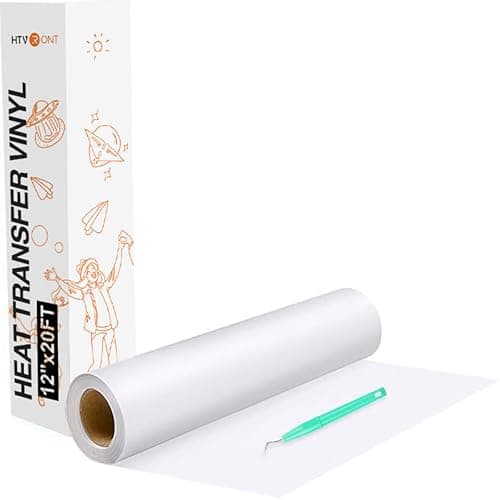
HTVRONT HTV Rolls
HTVRONT · Currently sold · Verified 2026-09-27
Dark garments are often the bulk of an order — black tees and black hoodies outsell most other colors — so cost per square foot matters here. HTVRONT rates its standard rolls for cotton, polyester and blends and roll pricing is a large step down from sheets. The trade-offs are weeding behavior on fine detail and consistency between rolls, which on a white-on-black design is more visible than on a subtle one, so test a piece from each new roll.
What works
- Far cheaper by area than sheet-format premium HTV
- Wide color and finish range including glitter and holographic
- Rolls mean you stop rationing material and start practicing
What does not
- Fine detail weeds less cleanly than Siser EasyWeed
- Batch-to-batch consistency is less predictable
- You are committing to a whole roll of one color
Not for you if
Your first project is a very fine script design. Learn to weed on EasyWeed first, then switch to save money.
Key specs
- Type
- Heat transfer vinyl (HTV)
- Format
- Rolls, typically 12 in wide
- Fabric compatibility
- Rated for cotton, polyester and blends
- Finish
- Matte, plus glitter and specialty lines
- Value
- Lowest cost per square inch of the three HTVs here
Price as of November 12, 2026
#ad · affiliate link · we never show a price we cannot verify
Dye migration: the other dark-fabric problem
Worth knowing even though it is a vinyl problem rather than a sublimation one, because it bites exactly the people who move from sublimation to HTV on dark polyester. The dye in colored polyester is itself a sublimation dye, so under press heat it turns to gas and travels into whatever is sitting on top of it. White vinyl on a red polyester shirt can turn pink hours later or after the first wash.
Mitigations are: use cotton blanks where you can, press as cool and as briefly as the vinyl allows, or buy a vinyl sold specifically as dye-blocking — Siser's Sub Block film exists for this. The best HTV for polyester covers the problem in full, and it is the reason a dark cotton tee is an easier first project than a dark polyester one.
Deciding, in one question
Is the garment color negotiable? If yes, buy white or very light polyester blanks and sublimation does what it is brilliant at — vivid, permanent, weightless prints. If no, sublimation is off the table and the choice is between vinyl for flat-color designs and a printed transfer for photographic ones. Is sublimation worth it is worth reading before the printer purchase if dark garments are most of what you plan to make, because that fact alone can change the answer.
Common questions
Can you sublimate on black shirts?
Is there sublimation paper for dark fabric?
How do you get a full-color design onto a black shirt?
Can you sublimate onto white HTV and press it on a dark shirt?
What is the darkest shirt you can sublimate on?
Sources
- Siser North America — HTV product range — Confirmed EasyWeed and the current Siser HTV range, including EasyWeed Sub Block, the film Siser sells specifically for blocking dye - checked 10 October 2026
- Sawgrass — SG500 product page — Confirmed a current dedicated sublimation printer and its four-color CMYK ink system, i.e. no white ink - checked 10 October 2026
How we picked
We verify every product is currently sold by reading the manufacturer's own catalog, compare published specifications rather than marketing copy, and rank on what a first-time buyer has to decide. We do not run lab tests and we do not claim to, and commission never affects the order.
Read this next
Sublimation vs HTV
The category-defining comparison: what each technology can and cannot do, and which to start with.
Can You Sublimate on Cotton?
Why sublimation ink will not stay in cotton fiber, what the sprays and coatings really achieve, and the two methods that do work on a cotton shirt.
Sublimation HTV vs DTF
The two methods that put full-color prints on cotton and dark garments, and which one suits a setup you already own.
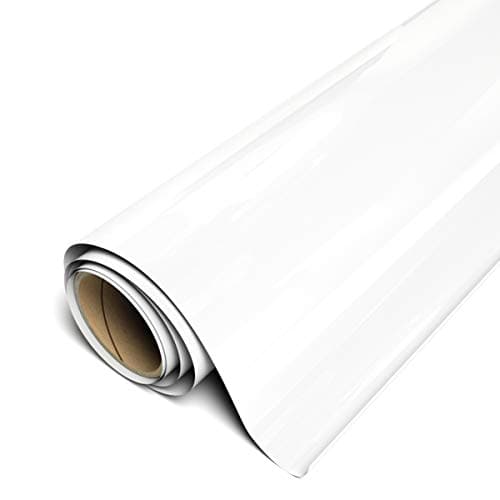
The Best Heat Transfer Vinyl for Polyester
Which heat transfer vinyl actually holds on 100% polyester and performance fabric, the heat ceiling that stops it scorching, and what dye migration does to a colored shirt.
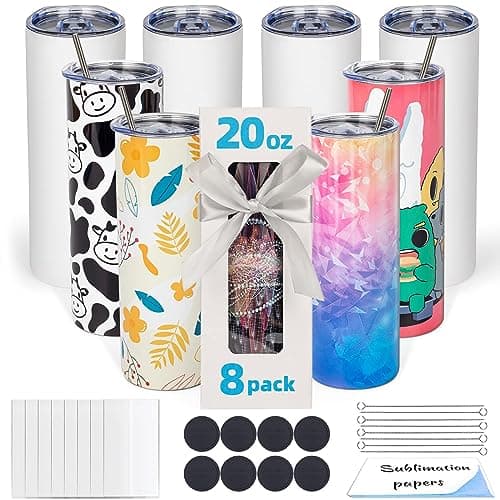
The Best Sublimation Blanks
Which blanks genuinely take sublimation, which are most forgiving, and what to check before buying.
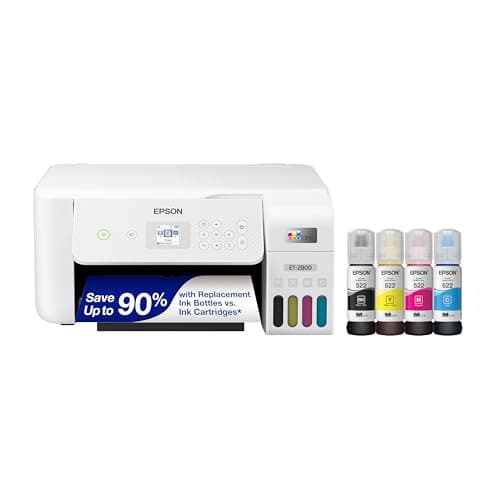
Is Sublimation Worth It?
What sublimation is genuinely worth it for, what it cannot do at any price, and the full cost of getting started.
Back to Sublimation.