
Can You Sublimate on Cotton?
Not in any way that survives a wash. This is chemistry rather than technique, and no setting fixes it.
Heads up: Mat & Blade earns a commission from qualifying purchases made through the links on this page, at no extra cost to you. It never changes which products we recommend or how we rank them. Read the full disclosure.
No — not in any way that survives washing. Sublimation works by turning dye into a gas that bonds into polyester polymer. Cotton is cellulose and has no polymer for the dye to bond into, so the ink sits on the surface of the fiber instead of inside it and washes out progressively from the first cycle. The print looks acceptable when you lift the press and noticeably faded after two or three washes. This is a chemistry limit rather than a settings problem: no temperature, time, pressure, paper or ink brand changes it. If the garment must be cotton, use heat transfer vinyl; if the output must be sublimation, use a polyester blank.
Why it does not work, in one paragraph of chemistry
Sublimation dye is a disperse dye. Under heat it converts from solid to gas without passing through a liquid phase, and in that gaseous state it penetrates polyester, which has softened just enough to receive it. As everything cools, the polymer closes around the dye and the color is physically inside the fiber — which is why a sublimated polyester shirt has no hand feel, cannot crack, cannot peel, and does not fade in normal use.
Cotton is a cellulose fiber. It does not soften and close around a gas, so there is nothing for the dye to key into. What you get instead is dye deposited on the fiber surface, held there by nothing but proximity. Water and detergent lift it off, and each wash takes more. The same physics in reverse is what makes sublimation so good on polyester — see sublimation versus HTV for the comparison and sublimation for beginners for the whole process.
What about blends?
Blends are a partial answer, and worth understanding precisely. On a 50/50 poly-cotton shirt, the sublimation dye bonds to the polyester half and washes out of the cotton half. The result is a faded, vintage-looking print — about half the intensity of the same design on 100% polyester — which then stays that way rather than continuing to fade.
| Fabric | What happens | Verdict |
|---|---|---|
| 100% polyester, white or light | Dye bonds into the fiber; vivid, permanent, no hand feel | What sublimation is for |
| 65/35 poly-cotton | Mostly bonds; slightly softened colors | Usable, and a deliberate look |
| 50/50 poly-cotton | Half bonds; distinctly faded vintage result | Fine if that is the look you want |
| 100% cotton | Nothing bonds; washes out progressively | Does not work |
| Tri-blend with rayon | Unpredictable; rayon takes dye differently again | Test before committing a batch |
The sprays and coatings, honestly
Products sold to make cotton sublimatable do exist and they do something. What they do is coat the fabric in a polymer layer, which the dye then bonds to — so you are not sublimating cotton, you are sublimating a plastic film that is sitting on top of cotton.
That matters because the result inherits the film's properties rather than cotton's. There is a hand feel where the coating is, the coated area can look slightly shiny or discolored against the uncoated shirt, coverage is only as even as your spraying, and the coating's own wash durability becomes the limit. It is a workable novelty for a one-off and a poor basis for anything you sell. If you need full-color artwork on cotton, the technology designed for that job is a printed transfer — sublimation HTV versus DTF covers the realistic options.
What to use instead
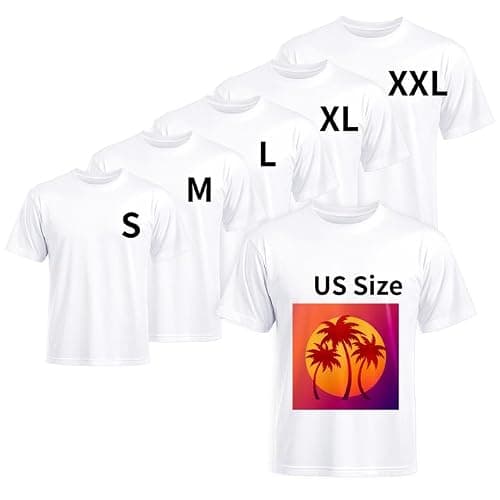
1. Best for making sublimation work instead of fighting it
Polyester Blank Shirts
Joyclub · Currently sold · Verified 2026-09-27
The simplest fix for a cotton problem is to stop using cotton. Sublimation ink bonds into polyester polymer, so a white or near-white polyester blank gives you the vivid, zero-hand-feel, crack-proof result sublimation is actually good at. Buying blanks that state the fiber content is what makes your settings reproducible, and polyester apparel has improved enough that a 100% polyester tee no longer has to feel like one. If you want sublimation output, this is the purchase that delivers it.
What works
- The only fabric sublimation genuinely bonds to
- Result has no hand feel at all — the design is in the fabric
- Will not crack or peel the way a vinyl transfer can
What does not
- White or near-white only — this is a hard physical limit
- 100% polyester feels different from a cotton tee
- Blends fade the design, which you may or may not want
Not for you if
You want a soft cotton shirt or a dark shirt. Use heat transfer vinyl instead — it works on both.
Key specs
- Fabric
- 100% polyester, or a high-polyester blend
- Color
- White or very light — dark fabric will not work
- Why polyester
- Sublimation ink bonds to polymer, not to cotton fiber
- Blend behavior
- A 65/35 blend gives a faded, vintage-looking result
Price as of November 12, 2026
#ad · affiliate link · we never show a price we cannot verify
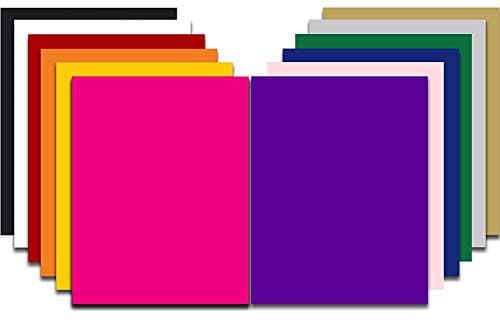
2. Best for decorating cotton properly
Siser EasyWeed HTV
Siser · Currently sold · Verified 2026-09-27
If the garment has to be cotton, heat transfer vinyl is the technology built for it. Siser rates EasyWeed for cotton, polyester and blends, it weeds cleanly on fine detail, and it survives washing on a cotton tee indefinitely when applied correctly. It is also the cheapest route in — a roll of vinyl and a heat source, with no printer involved at all. The trade-off against sublimation is that each color is a separate cut layer, so photographic artwork is not a vinyl job.
What works
- Weeds more cleanly than almost anything else at this price
- Thin enough that a layered design does not feel like a plastic patch
- Siser publishes clear time and temperature guidance for it
- Sold in single sheets, so you can try three colors without buying three rolls
What does not
- Matte only — no gloss, glitter or specialty finish in the base line
- Sheets cost more per square inch than buying a roll
- Still needs real heat and pressure; a household iron gives mixed results
Not for you if
You want a glitter or holographic finish. That is a different Siser product line, not EasyWeed.
Key specs
- Type
- Heat transfer vinyl (HTV) — for fabric
- Fabric compatibility
- Siser rates it for cotton, polyester and cotton/poly blends
- Thickness
- Siser published 90 microns / 3.5 mils
- Application
- Siser lists 305°F for 10-15 seconds at medium pressure
- Carrier
- Pressure-sensitive clear carrier sheet
- Finish
- Semi-gloss — EasyWeed Matte is a separate Siser line
Price as of November 12, 2026
#ad · affiliate link · we never show a price we cannot verify
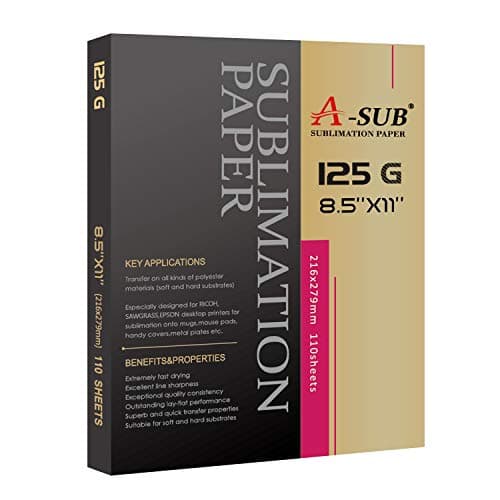
3. Best for getting the most out of the polyester you do use
A-SUB Sublimation Paper
A-SUB · Currently sold · Verified 2026-09-27
If you are moving your sublimation work onto polyester blanks, the paper is worth a moment's thought because it controls how much ink the sheet holds and how completely it releases under heat. A-SUB is the paper most beginners are pointed at — widely stocked, consistent enough to rule out as a variable, and cheap enough to practice with. It does nothing whatsoever to help on cotton, and no paper does.
What works
- Consistent results across shirts, mugs and hard blanks
- Dries quickly enough that sheets do not smudge when stacked
- Cheap enough to practice with
What does not
- Only works with sublimation ink — regular ink will not transfer
- Printing on the wrong side wastes the sheet and the ink
Not for you if
You are printing on dark fabric. Sublimation does not work on dark fabric at all, whatever paper you use.
Key specs
- Type
- Dye-sublimation transfer paper
- Weight
- Commonly 125 gsm
- Sizes
- Letter and larger sheets
- Transfer rate
- High — most of the ink releases to the blank
- Printed side
- One side only — the coated side
Price as of November 12, 2026
#ad · affiliate link · we never show a price we cannot verify
Choosing between the two real routes
| HTV on cotton | Sublimation on polyester | |
|---|---|---|
| Works on cotton | Yes | No |
| Works on dark fabric | Yes | No — the dye is translucent |
| Hand feel | A thin film you can feel | None at all |
| Full-color photographic artwork | No — each color is a cut layer | Yes |
| Can crack or peel | Eventually, if misapplied | Never |
| Equipment needed | Cutting machine and a heat source | Printer, ink, paper and a heat source |
| Cost to start | Lower | Higher |
The practical rule: let the garment choose the method. Cotton tee, bold logo, dark shirt — that is a vinyl job, and the best HTV for cotton covers the material. White polyester performance tee, photographic design, no hand feel wanted — that is a sublimation job. Trying to force either technology onto the other one's fabric is how people end up with a drawer of failed shirts.
Common questions
Can you sublimate on 100% cotton?
Why does sublimation wash out of cotton?
Do sublimation sprays for cotton work?
What happens if you sublimate a 50/50 poly-cotton shirt?
What should you use on cotton instead of sublimation?
Sources
- Siser North America — HTV product range — Confirmed EasyWeed and the wider current Siser HTV range, including the Sub Block film sold specifically for dye-blocking - checked 10 October 2026
- Sawgrass — SG500 product page — Referenced as a current dedicated sublimation printer while confirming that sublimation is marketed for polyester and polymer-coated substrates - checked 10 October 2026
How we picked
We verify every product is currently sold by reading the manufacturer's own catalog, compare published specifications rather than marketing copy, and rank on what a first-time buyer has to decide. We do not run lab tests and we do not claim to, and commission never affects the order.
Read this next
Sublimation vs HTV
The category-defining comparison: what each technology can and cannot do, and which to start with.
Sublimation for Beginners
The complete beginner walkthrough: how it works, what it needs, and the first-transfer process.
Can You Sublimate on Dark Shirts?
Why sublimation needs a white or very light substrate, what sublimation paper for dark fabric actually is, and the methods that do print on black shirts.
The Best HTV Vinyl for Cotton Shirts
Which heat transfer vinyl to buy for 100% cotton tees, why cotton is the forgiving fabric, and the three things that actually ruin a cotton press.
Sublimation HTV vs DTF
The two methods that put full-color prints on cotton and dark garments, and which one suits a setup you already own.
Is Sublimation Worth It?
What sublimation is genuinely worth it for, what it cannot do at any price, and the full cost of getting started.
Back to Sublimation.