The Best Glitter HTV for Beginners
Glitter heat transfer vinyl is not just iron-on with sparkle in it. It is three to four times thicker, it presses hotter and longer, and the manufacturer of the best one tells you not to layer it.
Heads up: Mat & Blade earns a commission from qualifying purchases made through the links on this page, at no extra cost to you. It never changes which products we recommend or how we rank them. Read the full disclosure.
Buy Siser Glitter if you are buying one glitter film, buy the Cricut sampler if you just want to try glitter on a Cricut, and buy a cheap fifteen-sheet multipack if you expect to waste a few learning. And before you buy any of them, know the rule that most glitter tutorials get wrong: Siser's own product page states it is not recommended to layer Glitter on itself or other materials. Glitter heat transfer vinyl is not ordinary iron-on with sparkle added. Siser publishes its Glitter at 325 microns against 90 microns for standard EasyWeed — roughly three and a half times the thickness — and that single number explains almost everything that is different about working with it.
Quick picks
| # | Product | Best for | Price |
|---|---|---|---|
| 1 |  Siser Glitter HTVThe glitter film to buy if you buy one: Siser publishes real numbers for it, the flakes are sealed into the... | The one to buy if you buy one | $9.49 · View on Amazon Price as of November 12, 2026 #ad · affiliate link · we never show a price we cannot verify |
| 2 | 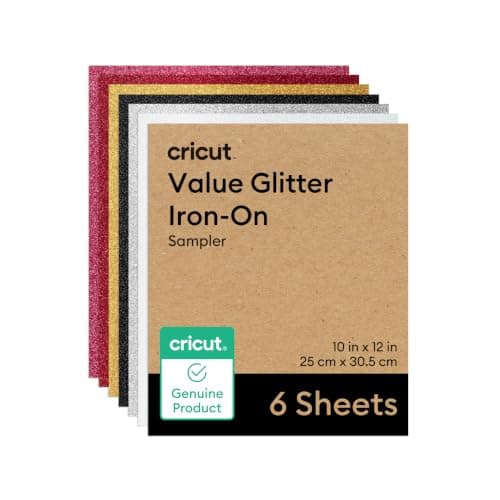 Cricut Value Glitter Iron-On SamplerSix colors in one pack with a named setting in Cricut's own Heat Guide — the lowest-risk way to find out wh... | A Cricut owner's first glitter project | $13.99 · View on Amazon Price as of November 12, 2026 #ad · affiliate link · we never show a price we cannot verify |
| 3 | 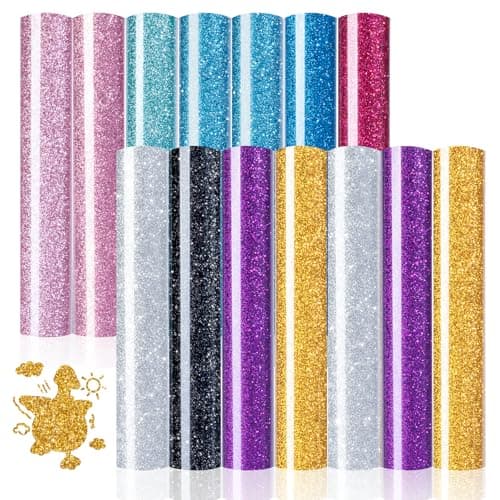 HTVRONT Glitter HTV SheetsThe cheapest honest way to practice a material that punishes practice: fifteen sheets means you can ruin th... | Practicing on, in fifteen colors | $16.99 · View on Amazon Price as of November 12, 2026 #ad · affiliate link · we never show a price we cannot verify |
| 4 | 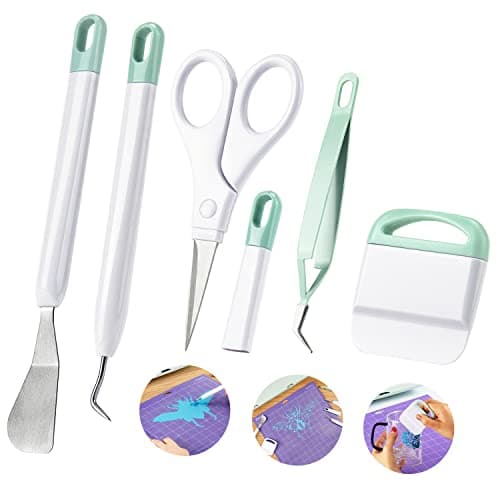 Ecraft Vinyl Weeding Tool SetThe single accessory that changes a beginner's experience most — weeding with a pin is miserable, and a hoo... | The purchase glitter makes non-optional | $7.99 · View on Amazon Price as of November 12, 2026 #ad · affiliate link · we never show a price we cannot verify |
| 5 | 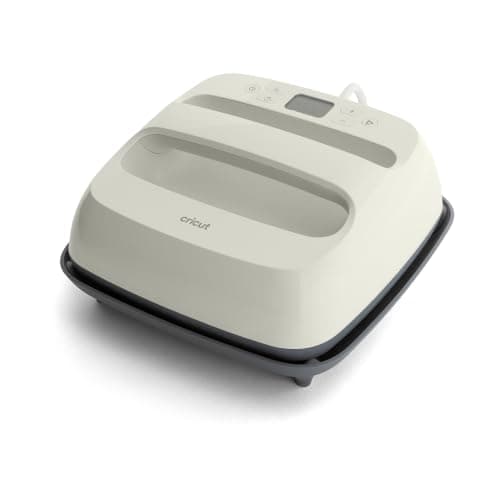 Cricut EasyPress SEThe current EasyPress and the easiest first heat source: controlled temperature, a flat even plate, and it ... | Holding 320°F for a full twenty seconds | $79.00 · View on Amazon Price as of November 12, 2026 #ad · affiliate link · we never show a price we cannot verify |
| 6 | 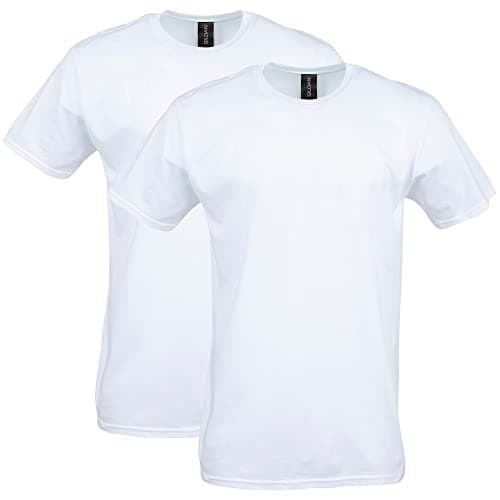 Gildan Softstyle Cotton T-ShirtsHeat transfer vinyl is happiest on cotton or a cotton blend, and a mid-weight ring-spun tee presses better ... | The fabric glitter behaves best on | $12.66 · View on Amazon Price as of November 12, 2026 #ad · affiliate link · we never show a price we cannot verify |
Tap any row to jump to the full write-up. Prices come from Amazon on the date stamped on each button and can change after that — check the listing before you buy.
What we judged these on
Glitter HTV is one of the few craft materials where the marketing photo tells you nothing useful — every sheet of it sparkles in a product shot. So the criteria below are the ones that actually show up on a finished garment three washes later, in the order they matter.
- Does the glitter shed? In a good glitter film the flakes are bonded into the polyurethane. In a bad one they sit near the surface, and you find out because there is glitter on your cutting mat, inside your press and in the washing machine. This is the single biggest quality divide in the category and it is invisible until you cut.
- Does the manufacturer publish a thickness, a temperature and a time? Glitter needs more heat and more dwell than standard HTV, and a brand that will not tell you how much is asking you to guess on a material that punishes guessing. Published numbers were a hard requirement for our top pick.
- Can you weed it? Thickness fights you here. Thicker film resists tearing cleanly along a cut line, so interior counters in letters lift badly and fine detail lifts not at all. A glitter film that is pleasant to weed is worth more than one that is marginally shinier.
- What does it do to the hand of the garment? A 325 micron film is a real physical presence on a shirt. On a left-chest logo that is fine. On a full back print it is a stiff panel, and no brand of glitter escapes this — it is a property of the category.
- Can it be layered? Mostly no, and the manufacturers say so. This matters because a huge amount of published glitter advice assumes you can stack it.
- Is it certified for the garment you intend? CPSIA certification is the one to look for if the shirt is going on a child. It is published for Siser Glitter and not published for the cheaper multipacks.
What we deliberately did not judge on: how it photographs, how many colors a brand claims, and "ease of use" claims on a listing. Every glitter film in this category is harder to use than standard heat transfer vinyl, and any listing that says otherwise is selling rather than informing.
1. Best for the one to buy if you buy one
Siser Glitter HTV
Siser · Currently sold · Verified 2026-11-05
This wins on the thing that actually matters with glitter: Siser publishes real numbers and real certifications for it, and the sparkle is bonded into the PU film rather than sitting on the surface, so it does not shed flakes onto your mat, your press or the inside of a washing machine. Siser states 325 microns, a 320°F / 160°C application at medium pressure for 15-20 seconds, a warm peel at least 15 seconds off the press, ratings for cotton, polyester, poly/cotton blends and leather, and CPSIA, OEKO-TEX Standard 100, VeganOK and REACH certification. It is also sold by the single sheet, so a color experiment costs very little. Honest cons: at 325 microns it is thick, and a large solid design does feel like a panel rather than part of the shirt; Siser explicitly does not recommend layering it, on itself or anything else; 320°F is hotter than ordinary HTV and too hot for some thin synthetics; and because sheets are sold per color, a multi-color project means buying several listings.
What works
- Siser publishes an exact thickness, temperature, time and pressure for it
- Glitter is bonded into the film, so it does not shed flakes into your mat or press
- CPSIA certified, which is the certification that matters for kids' clothing
- Siser states white Glitter can be sublimated directly onto
- Sold per sheet, so you can try a color without committing to a roll
What does not
- At 325 microns it is thick — a large design feels like a panel on the shirt
- Siser does not recommend layering it, so a multi-color glitter design is out
- 320°F is hotter than standard HTV and too hot for some thin synthetics
- Sheets are sold by the color, so a multi-color project means several listings
Not for you if
You want to stack glitter over another color. Siser explicitly does not recommend layering Glitter, and no press setting changes that.
Key specs
- Type
- Glitter heat transfer vinyl — PU composition
- Thickness
- Siser published 325 microns — roughly 3.6x standard EasyWeed
- Application
- Siser lists 320°F / 160°C, medium pressure, 15-20 seconds
- Peel
- Warm — Siser says at least 15 seconds off the press
- Fabric compatibility
- Siser rates it for cotton, polyester, poly/cotton blends and leather
- Layering
- Siser does not recommend layering Glitter on itself or other materials
- Certification
- CPSIA certified, OEKO-TEX Standard 100, VeganOK, REACH compliant
Price as of November 12, 2026
#ad · affiliate link · we never show a price we cannot verify
2. Best for a cricut owner's first glitter project
Cricut Value Glitter Iron-On Sampler
Cricut · Currently sold · Verified 2026-11-05
The lowest-risk way to find out whether you enjoy working with glitter at all, which is a real question — plenty of people try it once and go back to standard HTV. Cricut lists six sheets at 10 x 12 inches in White, Silver Holographic, Black, Gold, Red and Pink, with a clear heat-resistant backer that makes lining up a design easy, and compatibility with Maker 3 and 4 and Explore 3, 4 and 5. Its real advantage is the settings lookup: Cricut's own Heat Guide gives you a named temperature and time for its own material against its own press, instead of a range to guess inside. Honest cons: Cricut publishes no thickness, temperature or press time on the product itself, so you cannot check the numbers before you buy; 10 x 12 inch sheets are smaller than a Siser sheet; it costs more per square inch than a third-party multipack; and Cricut's own guidance on the roll version warns against layering it with other textured vinyl.
What works
- Six colors for the price of about one premium roll, so experiments cost little
- Cricut's Heat Guide gives a named setting for its own material and press
- Clear heat-resistant backer makes lining a design up straightforward
- Sheets rather than a roll, so nothing is left curling in a cupboard
What does not
- Cricut publishes no thickness, temperature or press time on the listing itself
- 10 x 12 in sheets are smaller than the 12 x 20 in a Siser sheet gives you
- Costs more per square inch than a third-party multipack
- Cricut's own guidance on the roll version warns against layering it with other textured vinyl
Not for you if
You want published specifications you can check before you press. Cricut sends you to its interactive Heat Guide instead of printing numbers.
Key specs
- Type
- Glitter heat transfer vinyl (sold as iron-on)
- Format
- Cricut lists 6 sheets at 10 x 12 in
- Colors
- Cricut lists White, Silver Holographic, Black, Gold, Red and Pink
- Settings source
- Looked up by press and material in Cricut's own Heat Guide
- Carrier
- Cricut describes a clear, heat-resistant backer
- Machine compatibility
- Cricut lists Maker 3 and 4 and Explore 3, 4 and 5
Price as of November 12, 2026
#ad · affiliate link · we never show a price we cannot verify
3. Best for practicing on, in fifteen colors
HTVRONT Glitter HTV Sheets
HTVRONT · Currently sold · Verified 2026-11-05
Glitter punishes practice — it is thick, it weeds badly, and your first two attempts will probably go in the trash — so the cheapest sensible way through the learning curve is a big multipack you do not mind wasting. Fifteen sheets at 12 x 10 inches is enough to ruin three, test-cut two and still have a project left, and the sheet size drops onto a standard 12 x 12 mat with no trimming. HTVRONT's own glitter guide states 15-20 seconds at medium pressure, and its general HTV guidance is 300-320°F / 150-160°C. Honest cons: HTVRONT publishes no thickness and no glitter-specific temperature, and its own page tells you to check the outer packaging for the authoritative figure — which means the real setting arrives with the box; color and finish consistency between sheets in a pack is not guaranteed; and no manufacturer certification is published, which matters if the garment is for a child.
What works
- Fifteen colors at a price where a wasted sheet is not a problem
- HTVRONT publishes press time and pressure guidance for glitter on its own site
- Sheet size suits a standard 12 x 12 cutting mat with no trimming
- Cheap enough to use for test cuts before committing a premium sheet
What does not
- HTVRONT publishes no thickness and no glitter-specific temperature
- Its own guidance says to check the outer packaging, so the authoritative number ships with the box
- Color and finish consistency between sheets in a pack is not guaranteed
- No manufacturer certification published, which matters if you are making kids' clothing
Not for you if
You are pressing something you will sell or give to a child. Buy a film whose certifications and settings the manufacturer publishes.
Key specs
- Type
- Glitter heat transfer vinyl sheets
- Format
- 15 sheets at 12 x 10 in
- Application
- HTVRONT's own glitter guide states 15-20 seconds at medium pressure
- Temperature
- HTVRONT's general HTV guidance is 300-320°F / 150-160°C; no glitter-specific figure is published
- Compatibility
- Sold for Cricut, Silhouette and any cutter that takes HTV
Price as of November 12, 2026
#ad · affiliate link · we never show a price we cannot verify
4. Best for the purchase glitter makes non-optional
Ecraft Vinyl Weeding Tool Set
ecraft · Currently sold · Verified 2026-09-27
On standard HTV a weeding hook is a convenience. On glitter it is the difference between a finished shirt and a wasted sheet, and that is purely a function of thickness: a 325 micron film resists tearing along a cut line in a way a 90 micron film does not, so the little interior pieces of an 'a' or an 'e' will not lift with a fingernail. A hook to start the lift and tweezers to pull the piece clear is the whole technique. Honest cons: a cheap multi-tool set always has one or two tools you will never touch, the points dull with use, and no tool rescues a cut that was too shallow in the first place — which on glitter is the most common failure of all.
What works
- Turns the most tedious step into a manageable one
- The scraper doubles as your transfer-tape burnishing tool
- Cheap, and a set lasts years
What does not
- Cheap sets have soft points that dull quickly
- More pieces than you will actually use
Not for you if
Nothing — if you cut vinyl, you need at least a hook.
Key specs
- Typical set
- Weeding hook, fine tweezers, scraper, spatula, scissors
- Used for
- Removing the vinyl you did not cut out of the design
- Also fits
- Every brand of machine — nothing here is Cricut-specific
Price as of November 12, 2026
#ad · affiliate link · we never show a price we cannot verify
5. Best for holding 320°f for a full twenty seconds
Cricut EasyPress SE
Cricut · Currently sold · Verified 2026-09-27
Glitter is the material that most clearly exposes a weak heat source, because it asks for both a higher temperature and a longer dwell than ordinary iron-on. Siser's published setting is 320°F for 15-20 seconds at medium pressure, with EasyPress users adding approximately 30 degrees, and a household iron cannot hold a stated temperature evenly across a design for that long — the edges go down and the middle does not, or the middle goes down and lifts a week later. A flat plate that reaches and keeps a set temperature across the whole design solves the problem in one purchase. Honest cons: it is slower than a clamshell press on a run of shirts, you supply the pressure yourself so consistency depends on you, and it will not close around a curved blank.
What works
- Holds a set temperature, which a household iron does not
- Even plate contact across the whole design
- Cricut's Heat Guide gives exact settings for it by material
- Stores away, which matters more than people expect
What does not
- You supply the pressure by leaning on it, so results depend on your technique
- Costs more than a comparably sized clamshell press
- Small plates mean multi-press passes on a big design
Not for you if
You are pressing more than a handful of shirts a week. Leaning on a handheld press twenty times an evening gets old fast — buy a clamshell.
Key specs
- Type
- Handheld heat press
- Plate sizes
- 12 x 10 in and 9 x 9 in in the SE line
- Temperature
- Set precisely; holds it, unlike a household iron
- Timer
- Built in, with an audible finish
- Storage
- Shelf or drawer — no permanent bench space
Price as of November 12, 2026
#ad · affiliate link · we never show a price we cannot verify
6. Best for the fabric glitter behaves best on
Gildan Softstyle Cotton T-Shirts
Gildan · Currently sold · Verified 2026-09-27
Worth a line because the garment decides more here than the brand of film does. Glitter HTV is thick and rigid, so it wants a fabric that does not stretch much — and a stable cotton or cotton-rich tee is exactly that. Put a big glitter design on a performance knit or a legging and the fabric moves while the film does not, which cracks it along the stress lines no matter how well you pressed it. Honest cons: 100% cotton is not the right base for sublimation if you ever want to mix techniques, dark colors need a test press because cheap dyes can scorch, and blank weights vary between batches so your press pressure will not transfer perfectly from one order to the next.
What works
- Any color works, which sublimation cannot claim
- Soft and familiar to wear
- Cheap in multi-packs, so practice is affordable
What does not
- Cotton will not take sublimation ink at all
- Very heavy or textured cotton gives uneven HTV adhesion
- Needs a pre-press to drive out moisture before the design goes on
Not for you if
You are sublimating. Sublimation needs polyester, and cotton simply will not hold the ink.
Key specs
- Fabric
- Cotton or cotton/poly blend
- Works with
- Heat transfer vinyl — not sublimation
- Weight
- Softstyle G64000 is 4.5 oz ring-spun — it presses flatter than heavy open-weave cotton
- Color
- Any color, including dark — unlike sublimation
Price as of November 12, 2026
#ad · affiliate link · we never show a price we cannot verify
The thickness number explains everything else
Siser publishes Glitter at 325 microns. For context, the same manufacturer publishes standard EasyWeed at 90 microns and its EcoStretch at 80. So glitter is not a variant of ordinary HTV in any meaningful sense — it is a different kind of material that happens to be applied the same way, and almost every practical difference traces back to that one figure.
| Siser Glitter | Siser EasyWeed (for scale) | |
|---|---|---|
| Published thickness | 325 microns | 90 microns / 3.5 mils |
| Application temperature | 320°F / 160°C | 305°F / 150°C |
| Press time | 15-20 seconds | 10-15 seconds |
| Pressure | Medium | Medium |
| Peel | Warm — at least 15 seconds off the press | Hot or cold |
| Layerable | Not recommended, on itself or other materials | Yes |
| Rated fabrics | Cotton, polyester, poly/cotton blends, leather | Cotton, polyester, poly/cotton blends, leather |
| Certifications | CPSIA, OEKO-TEX Standard 100, VeganOK, REACH | CPSIA |
| Note | Siser states white Glitter can be sublimated onto directly | EasyPress users add approx. 30° |
Read down that table and the consequences line up. More thickness means more thermal mass, which is why the temperature goes up 15 degrees and the time goes up by a third. More thickness means the carrier needs the adhesive to be at the right viscosity when you pull it, which is why the peel is warm rather than hot-or-cold — Siser specifies at least 15 seconds off the press. And more thickness means a stack of two layers is a rigid plate on a flexible garment, which is why layering is not recommended.
The layering problem, and the film that used to solve it
This is where glitter advice on the internet is most often wrong, and it is worth being precise about. Siser's own Glitter page states plainly that it is not recommended to layer Glitter on itself or other materials. Cricut's published guidance for its Value Glitter Iron-On roll takes a slightly softer line — it describes the material as good for layering but specifically not recommended for layering with other textured vinyl. Neither manufacturer supports the thing people most want to do, which is put a glitter word on top of a solid-color shape.
There was a clean answer to this and it has gone away. Siser Sparkle was a 90 micron PU film with silver glitter specks embedded in it, published as layerable — "can be layered for ultimate bling", in Siser's own words — applied at a much gentler 305°F for 10-15 seconds with a hot or cold peel, and sold in fourteen colors including a Clear Sparkle you could lay over any other film. Siser's own product page now carries it as DISCONTINUED MATERIAL. Retail stock is still out there, so you can buy it today; you would be buying end-of-line stock for a technique you cannot repeat once the colors run out, which is a specific kind of mistake we would rather you made deliberately than by accident.
So the honest workaround for a layered look is not a layered build at all. Cut the glitter element and the solid element as separate, adjacent shapes that butt up against each other rather than overlap — the finished garment reads the same from two feet away and nothing is stacked. If you genuinely need stacked layers, do it in standard HTV instead: the best HTV for layering covers the stacking order and the two-to-three-second tack press that makes it work.
Cutting and weeding glitter without wrecking it
Three things change when you put glitter on the mat. The first is cut pressure: a 325 micron film needs more of it than your machine's default HTV setting assumes, and the single most common glitter failure is a cut that did not get through the film. Siser publishes cutter force values for its own plotters — 30-35 with a 45 degree blade, 25-30 with a 60 degree blade — and the useful part of that for a Cricut owner is the principle rather than the number: start from the glitter or iron-on-plus setting rather than plain iron-on, and run a test cut on a corner of the sheet every time.
The second is the blade. Glitter is abrasive, and a blade that has been cutting glitter will not cut fine detail in standard vinyl as cleanly afterward. It is not a reason to avoid glitter, but it is a reason to expect to replace a blade sooner than you otherwise would, and a reason to cut your delicate work before your glitter work rather than after. Our Cricut blade guide covers which blade belongs on which material.
The third is weeding, which is the part people underestimate. Thick film does not tear politely along a cut line, so interior pieces resist lifting and fine strokes resist lifting completely. Two practical adjustments make a large difference: design with heavier letterforms than you would choose for standard HTV, and weed glitter while it is still warm from the room rather than cold from a garage shelf. How to weed vinyl covers the technique in full, and the best weeding tools covers the hook-and-tweezers pairing that glitter makes mandatory.
Pressing it: the two settings that fail
Glitter fails in exactly two ways and both are setting errors rather than material faults. The first is under-pressing: not hot enough, not long enough, or not enough pressure, and the design lifts at the edges within a wash or two. Glitter's extra thickness means the heat has further to travel to reach the adhesive, which is the entire reason for 320°F and 15-20 seconds instead of the 305°F and 10-15 seconds you use for standard HTV. If you are coming to glitter from ordinary iron-on, your habitual setting is an under-press.
The second is peeling at the wrong moment. Siser specifies a warm peel at least 15 seconds off the press — not hot, not cold. Peel immediately and you pull adhesive that has not set; leave it until it is fully cold and the carrier fights you and can take glitter with it. If an area does lift, the fix is published and reliable: replace the cover sheet and re-press that area for 5-10 seconds. Our heat press temperature guide has the wider table by material, and how to use HTV covers the full press sequence from preheat to wash.
One genuinely useful thing only glitter does
Worth knowing because almost nobody mentions it: Siser states that white Siser Glitter can be sublimated onto directly. That matters because sublimation's hard limit is that it needs polyester or a polymer coating and does essentially nothing on cotton — which is why so many people buy a sublimation printer and then discover they cannot decorate the cotton shirts they already own. A white glitter film pressed onto a cotton garment gives you a sublimatable surface sitting on top of a fabric sublimation cannot touch, with a sparkle base underneath the print. If you have been reading sublimation versus HTV and wishing you did not have to choose, that is the one place the two techniques genuinely meet — and the Epson SureColor F170 review covers the cheapest printer actually sold for the job if you want to try it.
The verdict
Buy Siser Glitter. It is the only film in this category whose manufacturer publishes the thickness, the temperature, the time, the pressure, the peel window and the certifications, and the published numbers are what let you get it right on the first shirt instead of the third. The glitter is bonded into the film rather than sitting on it, so it does not shed; it is rated for the fabrics beginners actually press; and it is sold by the single sheet, so trying a color costs very little. Its honest limitations are real and they are limitations of glitter rather than of Siser: it is thick, it is not for layering, and 320°F is too hot for some thin synthetics.
If you already own a Cricut and the only question is whether you like glitter at all, the six-color Cricut sampler answers it for less money and with a named setting in Cricut's own Heat Guide, at the cost of any published specification you can check in advance. And if you expect to learn the hard way — which, with a material this thick, is the realistic expectation — a fifteen-sheet multipack is the sensible way to pay for that learning. Whichever you buy, the rules do not change: more heat, more time, a warm peel, heavier letterforms than you would use for standard vinyl, and no layering. Siser versus Oracal is the next step if you are still choosing brands across the whole vinyl range, and the best HTV vinyl is where to go if what you actually want is the easy, forgiving material rather than the sparkly one.
Common questions
What temperature do you press glitter HTV at?
Can you layer glitter HTV?
Why does my glitter HTV peel off after washing?
Is glitter HTV harder to cut than regular vinyl?
Does glitter HTV shed glitter?
Can you use glitter HTV on stretchy fabric?
Can you sublimate on glitter HTV?
Is Cricut glitter iron-on the same as Siser Glitter?
Sources
- Siser Glitter — Siser's own material page — Siser's published figures used above — 325 microns, PU composition, rated for 100% cotton, 100% polyester, cotton/poly blends and leather, applied at 320°F/160°C with medium pressure for 15-20 seconds after a 2-3 second preheat, EasyPress users add approx. 30°, peel warm at least 15 seconds off the press, re-press lifting areas 5-10 seconds, CPSIA / OEKO-TEX Standard 100 / VeganOK / REACH / CA Prop 65 / recyclable, cutter force 30-35 with a 45° blade and 25-30 with a 60°, "not recommended to layer Glitter on itself or other materials", white Glitter can be sublimated onto directly, wait 24 hours before first wash - checked 5 November 2026
- Siser Sparkle — Siser's own material page — The source for the discontinuation above. Siser's page is headed DISCONTINUED MATERIAL and publishes 90 microns, PU, 14 colors including Clear Sparkle, "can be layered for ultimate bling", applied at 305°F/150°C with medium pressure for 10-15 seconds, hot or cold peel, cutter force 5-10 - checked 5 November 2026. Not carried as a pick on this page because it is end-of-line
- Cricut Value Glitter Iron-On Party Sampler — Cricut's own listing — Cricut's published details — 6 sheets at 10 x 12 in, colors White, Silver Holographic, Black, Gold, Red and Pink, glittery effect, outlasts multiple washes, clear heat-resistant backer, compatibility with Cricut Maker 3 and 4 and Explore 3, 4 and 5. Cricut publishes no thickness, temperature or press time on this listing - checked 5 November 2026
- Cricut Heat Guide — Cricut's interactive setting lookup, which is where its glitter iron-on temperature and time come from. It returns a figure per press and per base material rather than a single published number, which is why no Cricut temperature is quoted above
- HTVRONT — how to use glitter HTV — HTVRONT's own guidance used above — 15-20 seconds at medium pressure, preheat the press for about 3 minutes, set to the cotton or linen setting, and "different glitter HTV brands have different temperature settings, so remember to check the packaging instructions for accuracy" - checked 5 November 2026
- HTVRONT — what temperature to press HTVRONT — Source for HTVRONT's general HTV range of 300-320°F / 150-160°C. HTVRONT publishes no glitter-specific temperature on its own product pages, which is stated as a con on that pick rather than filled in with a guess - checked 5 November 2026
- Siser Glitter HTV — current retail listing — Listing confirmed live, title-checked against the Siser product name and reported in stock on 5 November 2026
- Cricut Value Glitter Iron-On Sampler — current retail listing — Listing confirmed live, title-checked against the Cricut product name and reported in stock on 5 November 2026
- HTVRONT Glitter HTV sheets — current retail listing — Listing confirmed live, title-checked against the HTVRONT product name and reported in stock on 5 November 2026
How we picked
We verify every product is currently sold by reading the manufacturer's own catalog, compare published specifications rather than marketing copy, and rank on what a first-time buyer has to decide. We do not run lab tests and we do not claim to, and commission never affects the order.
Read this next

The Best HTV Vinyl for Beginners
Which heat transfer vinyl weeds cleanly and presses forgivingly — and which to switch to later.
The Best HTV for Layering
Which heat transfer vinyl stacks without going stiff, the press order and timings for a layered design, and why the fourth layer is usually a mistake.
How to Use HTV
The full HTV process from cut to peel, plus a troubleshooting section for when it does not stick.
How to Weed Vinyl
Technique, tools and the reverse-weed trick that makes fine script designs manageable.
Siser vs Oracal
Why these two brands are not really rivals, and which one your project actually needs.
The Best Weeding Tools for Vinyl
The three tools that do the work, the ones you can skip, and the setting change that makes weeding easy.
Choosing HTV by Fabric Type
Which heat transfer vinyl suits each fabric, and the fabrics that resist adhesive regardless.
Back to Vinyl & Materials.