
The Best HTV for Towels
Heat transfer vinyl fails on towels for one reason: there is no flat surface for it to grip. Every pick and every technique below is aimed at that single problem.
Heads up: Mat & Blade earns a commission from qualifying purchases made through the links on this page, at no extra cost to you. It never changes which products we recommend or how we rank them. Read the full disclosure.
Buy Siser EasyWeed for towels — it is thin enough to settle into the pile instead of bridging across it, and it publishes the settings you need when a design lifts. For tea towels and linen, EcoStretch is the better pick because the weave is flat and the cloth gets wrung out constantly. The budget pick is HTVRONT's multipack, and towels are the right project for cheap film because your first attempts will fail. Whichever film you buy, buy a press mat: the pile is the problem, and the mat is what lets you flatten it. Everything else on this page follows from one fact about towels.
Quick picks
| # | Product | Best for | Price |
|---|---|---|---|
| 1 | 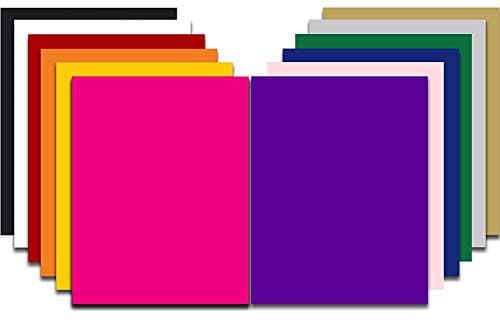 Siser EasyWeed HTVThe default heat transfer vinyl for beginners: it weeds cleanly, presses at a forgiving temperature, and is... | The film to buy for towels, bath or kitchen | $39.99 · View on Amazon Price as of November 12, 2026 #ad · affiliate link · we never show a price we cannot verify |
| 2 |  Siser EasyWeed EcoStretchSiser's current stretch heat transfer vinyl and the stated replacement for the discontinued EasyWeed Stretc... | Tea towels, flour-sack and linen | $17.99 · View on Amazon Price as of November 12, 2026 #ad · affiliate link · we never show a price we cannot verify |
| 3 | 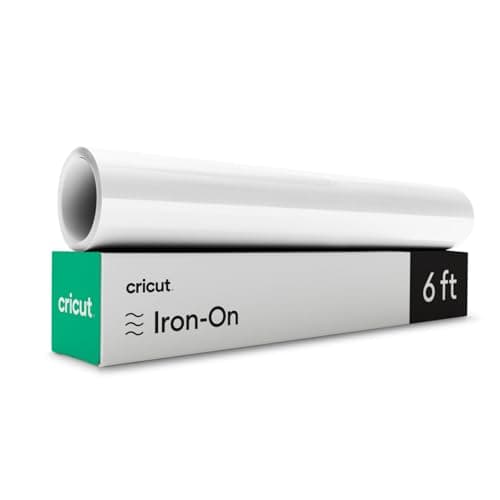 Cricut Everyday Iron-OnThe easiest HTV to get right on a Cricut, because Cricut's own heat guide lists exact settings for it again... | Cricut owners who want the setting looked up | $18.99 · View on Amazon Price as of November 12, 2026 #ad · affiliate link · we never show a price we cannot verify |
| 4 | 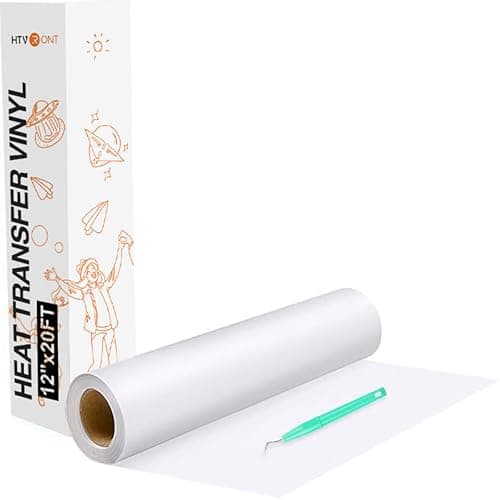 HTVRONT HTV RollsThe budget HTV that most people move to once they stop making one shirt at a time — noticeably cheaper by t... | The budget pick — practice film for a fabric that will waste some | $14.24 · View on Amazon Price as of November 12, 2026 #ad · affiliate link · we never show a price we cannot verify |
| 5 | 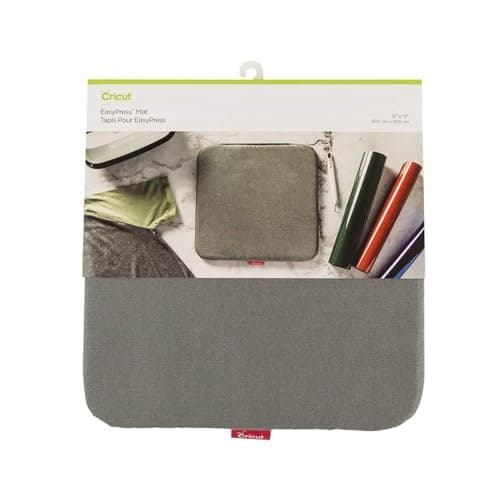 Cricut EasyPress MatThe cheap accessory that fixes most failed presses: it gives you a firm, even, heat-safe surface instead of... | The cheapest thing that fixes the actual problem | $9.99 · View on Amazon Price as of November 12, 2026 #ad · affiliate link · we never show a price we cannot verify |
| 6 | 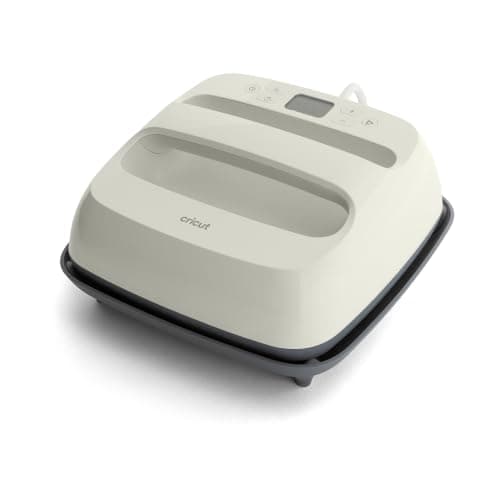 Cricut EasyPress SEThe current EasyPress and the easiest first heat source: controlled temperature, a flat even plate, and it ... | Holding a set temperature while you lean on it | $79.00 · View on Amazon Price as of November 12, 2026 #ad · affiliate link · we never show a price we cannot verify |
Tap any row to jump to the full write-up. Prices come from Amazon on the date stamped on each button and can change after that — check the listing before you buy.
What we judged these films on
The criteria for towels are not the criteria for shirts. Color range, finish and softness-on-the-hand matter much less here, and two things matter much more.
- Published thickness, and how thin it is. A thinner film deforms into the gaps between loops instead of spanning them. Siser publishes standard EasyWeed at 90 microns and EcoStretch thinner again; thick decorative films are published in the hundreds of microns, which is why glitter and towels are a poor combination.
- Whether the brand publishes a temperature, time, pressure and peel at all. On towels you will deviate from the sheet — more pressure, a longer dwell — and a deviation only makes sense from a known baseline. A film with no published numbers leaves you changing two variables at once.
- Cotton rating. Almost every towel is cotton or a cotton-rich blend, so a film rated for cotton at a temperature cotton tolerates is a hard requirement. This also rules sublimation out entirely for most towels.
- Cost per square inch, for the sheets you will waste. Towels have a real learning curve and the first attempts are tuition. Cheap film for practice is not a compromise, it is the sensible plan.
- What we did not judge on: how the film photographs, how many colors a brand claims, or any "extra strong adhesive" claim on a listing. Adhesion on terry is a function of pressure and contact, not of marketing.
1. Best for the film to buy for towels, bath or kitchen
Siser EasyWeed HTV
Siser · Currently sold · Verified 2026-09-27
The right first choice for towels, and the reason is thinness combined with published numbers. Siser publishes EasyWeed at 90 microns — thin enough to sink into the gaps between terry loops rather than bridging across their tops, which is exactly the failure that makes towel designs peel. It also publishes an application temperature, a press time, a pressure and a warm peel, which matters more on towels than on any flat fabric: when a towel design lifts you need to know whether to change the pressure or the dwell, and you cannot work that out against a brand that publishes nothing. On a towel you will press it longer and harder than the sheet says, and knowing the published baseline is what makes that adjustment deliberate rather than random. Honest cons: it costs more per square inch than the value brands; it is sold mostly by the color rather than in mixed packs, so a multi-color towel set means several listings; and no film, this one included, will bond to a plush, deep-pile bath sheet without you flattening that pile first.
What works
- Weeds more cleanly than almost anything else at this price
- Thin enough that a layered design does not feel like a plastic patch
- Siser publishes clear time and temperature guidance for it
- Sold in single sheets, so you can try three colors without buying three rolls
What does not
- Matte only — no gloss, glitter or specialty finish in the base line
- Sheets cost more per square inch than buying a roll
- Still needs real heat and pressure; a household iron gives mixed results
Not for you if
You want a glitter or holographic finish. That is a different Siser product line, not EasyWeed.
Key specs
- Type
- Heat transfer vinyl (HTV) — for fabric
- Fabric compatibility
- Siser rates it for cotton, polyester and cotton/poly blends
- Thickness
- Siser published 90 microns / 3.5 mils
- Application
- Siser lists 305°F for 10-15 seconds at medium pressure
- Carrier
- Pressure-sensitive clear carrier sheet
- Finish
- Semi-gloss — EasyWeed Matte is a separate Siser line
Price as of November 12, 2026
#ad · affiliate link · we never show a price we cannot verify
2. Best for tea towels, flour-sack and linen
Siser EasyWeed EcoStretch
Siser · Currently sold · Verified 2026-10-29
The pick when the towel is a flat weave rather than terry — tea towels, flour-sack towels, linen hand towels — which is a different and much easier job. Siser publishes EcoStretch thinner still than standard EasyWeed, and on a thin flat-woven towel that thinness is the whole advantage: the design stays soft, it does not stiffen a cloth that gets wrung out and folded constantly, and it moves with the weave instead of cracking across it. Tea towels also get washed hot and often, so a film with published wash guidance earns its place. Honest cons: it costs more than the value films; on deep terry it has no real advantage over standard EasyWeed because thinness is not what terry needs most; and like every film here it is not a shortcut around pressing the pile flat first.
What works
- 250°F is genuinely kinder to thin polyester and spandex than any 320°F film
- The thinnest stretch film Siser currently makes, so a tank top does not feel patched
- Water-based and recyclable, which is the reason the line exists
- Siser's current line, so colors and stock are not sell-through leftovers
What does not
- Hot peel only — there is no cold-peel latitude to fall back on
- Costs more per square inch than standard EasyWeed
- A low application temperature means an under-set press is a real failure mode
- Fewer colors stocked on Amazon than standard EasyWeed
Not for you if
Everything you press is rigid cotton. Standard EasyWeed is cheaper and the stretch buys you nothing there.
Key specs
- Type
- Heat transfer vinyl (HTV) — water-based stretch formulation
- Thickness
- Published at 80 microns / 3.15 mils
- Application
- 250°F for 10-15 seconds at medium pressure, hot peel
- Fabric compatibility
- Rated for 100% cotton, 100% polyester, poly/cotton blends, spandex and Lycra
- Certification
- CPSIA certified; film and liner stated as 100% recyclable
Price as of November 12, 2026
#ad · affiliate link · we never show a price we cannot verify
3. Best for cricut owners who want the setting looked up
Cricut Everyday Iron-On
Cricut · Currently sold · Verified 2026-09-27
Worth buying if you already own a Cricut press, for a reason that has nothing to do with the film itself: Cricut's Heat Guide returns a named temperature and time for Cricut material on Cricut hardware, so you start from a specific number instead of a range. On towels that head start is useful, because you are going to add pressure and time to whatever the baseline is, and it is easier to adjust from a number than from a guess. The film weeds cleanly and presses predictably on cotton, which is what almost every towel is. Honest cons: Cricut publishes far less hard specification than Siser — no thickness figure to compare against a terry pile — it costs more per square inch, the sheets are smaller than a value-brand roll, and the Heat Guide has no towel-specific entry, so the pile adjustment is still yours to make.
What works
- Cricut's Heat Guide gives you a precise, named setting instead of a guess
- Sold in the same shops as the machine, so it is easy to restock
- Consistent weeding behavior across colors
What does not
- Costs more per square inch than third-party HTV
- The convenience is mostly about the settings lookup, not the material itself
Not for you if
You are pressing a lot of shirts and cost per shirt matters. Third-party rolls are meaningfully cheaper.
Key specs
- Type
- Heat transfer vinyl (HTV)
- Fabric compatibility
- Cricut rates it for cotton, polyester, blends, canvas
- Settings source
- Listed in Cricut's own Heat Guide by press and material
- Format
- Rolls and sheets
- Finish
- Matte
Price as of November 12, 2026
#ad · affiliate link · we never show a price we cannot verify
4. Best for the budget pick — practice film for a fabric that will waste some
HTVRONT HTV Rolls
HTVRONT · Currently sold · Verified 2026-09-27
The cheapest credible film here, and towels are exactly the project to use it on, because your first two attempts will probably fail. Terry punishes technique in a way flat cotton does not: too little pressure and the design bridges the loops, too much heat and you flatten the pile into a permanent shiny patch around the design. Learning where that line sits costs you a few sheets, and there is no sense learning it on premium film. Rolls and mixed packs mean a dozen colors for the cost of two premium sheets, which also suits towel sets. Honest cons: published specifications are thin and HTVRONT's own guidance sends you to the packaging for the authoritative setting, which arrives with the box rather than before you buy; batch-to-batch color consistency is not guaranteed across a set; and no manufacturer certification is published, which matters if the towels are for a child's bathroom.
What works
- Far cheaper by area than sheet-format premium HTV
- Wide color and finish range including glitter and holographic
- Rolls mean you stop rationing material and start practicing
What does not
- Fine detail weeds less cleanly than Siser EasyWeed
- Batch-to-batch consistency is less predictable
- You are committing to a whole roll of one color
Not for you if
Your first project is a very fine script design. Learn to weed on EasyWeed first, then switch to save money.
Key specs
- Type
- Heat transfer vinyl (HTV)
- Format
- Rolls, typically 12 in wide
- Fabric compatibility
- Rated for cotton, polyester and blends
- Finish
- Matte, plus glitter and specialty lines
- Value
- Lowest cost per square inch of the three HTVs here
Price as of November 12, 2026
#ad · affiliate link · we never show a price we cannot verify
5. Best for the cheapest thing that fixes the actual problem
Cricut EasyPress Mat
Cricut · Currently sold · Verified 2026-09-27
The highest-value purchase on this page relative to its cost, because a towel is thick, uneven and springy, and a press mat gives it something firm to be compressed against. Put the mat under the towel and the pressure goes into flattening the pile under the design instead of being absorbed by the towel's own loft and the give of your table. It also protects the surface underneath from the heat that comes straight through a single layer of terry. If you are only going to add one thing to a towel order, add this rather than a different film. Honest cons: it does not replace pressure from the press — it just makes the pressure you apply land where it should; a mat sized for a hand towel will not help much under a bath sheet; and it is one more thing to store.
What works
- Turns an uneven surface into an even one, which is most of a good press
- Protects the table underneath
- Costs very little relative to the failures it prevents
What does not
- One more thing to store
- Does not fix pressure that is simply too light
Not for you if
You have a clamshell press with a proper lower platen. The platen already does this job.
Key specs
- Purpose
- Firm heat-resistant base that concentrates pressure into the design
- Why it matters
- Absorbs seams and zips so the design sits flat
- Sizes
- 12 in x 12 in; Cricut also lists a 16 in x 20 in mat
Price as of November 12, 2026
#ad · affiliate link · we never show a price we cannot verify
6. Best for holding a set temperature while you lean on it
Cricut EasyPress SE
Cricut · Currently sold · Verified 2026-09-27
Towels are where a household iron stops being a viable substitute, and the reason is that two things have to be true at once: the plate has to hold its temperature for a longer-than-usual dwell, and you have to be able to apply real, steady pressure into a springy surface. A controlled flat plate does the first and lets you do the second with your body weight. The SE plate also covers most towel designs in one press, which matters because repositioning on pile is where edges lift. Honest cons: you are the pressure source, so consistency across a set of six towels tracks your technique rather than a clamp — if you are making towel sets to sell, a clamshell with set-once pressure is the better tool; and a flat plate cannot do anything about a curved blank.
What works
- Holds a set temperature, which a household iron does not
- Even plate contact across the whole design
- Cricut's Heat Guide gives exact settings for it by material
- Stores away, which matters more than people expect
What does not
- You supply the pressure by leaning on it, so results depend on your technique
- Costs more than a comparably sized clamshell press
- Small plates mean multi-press passes on a big design
Not for you if
You are pressing more than a handful of shirts a week. Leaning on a handheld press twenty times an evening gets old fast — buy a clamshell.
Key specs
- Type
- Handheld heat press
- Plate sizes
- 12 x 10 in and 9 x 9 in in the SE line
- Temperature
- Set precisely; holds it, unlike a household iron
- Timer
- Built in, with an audible finish
- Storage
- Shelf or drawer — no permanent bench space
Price as of November 12, 2026
#ad · affiliate link · we never show a price we cannot verify
The pressing changes that actually matter
Film choice is maybe a third of the answer on towels. The rest is technique, and it is four specific changes from the way you would press a t-shirt.
1Pre-press the towel, hard, for longer than feels necessary
Close the press on the bare towel for ten to fifteen seconds before the film goes anywhere near it. This does two jobs: it drives out moisture, which towels hold more of than any other fabric in a craft room, and it crushes the pile flat so there is a surface to bond to. A towel that has not been pre-pressed is the single most common cause of a design that peels.
2Put something firm underneath
A press mat under the towel stops the towel's own loft and your table absorbing the pressure. On a thick bath towel this is the difference between compressing the pile and simply squashing the whole towel into the table.
3Press harder and longer than the sheet says
Use firm pressure rather than medium, and add a few seconds to the published dwell. You are pushing adhesive down past the loops to the base weave, which takes more of both than a flat knit does. Add time in small increments and stop as soon as the design is bonded — over-cooking a film makes it brittle.
4Peel warm, then press again through a cover sheet
Peel at the temperature the manufacturer specifies, then do a short second press over the top with a cover sheet or parchment. That second pass settles the edges into the pile, which is where towel designs start to lift.
Bath, kitchen and tea towels are three different jobs
They get lumped together in one search and they behave nothing alike, so match the film and the design to the towel in front of you.
| Towel type | What makes it hard | What to do |
|---|---|---|
| Bath towel / bath sheet (deep terry) | Tall, dense pile and real loft; soaks up pressure | Thin film, long pre-press, firm pressure, mat underneath; keep designs small and bold |
| Hand towel (shorter terry) | Same pile problem at a smaller scale, usually a flat woven border | Press on the woven border where there is one — it behaves like flat cotton |
| Kitchen towel (terry one side, flat the other) | Two different surfaces on one item | Put the design on the flat-woven side and the job becomes easy |
| Tea towel / flour-sack (flat weave) | Thin, no pile, but washed hot and wrung constantly | Thinnest film you have; standard settings work; expect heavy laundering |
| Microfibre or plush synthetic | Melts or glazes well below cotton temperatures | Test on a corner first; many will not survive any iron-on temperature |
Design choices that survive a towel
Towels punish fine detail more than any other blank, and the reason is mechanical rather than aesthetic: a thin stroke has very little contact area, and on pile it has even less. Three rules follow.
- Go bolder and bigger than you would on a shirt. Thick strokes, solid shapes and chunky lettering have the contact area to stay put. Script with hairline strokes is the first thing to lift.
- Avoid thick decorative finishes. Glitter film is several times thicker than standard iron-on, which is the opposite of what pile needs — see the glitter HTV roundup for what that thickness does on a flat garment, then imagine it bridging loops.
- Skip layering on terry. Each layer adds thickness and a second press, and towels do not reward either. If you want two colors, cut them as separate non-overlapping shapes instead — the layering guide explains why stacked film and flexible substrates fight each other.
- Put the design where the towel is flattest when the item gives you a choice. A woven border or the flat face of a kitchen towel is a far better surface than the middle of a bath sheet.
Why sublimation is not the answer here
It comes up constantly, because sublimated towels look seamless in photos. The problem is material: sublimation dye bonds to polyester and polymer coatings, and almost every towel worth owning is cotton — which is exactly why it feels nice. We go through the chemistry in can you sublimate on cotton, and the short version is that on a cotton towel the color washes out. Polyester-faced sublimation towels do exist, but they are a different product bought for a different reason, and they are not the towels most people already have. For cotton, heat transfer vinyl is the honest answer.
Prices in the table above are read from Amazon automatically and each buy button carries the date its number was read, so nothing on this page quotes a figure that can go stale. If you want the wider view of the category first, the best HTV vinyl is the general roundup, HTV brands compared covers who publishes what, and the HTV under $25 bracket is where most of these films sit.
Common questions
Can you use HTV on towels?
What is the best heat transfer vinyl for towels?
Why does my vinyl peel off towels after washing?
What temperature do I press HTV on a towel?
Can I use glitter HTV on towels?
How we picked
We verify every product is currently sold by reading the manufacturer's own catalog, compare published specifications rather than marketing copy, and rank on what a first-time buyer has to decide. We do not run lab tests and we do not claim to, and commission never affects the order.
Read this next
The Best HTV Vinyl for Beginners
Which heat transfer vinyl weeds cleanly and presses forgivingly — and which to switch to later.
The Best HTV Vinyl for Cotton Shirts
Which heat transfer vinyl to buy for 100% cotton tees, why cotton is the forgiving fabric, and the three things that actually ruin a cotton press.
The Best HTV Under $25
Every heat transfer film in our registry currently priced under $25, ranked by what each is actually for, with live prices and read dates.
How to Use HTV
The full HTV process from cut to peel, plus a troubleshooting section for when it does not stick.
Heat Press Temperature Guide
Published time and temperature figures by material, sourced — plus the three variables that matter more.
Back to Vinyl & Materials.