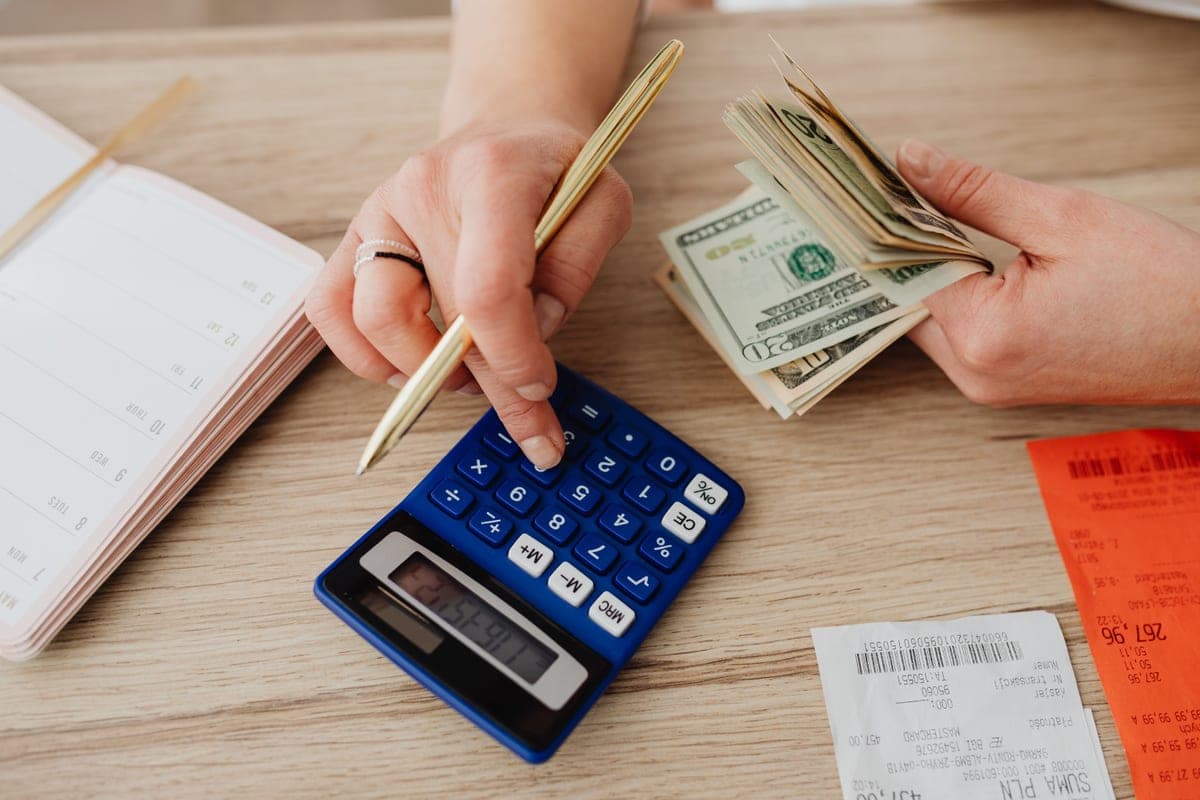
Sublimation Startup Costs
The printer is the headline and rarely the biggest line. Here is the whole list, in order, including the parts nobody mentions.
Heads up: Mat & Blade earns a commission from qualifying purchases made through the links on this page, at no extra cost to you. It never changes which products we recommend or how we rank them. Read the full disclosure.
A working sublimation setup is five purchases, not one: a printer, sublimation ink, sublimation paper, a heat source, and blanks that can actually be sublimated. The printer is the line people budget for and it is often not the largest. The heat press frequently costs more than a converted EcoTank, blanks are an ongoing cost that scales with everything you make, and paper and ink are consumables you will reorder. Below is the full list in the order you have to buy it, plus the four costs that beginners discover after the printer arrives.
The five things you cannot skip
Every one of these is required for a single finished item. Leave any out and you own equipment that makes nothing.
- A printer with refillable tanks. Sublimation ink comes in bottles, so a cartridge printer is the wrong shape of purchase. In practice this means an EcoTank you convert, or a printer sold as a sublimation printer with its own ink.
- Sublimation ink. A separate purchase from the printer on the conversion route. Buy from a seller who supplies an ICC color profile.
- Sublimation paper. Not the same as transfer paper and not interchangeable with copy paper. A consumable.
- A heat source that holds temperature and applies even pressure. A clamshell press for flat work, plus a tumbler press or mug press if those are the plan. A household iron is not a substitute.
- Blanks that can be sublimated. Polyester fabric or polymer-coated hard goods, in white or very light colors. This is a physical requirement, not a recommendation.
The shopping list in order
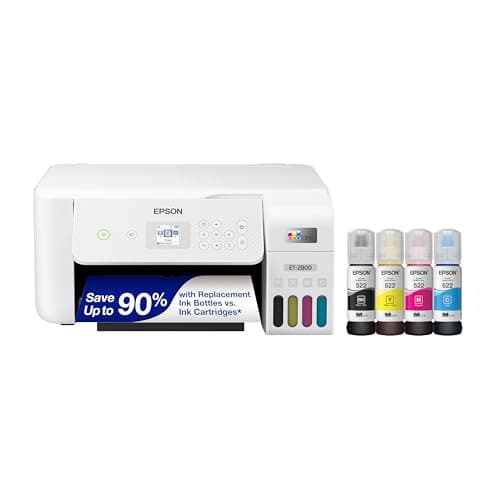
1. Best for the cheapest printer line on the list
Epson EcoTank ET-2800
Epson · Currently sold · Verified 2026-09-27
The ET-2800 is where most budgets start: a four-tank refillable inkjet that prints to letter width, cheap enough that treating it as semi-disposable is a rational plan. It is not sold as a sublimation printer — you convert it by filling the tanks with sublimation ink, which puts it outside Epson's coverage for ink-related damage and cannot be undone. Price that trade-off in deliberately rather than discovering it later. Letter width covers shirt fronts, mugs, tumblers and coasters.
What works
- By far the cheapest way to start sublimating
- Refillable tanks mean low running cost once converted
- Very widely documented by the crafting community
What does not
- Converting it with third-party sublimation ink voids Epson's coverage for ink-related damage
- A converted printer cannot go back to regular ink
- 8.5 in width limits you to letter-size transfers
Not for you if
You want a supported, warrantied sublimation setup you can call for help on. Buy a dedicated sublimation printer instead.
Key specs
- Type
- Refillable-tank inkjet — sold as a regular printer
- Sublimation
- Not a sublimation printer as sold; people convert it
- Max print width
- 8.5 in (letter)
- Ink system
- Four refillable tanks
- Warranty note
- Epson's warranty covers damage from genuine ink, not third-party ink
#ad · affiliate link · we never show a price we cannot verify
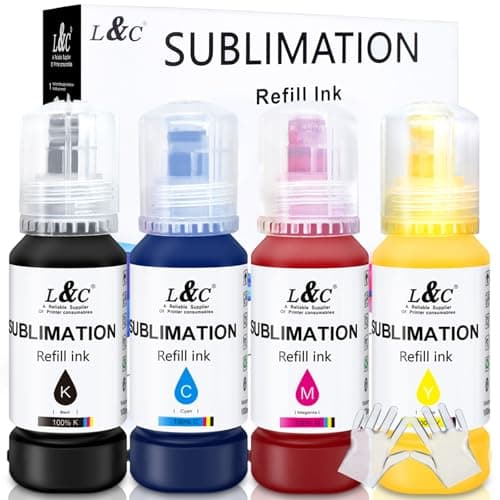
2. Best for the line item people forget to add
Third-Party Sublimation Ink
MERRYWORK · Currently sold · Verified 2026-09-27
A converted EcoTank needs sublimation ink in bottles, and that is a separate purchase from the printer rather than a consumable you top up later. Refill-bottle ink is far cheaper per page than cartridge systems, which is most of the running-cost argument for this route. Choose on whether the seller supplies an ICC color profile rather than on brand, because an unprofiled setup prints colors that are visibly wrong. It is also the thing that makes the conversion permanent.
What works
- Turns a cheap printer into a working sublimation printer
- Far cheaper per page than cartridge sublimation ink
- Most sellers supply an ICC profile for color accuracy
What does not
- Voids Epson's coverage for damage caused by non-genuine ink
- Color accuracy varies a lot by brand without a good profile
- There is no going back to regular printing
Not for you if
The printer is also your household document printer. Once it is converted, that is over.
Key specs
- Type
- Dye-sublimation ink in refill bottles
- Used with
- Refillable-tank inkjets, most commonly Epson EcoTank
- Color profile
- An ICC profile from the ink maker matters more than the ink brand
- Reversible
- No — a converted printer stays converted
Price as of November 12, 2026
#ad · affiliate link · we never show a price we cannot verify
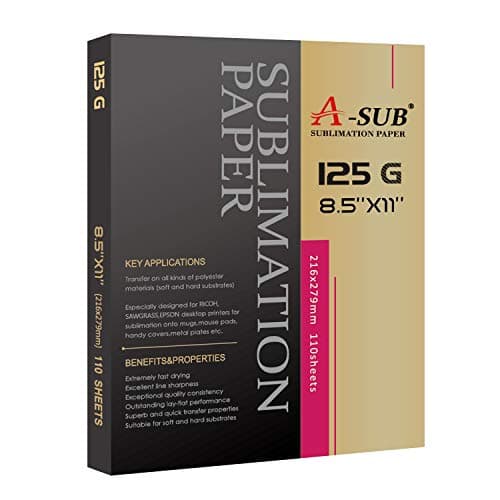
3. Best for the consumable you will reorder most
A-SUB Sublimation Paper
A-SUB · Currently sold · Verified 2026-09-27
Paper is a running cost rather than a one-off, and it is a real variable: it controls how much ink the sheet holds and how completely that ink releases under heat, which together decide color saturation. A-SUB is the standard starting point — widely stocked, consistent enough to eliminate as a cause when something looks wrong, and cheap enough to practice on. Budget for wasting a fair amount of it while you learn.
What works
- Consistent results across shirts, mugs and hard blanks
- Dries quickly enough that sheets do not smudge when stacked
- Cheap enough to practice with
What does not
- Only works with sublimation ink — regular ink will not transfer
- Printing on the wrong side wastes the sheet and the ink
Not for you if
You are printing on dark fabric. Sublimation does not work on dark fabric at all, whatever paper you use.
Key specs
- Type
- Dye-sublimation transfer paper
- Weight
- Commonly 125 gsm
- Sizes
- Letter and larger sheets
- Transfer rate
- High — most of the ink releases to the blank
- Printed side
- One side only — the coated side
Price as of November 12, 2026
#ad · affiliate link · we never show a price we cannot verify
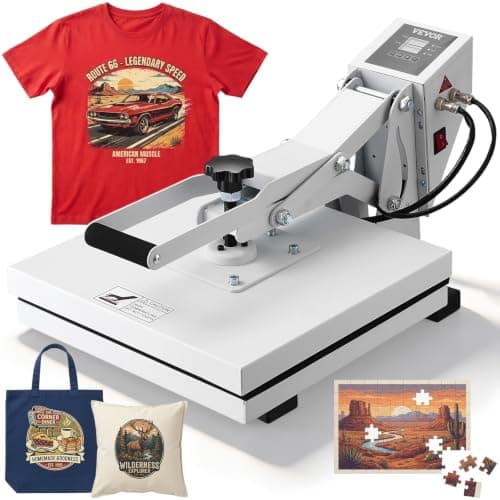
4. Best for the cheapest real heat source for sublimation
VEVOR Clamshell Heat Press
VEVOR · Currently sold · Verified 2026-09-27
Sublimation needs sustained, even, firm heat across the whole transfer, which a handheld plate struggles to deliver and a household iron cannot deliver at all. A budget clamshell gives you a flat platen and mechanical pressure, which is the actual requirement. It is the cheapest press worth owning for this job. The honest caveats are that budget press displays do not always match the real plate temperature and that build quality is what you are economizing on.
What works
- Full-size plate and real clamp pressure for less than a handheld press
- Presses an adult design in a single pass
- Widely available with lots of community guidance
What does not
- Displayed temperature can differ from actual plate temperature — worth checking
- No auto-open, so a forgotten timer scorches the shirt
- Build quality is visibly budget
Not for you if
You want to set it and trust it. Check the plate temperature with an infrared thermometer before you trust the display.
Key specs
- Type
- Manual clamshell heat press
- Plate size
- Commonly 15 x 15 in
- Pressure
- Manual knob adjustment
- Auto-open
- No — it beeps, you lift
- Bench space
- Permanent
Price as of November 12, 2026
#ad · affiliate link · we never show a price we cannot verify
What each purchase is actually buying you
| Purchase | One-off or ongoing | What it decides | Can you economize? |
|---|---|---|---|
| Printer | One-off | Maximum transfer width, and whether you have support | Yes — a converted EcoTank is the cheap route |
| Sublimation ink | One-off then ongoing | Color accuracy, via the ICC profile | Not really — a bad profile shows in every print |
| Sublimation paper | Ongoing | Color saturation and ink release | Somewhat, once you know your settings |
| Heat press | One-off | Whether transfers apply evenly at all | Yes, with the caveat that displays can be inaccurate |
| Blanks | Ongoing, per item | Whether sublimation works at all | No — the substrate requirement is physical |
| Design software | Varies | Nothing technical; plenty of free options work | Yes — this is a genuinely optional cost |
The four costs nobody warns you about
A second press for curved items
A flat clamshell cannot wrap a tumbler or a mug. If tumblers are part of the plan — and for most people they are, because they sell well — that is a tumbler press or a mug press as a separate purchase on top of the flat press. Sublimation printer and heat press together sets out which combinations actually cover which products.
Wasted blanks while you learn
Sublimation has more variables than vinyl — time, temperature, pressure, paper, profile, substrate coating — and the first attempts at any new blank type usually fail. Buy blanks in small quantities until your settings for that specific item are known, and treat the first few of each as test pieces rather than products. The sublimation temperature guide shortens the process but does not eliminate it.
Consumables around the press
Butcher paper or Teflon sheets to protect the platen, heat tape to stop transfers shifting, lint rollers, heat-resistant gloves, and a shrink-wrap and oven setup if you go down the tumbler route. Individually small, collectively a real line on the first order, and all of it is needed before the first successful item rather than later.
Running the printer regularly
Sublimation ink dries in the head of an idle printer, and a clogged head on a converted EcoTank is not a warranty matter. The accepted practice is to print something small every week whether or not you have an order, which is a small ongoing ink and paper cost and a genuine habit requirement. People who sublimate seasonally and leave the printer off for months are the ones who report dead printers.
Is it worth it?
That depends almost entirely on what you intend to make. Sublimation is the cheapest way to produce full-color, no-hand-feel designs on polyester and coated hard goods at volume, and it is an expensive way to make a handful of shirts. Vinyl has a much lower entry cost, works on cotton and on dark garments, and is better for lettering and logos — so for many beginners the honest sequence is vinyl first, sublimation later when a specific product demands it.
Is sublimation worth it works through that decision properly, and Cricut business startup costs covers the same arithmetic for the cutting-machine route. If you are weighing the two technologies rather than the costs, sublimation versus HTV is the comparison.
For how these numbers compare with the traditional alternative, sublimation vs screen printing covers setup cost per design against flat per-item cost, which is what decides small runs.
If you would rather see the list as products than as a figure, the best sublimation starter kit assembles the same setup from parts with a live price on each.
Common questions
What do you need to start sublimation?
Is the printer the most expensive part of a sublimation setup?
Do you need a heat press for sublimation, or will an iron do?
Can you sublimate tumblers with a flat heat press?
What ongoing costs does sublimation have?
Sources
- Epson — EcoTank ET-2800 product page — Confirmed the ET-2800 is a current cartridge-free refillable-tank inkjet with letter-width printing, sold as a general-purpose printer - checked 10 October 2026
- Sawgrass — SG500 product page — Confirmed a current printer sold as a dedicated sublimation printer with its own ink system, used as the supported-route reference - checked 10 October 2026
How we picked
We verify every product is currently sold by reading the manufacturer's own catalog, compare published specifications rather than marketing copy, and rank on what a first-time buyer has to decide. We do not run lab tests and we do not claim to, and commission never affects the order.
Read this next
Is Sublimation Worth It?
What sublimation is genuinely worth it for, what it cannot do at any price, and the full cost of getting started.
The Best Sublimation Printer Under $200
What a $200 budget actually buys in sublimation, why the complete setup costs more than the printer, and the cheapest printer that is genuinely sold as a sublimation machine.
Sublimation for Beginners
The complete beginner walkthrough: how it works, what it needs, and the first-transfer process.
Sublimation Printer and Heat Press
How to match a press to a printer, why drinkware needs a curved press, and the complete list of what a working setup includes.
The Best Epson Printer for Sublimation
Which Epson EcoTank crafters convert for sublimation, the warranty and one-way-conversion reality, and when a supported printer is the better buy.
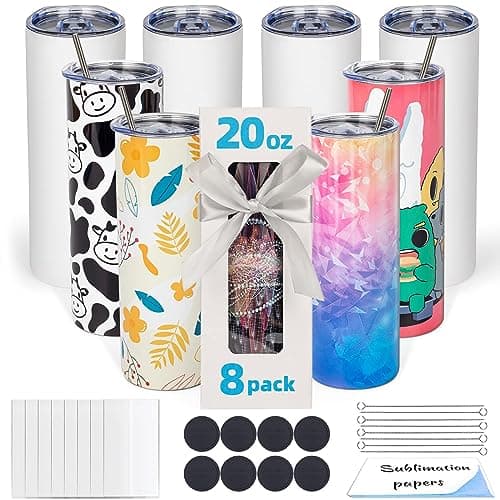
Sublimation Temperature Guide
Times and temperatures by blank type, sourced, plus what to adjust when a transfer comes out pale.
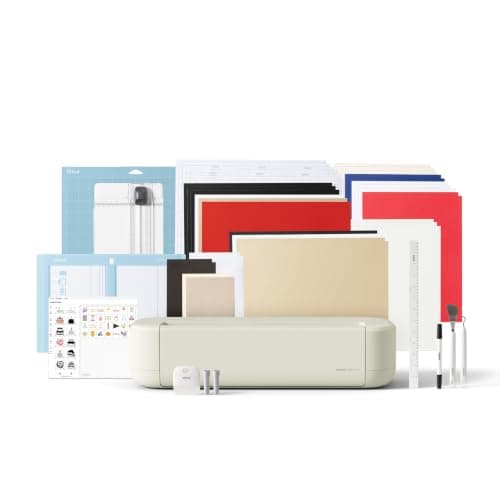
Cricut Business Startup Costs
The equipment, materials and overlooked costs of starting a Cricut business, and the buying order that avoids idle kit.
Back to Sublimation.