
Cricut Maker Alternatives
Most people shopping for a Maker alternative do not need what the Maker is for. Work out which group you are in first and the shortlist answers itself.
Heads up: Mat & Blade earns a commission from qualifying purchases made through the links on this page, at no extra cost to you. It never changes which products we recommend or how we rank them. Read the full disclosure.
For most people shopping for a Cricut Maker alternative, the alternative is a cheaper Cricut: the Explore 5 cuts the same everyday materials at the same width, and the Maker's premium buys fabric and leather tools you may never fit. If you want out of the Cricut ecosystem rather than down a tier, the Silhouette CAMEO is the real cross-brand option, and the Brother ScanNCut is the one that cuts with no computer at all. The budget pick is the Cricut Joy 2 — the cheapest machine here that does a real job, if your work is small. And if you genuinely need the Maker's tools, the prior-generation Maker 4 runs the same tool system for whatever today's price gap is. Start with what the Maker is for, because that is the whole decision.
Quick picks
| # | Product | Best for | Price |
|---|---|---|---|
| 1 | 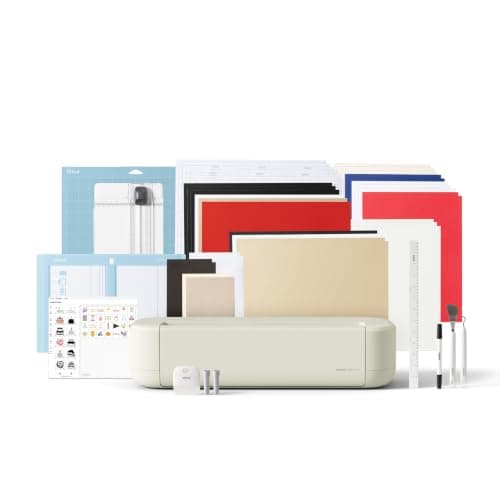 Cricut Explore 5The sensible default for a first machine: it cuts everything a beginner actually uses, and the money you sa... | The alternative most Maker shoppers actually need | $249.00 · View on Amazon Price as of November 12, 2026 #ad · affiliate link · we never show a price we cannot verify |
| 2 | 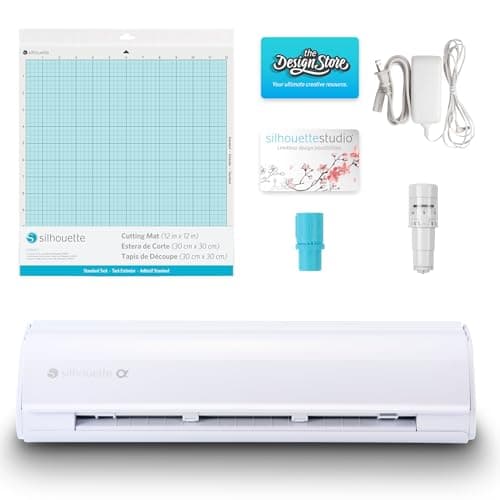 Silhouette CAMEO 5The real alternative to a Cricut, and the better pick if the idea of a cloud-only design app with a subscri... | Leaving Cricut, not just the Maker | $299.00 · View on Amazon Price as of November 12, 2026 #ad · affiliate link · we never show a price we cannot verify |
| 3 | 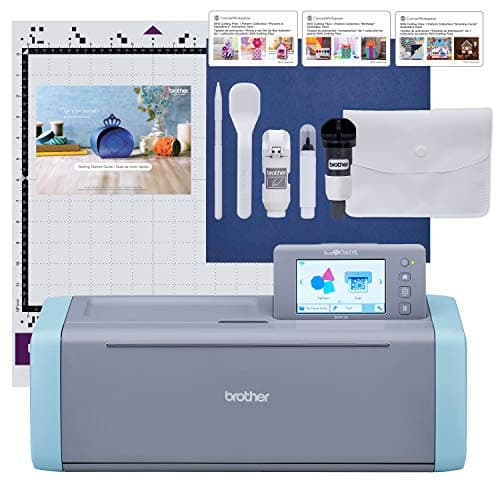 Brother ScanNCut DX SDX125EThe machine for people who do not want to design on a laptop — it has a built-in scanner and touchscreen, s... | Cutting standalone, with no computer at all | $449.99 · View on Amazon Price as of November 12, 2026 #ad · affiliate link · we never show a price we cannot verify |
| 4 | 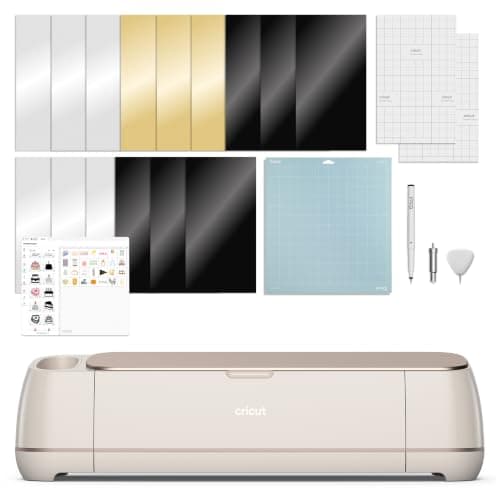 Cricut Maker 4Still sold alongside the Maker 5 and still fully supported — worth a look purely because the older model in... | Maker capability for whatever today's gap is | $379.00 · View on Amazon Price as of November 12, 2026 #ad · affiliate link · we never show a price we cannot verify |
| 5 | 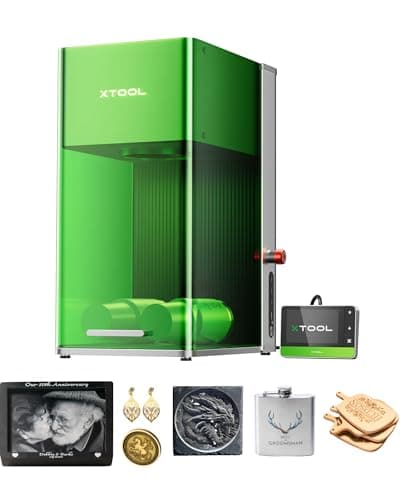 xTool F1 UltraNot a vinyl cutter at all — a compact laser. Worth knowing about because it answers a different question, a... | Leaving because a blade is the wrong tool entirely | $2,420.00 · View on Amazon Price as of November 12, 2026 #ad · affiliate link · we never show a price we cannot verify |
| 6 | 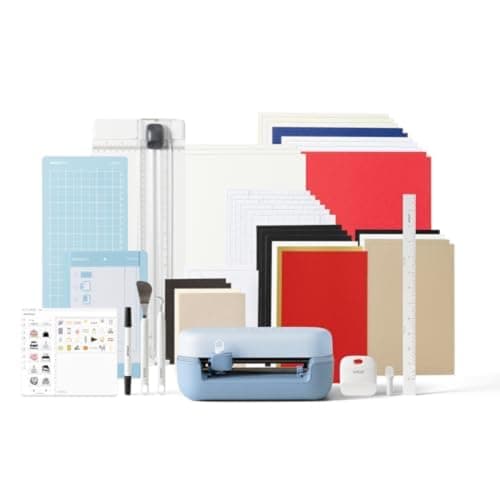 Cricut Joy 2The cheapest way into the hobby and a genuinely good little machine — as long as you accept that its narrow... | The budget pick — the cheapest machine that does a real job | $109.00 · View on Amazon Price as of November 12, 2026 #ad · affiliate link · we never show a price we cannot verify |
Tap any row to jump to the full write-up. Prices come from Amazon on the date stamped on each button and can change after that — check the listing before you buy.
Pick your alternative by your reason for looking
Nearly everyone searching this has one of five reasons, and they lead to genuinely different machines. Guessing which one applies to you is the only hard part of this page. (We run the same exercise on the printer side in Epson EcoTank alternatives, if a sublimation printer is the other thing in your basket.)
| Your reason | The alternative | What you give up |
|---|---|---|
| It costs more than I want to spend | Cricut Explore 5 | Rotary and knife blades — so fabric and leather, permanently |
| I do not want a cloud app or a subscription prompt | Silhouette CAMEO 5 | Design Space's easier learning curve and huge tutorial library |
| I want to cut without a computer, from a printed pattern | Brother ScanNCut | Software power and the biggest file ecosystem |
| I do need the rotary blade, just not at full price | Cricut Maker 4 (prior generation) | The longer support runway of the current model |
| I want to cut wood, engrave or mark metal | A laser, not a blade cutter | Price, simplicity, and a workspace you do not have to ventilate |
| My projects are cards, labels and small decals | Cricut Joy 2 | Cutting width — shirt-front designs are out |
1. Best for the alternative most maker shoppers actually need
Cricut Explore 5
Cricut · Currently sold · Verified 2026-09-27
The honest top pick, and it is a cheaper machine rather than a rival brand. The Maker's price premium over the Explore buys a tool system — a rotary blade for fabric without backing and a deep-cut knife blade for thick board and thin leather — plus more cutting force to drive them. If your projects are vinyl, iron-on, cardstock, paper and stickers, you will never fit either tool, and you are paying for capability that sits in the box. The Explore cuts the same everyday materials at the same full 12-inch width, runs the same Design Space app with the same enormous tutorial library, and the difference in price buys a real heat press or a very large pile of material. Honest cons: no rotary or knife blade, so quilting fabric and genuine leather stay out of reach permanently; it is cloud-dependent software like every Cricut; and it still wants permanent desk space.
What works
- Cuts every material a beginner's first ten projects will use
- Matless Smart Material cutting means long banners and decals without a mat
- Cheapest current machine that still handles full 12 in wide vinyl
- Huge community of tutorials aimed at exactly this machine
What does not
- No rotary blade, so unbacked fabric is out
- No knife blade for basswood or thick leather
- Still needs Design Space, which needs an internet connection to set up
Not for you if
You already know you want to cut quilting fabric or thick leather. That is the Maker line's rotary and knife blades, and no accessory adds them to an Explore.
Key specs
- Cuts
- Vinyl, heat transfer vinyl, cardstock, paper, iron-on, faux leather
- Max material width
- 12 in (11.5 in cut width)
- Matless cutting
- Yes, with Smart Materials
- Tool slots
- Two — blade plus pen or scoring tool
- Rotary / knife blade
- No — Maker line only
Price as of November 12, 2026
#ad · affiliate link · we never show a price we cannot verify
2. Best for leaving cricut, not just the maker
Silhouette CAMEO 5
Silhouette · Currently sold · Verified 2026-09-27
The genuine cross-brand alternative at a comparable level, and the right pick if your objection is the ecosystem rather than the price. Silhouette Studio installs on your computer and works offline, so the machine does not depend on anyone's servers to cut, and no subscription is required to use it. It handles the same everyday materials a beginner uses — vinyl, heat transfer vinyl, cardstock, paper and fabric with backing — at a 12-inch width, with a dual carriage and auto tool detection. For print-then-cut work its registration is the thing sticker makers consistently praise. Honest cons: Studio is noticeably harder to learn than Design Space; SVG import is gated behind a paid Studio tier on the basic edition, so budget for that if you buy files from third parties; the beginner tutorial ecosystem is much smaller; and it is not a high-force machine, so it does not replace the Maker's fabric and leather headroom either.
What works
- Silhouette Studio runs on your computer and does not need to be online to cut
- No subscription is required to use the machine
- Cuts the same everyday materials a beginner uses
- Strong choice if you already own or buy SVG files from third parties
What does not
- Studio is more capable but noticeably harder to learn than Design Space
- SVG import is gated behind a paid Studio upgrade on the basic edition
- Smaller tutorial ecosystem than Cricut for absolute beginners
Not for you if
You want the shortest possible path from unboxing to a finished shirt. Design Space is the friendlier first app, even with its downsides.
Key specs
- Cuts
- Vinyl, heat transfer vinyl, cardstock, paper, fabric with backing
- Max cut width
- 12 in
- Software
- Silhouette Studio — installs locally, works offline
- File handling
- Imports SVG in the paid Studio tiers; basic edition is more limited
- Tool system
- Dual carriage with auto tool detection
Price as of November 12, 2026
#ad · affiliate link · we never show a price we cannot verify
3. Best for cutting standalone, with no computer at all
Brother ScanNCut DX SDX125E
Brother · Currently sold · Verified 2026-10-16
The most genuinely different machine on the list. It cuts without a computer or an account — the design work happens on the machine — and its built-in scanner reads a drawn or printed pattern directly into a cuttable shape, which neither Cricut nor Silhouette offers at any price. Its blade system adjusts to material thickness automatically, which removes a setting beginners routinely get wrong. For anyone whose work starts from a physical template rather than a file on screen, this is the alternative that fits the workflow instead of fighting it. Honest cons: the on-board design software is weaker than Studio and much weaker than Design Space for anything complex; the tutorial and file ecosystem is the smallest of the three brands; it is not a high-force machine, so thick leather is out; and it is usually the most expensive of the three 12-inch options here.
What works
- The only mainstream machine that genuinely works without a computer or tablet
- The scanner turns a hand-drawn shape into a cut file directly
- No subscription anywhere in the workflow
What does not
- Canvas Workspace is the weakest of the three design apps
- Much smaller beginner tutorial ecosystem
- Accessory and blade availability is thinner than Cricut's
Not for you if
You are comfortable designing on a computer. The scanner is the main reason to choose this, and you will not use it.
Key specs
- Built-in scanner
- Yes — scans a drawing or printed image and cuts it out
- Standalone operation
- Yes — on-machine touchscreen, no computer required
- Max cut width
- 12 in on the mat
- Software
- Canvas Workspace, plus on-machine editing
- Wireless
- Yes on current models
Price as of November 12, 2026
#ad · affiliate link · we never show a price we cannot verify
4. Best for maker capability for whatever today's gap is
Cricut Maker 4
Cricut · Currently sold · Verified 2026-09-27
The alternative nobody thinks of: the previous-generation Maker. It runs the same tool system as the current model, which means for cutting purposes — rotary blade, knife blade, cutting force, 12-inch width — it does the same job. Whether it belongs above or below its successor on your shortlist is purely a price question on the day you buy, and that number moves. If you have decided you genuinely need the Maker's tools, this is the cheapest honest way to get them, and it is worth checking both live prices before you pay full price for the newer badge. Honest cons: it is a prior-generation product, so expect it to leave the shelves before the current model does; the newer machine has the longer support runway; and if you do not need the rotary blade, this is still more machine than you need.
What works
- Rotary and knife blade capability, the same reason anyone buys a Maker
- Frequently the cheaper route into the Maker line
- Fully supported in Design Space — this is not a discontinued model
What does not
- Slower than the Maker 5 on long cuts
- Being the older model in the line, stock can be patchy
- Same caveat as every Maker: most beginners never use the rotary blade
Not for you if
You are buying your first machine and have no fabric or wood project in mind. The Explore 5 does your projects for less.
Key specs
- Cuts
- 300+ materials including unbacked fabric, leather, basswood
- Max material width
- 12 in (11.5 in cut width)
- Rotary blade
- Yes
- Knife blade
- Yes — sold separately
- Status
- Current line, sold alongside the Maker 5
Price as of November 12, 2026
#ad · affiliate link · we never show a price we cannot verify
5. Best for leaving because a blade is the wrong tool entirely
xTool F1 Ultra
xTool · Currently sold · Verified 2026-10-16
Here for honesty rather than as a recommendation for most readers: if what you actually want is engraving, cutting wood, or marking metal and slate, no blade cutter of any brand will do it, and a laser is the real alternative rather than a different Cricut. A laser removes material with light instead of pushing a blade through it, which is why it handles rigid materials a blade cannot touch. If the reason you were looking at a Maker was its "it cuts everything" positioning, this is the machine that genuinely does more. Honest cons: it costs several times what any machine above costs, it needs ventilation and real safety discipline, it is slower on vinyl than a blade cutter and not the right tool for iron-on at all, and the learning curve is a different hobby rather than a different machine.
What works
- Engraves materials no blade machine can touch
- Very fast at what it does
- Opens a genuinely different product range — tumblers, wood signs, leather goods
What does not
- Cannot cut vinyl, which is the entire reason most people buy a craft machine
- Needs ventilation and eye protection — this is a real safety consideration
- Considerably more expensive than every blade machine here
Not for you if
Your project list is shirts and decals. A laser does not make those, and buying one instead of a cutter is the single most expensive mistake in this category.
Key specs
- Type
- 20 W fiber + diode dual laser engraver and cutter
- Marks
- Wood, leather, acrylic, coated metal, slate
- Cuts vinyl
- No — a laser melts vinyl and releases hazardous fumes
- Ventilation
- Required
- Footprint
- Compact for a laser, large for a craft machine
Price as of November 12, 2026
#ad · affiliate link · we never show a price we cannot verify
6. Best for the budget pick — the cheapest machine that does a real job
Cricut Joy 2
Cricut · Currently sold · Verified 2026-09-27
Named as the budget pick because it is the cheapest machine in our registry that cuts properly, and because a meaningful share of people pricing a Maker are making cards, labels, tags and small decals — work this does as cleanly as anything above it. Spending the difference on materials and a press produces more finished projects than spending it on cutting force you will not use. It sets up in minutes and is the least intimidating machine in the line. Honest cons: the narrow cutting width is a hard limit, and it arrives the first time you try a shirt-front design; there is no rotary or knife blade, so fabric and leather are out; and it is the wrong purchase if you buy it as a cheap substitute for a full-size machine rather than for the work it genuinely suits.
What works
- The lowest cost of entry in the current Cricut line
- Genuinely portable and storable, which matters if you have no dedicated craft space
- Long matless cuts make it excellent for labels and long decals
- Simple enough that the learning curve is close to flat
What does not
- 4.5 in cut width is the hard limit — most adult shirt designs will not fit
- No print-then-cut, so printed stickers are out
- Takes the narrow Joy-format materials, which are less widely stocked
Not for you if
You want to make shirts. A 4.5 in design reads as a small chest logo, not a front print, and there is no workaround.
Key specs
- Cuts
- Vinyl, heat transfer vinyl, cardstock, paper, Smart Label material
- Max cut width
- 4.5 in
- Max cut length
- Up to 20 ft with Smart Materials
- Footprint
- Small enough to store in a drawer
- Mat required
- Optional — cuts matless with Smart Materials
Price as of November 12, 2026
#ad · affiliate link · we never show a price we cannot verify
Do you actually need a rotary blade?
This is the only question that decides whether a Maker-class machine is worth its premium, and it has a short test. You need one if you intend to cut fabric without a stabilizer behind it — quilting cotton, apparel fabric, felt straight off the roll — because that is what a rolling blade does that a drag blade cannot. You need the knife blade if you intend to cut thick chipboard, heavy poster board or genuine leather, which is a force-and-depth problem rather than a blade-shape problem.
You do not need either for heat transfer vinyl, adhesive vinyl, cardstock, paper, sticker sheets, faux leather or iron-on of any kind — which is the overwhelming majority of what beginners make. If that list describes your projects, the Explore-class machine is not a compromise, it is the correct machine, and we lay out the capability difference in best Cricut machine that does everything and the fabric case in best cutting machine for fabric.
What the non-Cricut options really trade
Leaving Cricut is a software decision far more than a hardware one, and it is worth being clear-eyed about the trade in both directions.
- Design Space is cloud-based. That is a structural fact, not a setting: no Cricut works fully offline. If that is your objection, no Cricut at any price is an alternative, and Silhouette Studio or the ScanNCut's on-board software is the answer.
- Design Space is also genuinely easier. Guided workflows, named material settings and a tutorial for almost every beginner question. Studio is more capable once learned and harder for the first month; the ScanNCut's on-board tools are the most limited of the three.
- Subscriptions are optional on all of them, but asked for differently. Cricut Access is not required to use a Cricut — see is Cricut Access worth it — and Silhouette requires no subscription at all, though SVG import sits behind a paid Studio tier on the basic edition. One is a recurring prompt you decline; the other is a one-off you may have to pay.
- File ecosystems are not equal. Cricut's is the largest by a wide margin, which matters most if you buy designs rather than draw them.
- None of the alternatives matches the Maker's fabric headroom. If a rotary blade is the requirement, the alternatives are other Makers, not other brands — which is why the prior-generation Maker is on this list.
The case for staying with the Maker
There is one, and it is worth stating plainly on a page like this. If your work spans fabric, leather and the everyday materials — a quilter who also makes shirts, a bag maker who also cuts vinyl labels — the Maker is the only machine here that covers all of it with one tool system and one app. Buying an Explore plus a separate solution for fabric is usually worse and often more expensive. Our Maker 5 review is the long version of that case, Explore 5 vs Maker 5 is the direct comparison, and Maker 4 vs Maker 5 covers the generation question.
Where the money is better spent
The most common expensive mistake in this category is not buying the wrong cutter — it is buying the best cutter and then pressing with a household iron. If you are making shirts, towels, totes or anything with heat transfer vinyl, the press decides whether the design survives the wash and the cutter does not. A cheaper machine plus a real press beats a Maker plus an iron every time. Our heat press roundup and the under $200 bracket cover that side, and the Cricut cost guide adds up what a working setup really costs.
Prices in the table are read from Amazon automatically with the date each was read beneath the button — worth a look on this page in particular, because the gap between the two Maker generations and between the Explore and the CAMEO moves around, and that gap is the whole decision for a lot of readers.
Common questions
What is the best alternative to a Cricut Maker?
Is there a cheaper machine that cuts fabric like a Maker?
Do I need a Cricut Maker for vinyl and iron-on?
Can any cutting machine work without the internet?
Is a laser cutter a real alternative to a Cricut Maker?
How we picked
We verify every product is currently sold by reading the manufacturer's own catalog, compare published specifications rather than marketing copy, and rank on what a first-time buyer has to decide. We do not run lab tests and we do not claim to, and commission never affects the order.
Read this next
Cricut Alternatives Worth Considering
The machines that genuinely compete with Cricut, organized by the reason you want to avoid one.
Cricut Explore 5 vs Maker 5
The Explore-versus-Maker question settled: what the extra blades do, and who will never use them.
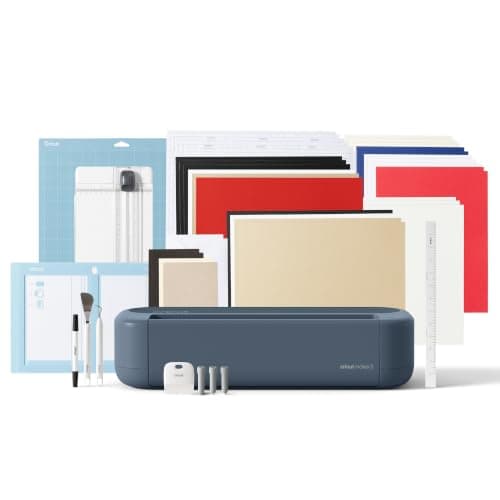
The Best Cutting Machine Under $500
Six registry machines currently priced under $500 across three brands, ranked by what the budget unlocks: material range, software and width.
Silhouette CAMEO Alternatives
What the Silhouette CAMEO is known for, and four registry alternatives — including the one that keeps offline software and the one that trades it for an easier app.
The Cricut Machine That Does Everything
The Maker 5 is the only Cricut rated for the full material list — here is exactly what that adds, and when it is wasted.
Back to Cutting Machines.