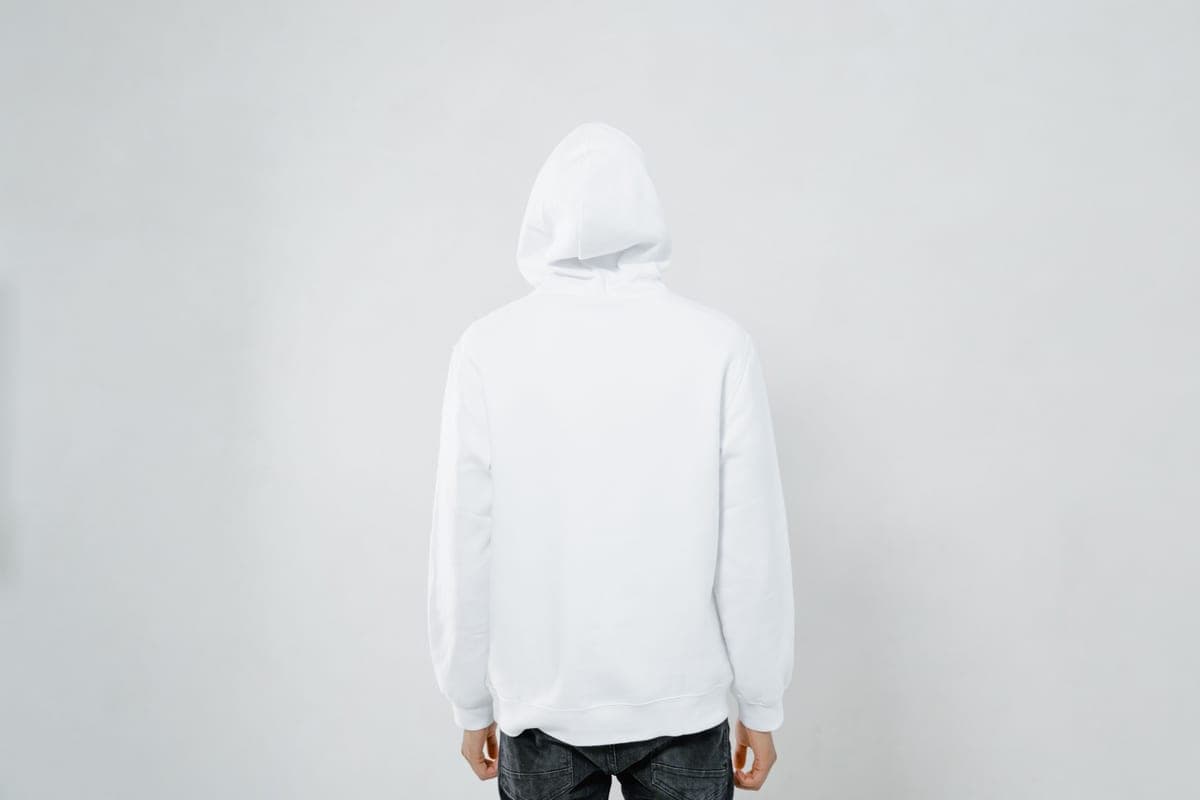
The Best HTV for Sweatshirts and Hoodies
A sweatshirt is not a thicker t-shirt. It is a loose, lofty fabric with seams and a hood in the way, and that changes the pressing more than the vinyl.
Heads up: Mat & Blade earns a commission from qualifying purchases made through the links on this page, at no extra cost to you. It never changes which products we recommend or how we rank them. Read the full disclosure.
For sweatshirts, buy Siser EasyWeed and change how you press, not what you press with. Sweatshirt fleece is thick, lofty and full of trapped air, so the usual failure is not the vinyl's chemistry — it is that the heat and pressure never reach the fabric surface evenly. EasyWeed is rated for the cotton and poly-cotton blends almost every hoodie blank is made from and stays thin enough not to look like a plastic patch; EasyWeed Stretch is the right call when the blank has elastane in it; HTVRONT rolls are the cost answer when the designs get large. A firm press mat and a longer pre-press do more for your results than any upgrade in material.
How we picked
The criteria below are the ones that actually separate materials on a thick, lofty garment. Every compatibility claim comes from the manufacturer's own published statement; we have no lab and do not pretend to.
- Published rating for the blend the blank actually is. Sweatshirt fleece is mostly cotton or 50/50 poly-cotton. A vinyl that only lists one of those is a partial answer.
- Film thickness and hand feel. On a lofty fabric a thick film sits above the surface and looks applied rather than printed. Thinner is better here, and noticeably so.
- Stretch behavior. Hoodies flex at the chest, cuffs and hood seam. If the blank has elastane in it, a rigid film will crack eventually.
- Cost per square inch. Sweatshirt designs are large, so this matters more than on tees, and it is the main argument for rolls over sheets.
- Tolerance of uneven pressure. Pockets, zips, seams and hood bulk all mean parts of the design get less pressure than others. Materials differ in how much that costs you.
- Honest downside. Every pick carries its real cons, including the ones that make it wrong for some readers.
What makes a sweatshirt harder than a t-shirt
Nothing about the chemistry. Everything about the geometry and the loft. If you press a hoodie exactly as you press a tee, it will fail in one of three predictable ways.
The fabric is full of air
Fleece and French terry are brushed or looped on at least one face, which means a cushion of trapped air between the plate and the fibers the adhesive needs to reach. That cushion absorbs pressure and insulates against heat. The fix is a longer pre-press — eight to ten seconds rather than three — to flatten the pile and drive out moisture, then firm pressure rather than more temperature.
The surface is not flat
A hoodie has a kangaroo pocket, often a zip, a hood that bunches behind the shoulders, and side seams that sit under the edge of a chest design. Any of those raises part of the garment and lowers the pressure across the rest. Pressing with the bulk hanging off the edge of your mat, or sliding a small pressing pillow under the design area, puts the whole design on one plane again.
The designs are bigger
Sweatshirt prints tend to be full chest or full back rather than left chest. That means more vinyl per garment, more weeding, and a real chance the design is wider than a handheld plate. Two overlapping passes on fleece is the classic cause of a visible rectangle on the finished garment, because the overlap gets double the heat.
Our picks in full

1. Best for the default on a cotton or poly-cotton sweatshirt
Siser EasyWeed HTV
Siser · Currently sold · Verified 2026-09-27
Sweatshirt blanks are overwhelmingly cotton or 50/50 poly-cotton fleece, and EasyWeed is rated for both. It is also thin, which matters more on a hoodie than on a tee: a thick film on a lofty fabric sits proud of the surface and reads as a plastic patch rather than a print. The weeding advantage still applies, and sweatshirt designs tend to be larger, so there is more thin detail to lose. Where it needs help is pressure, not formulation.
What works
- Weeds more cleanly than almost anything else at this price
- Thin enough that a layered design does not feel like a plastic patch
- Siser publishes clear time and temperature guidance for it
- Sold in single sheets, so you can try three colors without buying three rolls
What does not
- Matte only — no gloss, glitter or specialty finish in the base line
- Sheets cost more per square inch than buying a roll
- Still needs real heat and pressure; a household iron gives mixed results
Not for you if
You want a glitter or holographic finish. That is a different Siser product line, not EasyWeed.
Key specs
- Type
- Heat transfer vinyl (HTV) — for fabric
- Fabric compatibility
- Siser rates it for cotton, polyester and cotton/poly blends
- Thickness
- Siser published 90 microns / 3.5 mils
- Application
- Siser lists 305°F for 10-15 seconds at medium pressure
- Carrier
- Pressure-sensitive clear carrier sheet
- Finish
- Semi-gloss — EasyWeed Matte is a separate Siser line
Price as of November 12, 2026
#ad · affiliate link · we never show a price we cannot verify
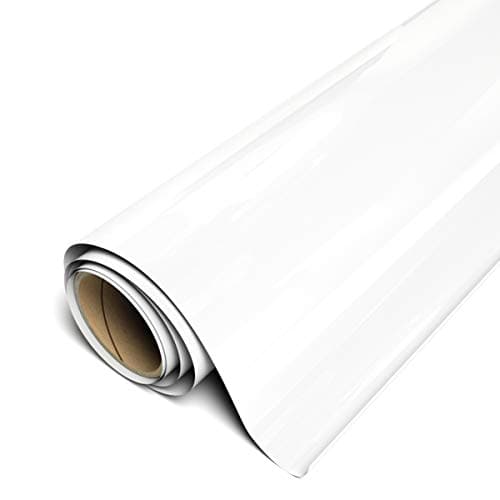
2. Best for hoodies with elastane, and anything in a stretchy french terry
Siser EasyWeed Stretch HTV
Siser · Prior generation · Verified 2026-10-08
Plenty of current hoodie blanks include a few percent elastane for shape retention, and performance fleece is a whole category now. On those, a rigid film flexes at the cuffs, the chest and the hood seam on every wear and eventually cracks across letters. Stretch HTV removes that failure mode because the film moves with the garment. It costs more, so it is the right buy only when the fabric genuinely stretches — check the composition, not the price.
What works
- Stretches with knit polyester instead of cracking when the garment does
- Thin and light enough that a tank top or onesie does not feel patched
- Weeds as cleanly as standard EasyWeed on fine detail
- Sold in both single sheets and rolls, so you can test one color first
What does not
- Discontinued by Siser — EasyWeed EcoStretch is the current stretch film
- Costs more per square inch than standard EasyWeed or budget roll HTV
- Needs 320°F and firm pressure, which is hotter than thin polyester likes
- Matte only — there is no gloss or glitter in the Stretch line
- Overkill, and an unnecessary expense, on a rigid cotton tee
Not for you if
Everything you press is standard cotton t-shirts. Standard EasyWeed is cheaper and the stretch does nothing for you there.
Key specs
- Type
- Heat transfer vinyl (HTV) — stretch formulation
- Fabric compatibility
- Siser rates it for 100% polyester, 100% cotton, poly/cotton blends and leather
- Application
- Siser lists 320°F for 20 seconds at firm pressure
- Thickness
- Siser published 85 microns / 3.35 mils — thinner than standard EasyWeed
- Peel
- Hot or cold — the carrier is forgiving either way
- Finish
- True matte
Price as of November 12, 2026
#ad · affiliate link · we never show a price we cannot verify
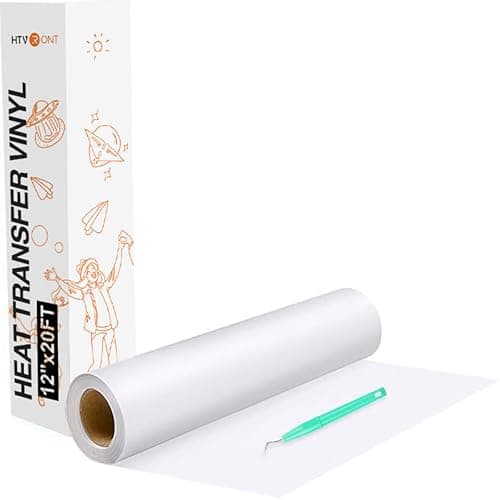
3. Best for cost per garment on a run of sweatshirts
HTVRONT HTV Rolls
HTVRONT · Currently sold · Verified 2026-09-27
Sweatshirt designs are big. A chest print across a hoodie uses several times the vinyl of a left-chest logo on a tee, so cost per square inch bites harder here than anywhere else on the site, and buying by the roll is the obvious answer. HTVRONT rates its standard rolls for cotton, polyester and blends, which covers normal fleece. The trade-off is weeding behavior on fine detail and consistency between rolls, which on a large design means a test press from each new roll is not optional.
What works
- Far cheaper by area than sheet-format premium HTV
- Wide color and finish range including glitter and holographic
- Rolls mean you stop rationing material and start practicing
What does not
- Fine detail weeds less cleanly than Siser EasyWeed
- Batch-to-batch consistency is less predictable
- You are committing to a whole roll of one color
Not for you if
Your first project is a very fine script design. Learn to weed on EasyWeed first, then switch to save money.
Key specs
- Type
- Heat transfer vinyl (HTV)
- Format
- Rolls, typically 12 in wide
- Fabric compatibility
- Rated for cotton, polyester and blends
- Finish
- Matte, plus glitter and specialty lines
- Value
- Lowest cost per square inch of the three HTVs here
Price as of November 12, 2026
#ad · affiliate link · we never show a price we cannot verify
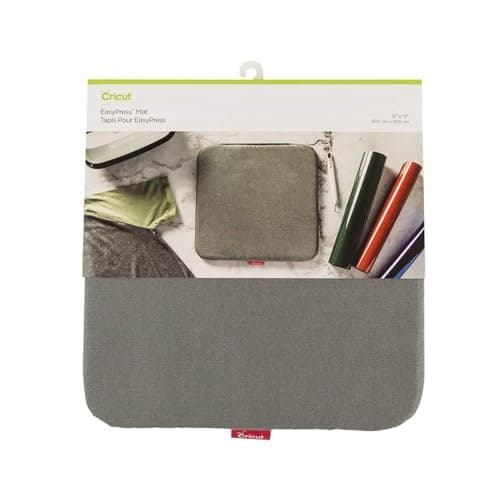
4. Best for making a handheld press work on a thick garment
Cricut EasyPress Mat
Cricut · Currently sold · Verified 2026-09-27
The single most useful purchase on this page if your heat source is an EasyPress or similar. A firm heat press mat gives you a flat, heat-resistant surface that pushes back, which is exactly what fleece will not do on its own — a sweatshirt on a soft ironing board absorbs the pressure you think you are applying. It also lets you press around a pocket or a zip by putting the bulk off the edge of the mat rather than under the plate.
What works
- Turns an uneven surface into an even one, which is most of a good press
- Protects the table underneath
- Costs very little relative to the failures it prevents
What does not
- One more thing to store
- Does not fix pressure that is simply too light
Not for you if
You have a clamshell press with a proper lower platen. The platen already does this job.
Key specs
- Purpose
- Firm heat-resistant base that concentrates pressure into the design
- Why it matters
- Absorbs seams and zips so the design sits flat
- Sizes
- 12 in x 12 in; Cricut also lists a 16 in x 20 in mat
Price as of November 12, 2026
#ad · affiliate link · we never show a price we cannot verify
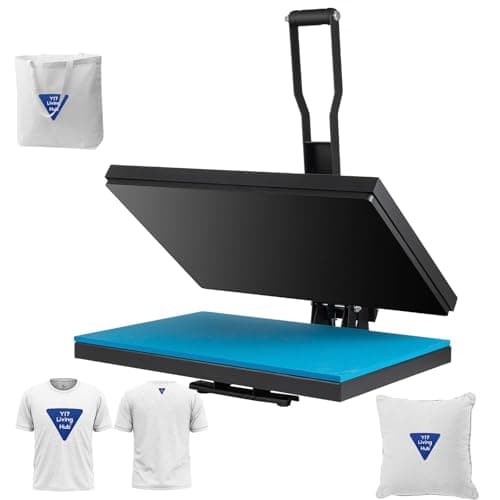
5. Best for pressing hoodie-sized designs in one shot
SmarketBuy 16 x 20 Clamshell Heat Press
SmarketBuy · Currently sold · Verified 2026-09-29
A 16 by 20 inch clamshell is the honest answer for anyone pressing sweatshirts regularly. A big chest design on a hoodie exceeds a handheld plate, and two overlapping passes on fleece is where a visible press line appears. A clamshell also applies even mechanical pressure through a thick, uneven garment in a way hand weight cannot. The obvious costs are money, bench space and the fact it is not something you put away in a drawer.
What works
- Presses a hoodie front or an oversized design in a single pass
- Covers a full 13 x 19 transfer, which a 15 x 15 platen cannot
- Clamp pressure repeats exactly, which matters most on thick garments
What does not
- Heavy, and it needs considerably more bench space than a 15 x 15
- Overkill for standard adult front prints, which fit a smaller platen
- Takes longer to reach temperature than a small plate
Not for you if
You press standard adult t-shirt designs a few times a month. A 15 by 15 platen already covers those, for less money and less table.
Key specs
- Type
- High-pressure clamshell heat press, 1700 W
- Platen size
- 16 x 20 in
- Pressure
- Adjustable clamp — repeatable every press
- Bench space
- Permanent, and more of it than a 15 x 15
- Typical use
- Hoodies, DTF transfers, oversized prints, batch work
Price as of November 12, 2026
#ad · affiliate link · we never show a price we cannot verify
The picks side by side
| Material | Format | Published rating | Stretch | Best for |
|---|---|---|---|---|
| Siser EasyWeed | Sheets and rolls | Cotton, polyester, poly/cotton blends | No | Standard cotton and 50/50 fleece |
| Siser EasyWeed Stretch | Sheets and rolls | 100% polyester, cotton, blends, leather | Yes — the point of the material | Blanks with elastane, performance fleece |
| HTVRONT HTV rolls | Rolls, typically 12 in wide | Cotton, polyester, blends | No | Large designs, cost per garment |
How to press a hoodie, in order
1Work out what the blank actually is
Read the composition on the tag. 100% cotton and 50/50 poly-cotton both take the vinyl's cotton figure as a starting point; anything with elastane in it needs stretch vinyl and the lowest setting the material supports.
2Get the garment flat and on one plane
Hang the hood and the sleeves off the edge of the mat. If a pocket seam crosses the design area, put a pressing pillow underneath so the design sits on a single level surface.
3Pre-press for eight to ten seconds
Longer than you would on a tee. You are flattening the pile and driving out moisture. Lift and look: the fabric should be visibly compressed where the plate sat.
4Press at the published setting with firm pressure
Start at the vinyl's number for the blend. Put weight behind a handheld plate, or close a clamshell on its normal setting. Resist adding temperature — on a 50/50 blend the polyester half limits you.
5Peel as the carrier instructs, then press again through a cover sheet
A short second press through a Teflon sheet or parchment after peeling settles the film into the compressed pile and is the step most people skip on fleece.
6Leave it 24 hours before the first wash
Then wash inside out on cold. Fleece sheds and pills faster than jersey, which is a garment issue rather than a vinyl one, but it makes a failing transfer look worse sooner.
The mistakes that get blamed on the vinyl
- A three-second pre-press. The single most common cause of a hoodie transfer that lifts in the wash. Fleece needs longer.
- Pressing over the pocket seam. The seam raises the fabric, the surrounding design gets no pressure, and the edges lift first. Use a pillow.
- Two overlapping passes with a small plate. The overlap gets double heat and shows as a line. If the design is wider than your plate, that is an argument for a bigger press, not a technique problem.
- Cotton settings on a 50/50 blank. Half of that fabric is polyester. Use the polyester figure and work up with time, not heat.
- A soft ironing board. It absorbs the pressure you think you are applying. A firm heat press mat is a genuinely cheap fix.
- Assuming a hoodie needs more heat than a tee. It needs more pressure and a longer pre-press. The temperature is set by the fiber, not the thickness.
What about the press itself?
A handheld plate can press a sweatshirt if the design fits inside the plate and you have a firm mat under it. Past that, the honest answer is a clamshell: even mechanical pressure through a thick garment is exactly what a handheld plate cannot deliver, and a 16 by 20 platen covers a full chest print in one shot. The best heat press for hoodies is the full version of that argument, and what size heat press do I need works through platen sizes against garment sizes.
If you are still deciding between a handheld and a real press at all, EasyPress versus heat press is the comparison, and sweatshirts are one of the clearest cases where the clamshell wins on results rather than convenience.
Common questions
What HTV is best for sweatshirts and hoodies?
What temperature and time do you press HTV on a hoodie?
Why does HTV peel off sweatshirts but not t-shirts?
Do you need a bigger heat press for hoodies?
How do you press a design over a hoodie pocket?
Sources
- Siser North America — HTV product range — Confirmed the current named Siser HTV lines including EasyWeed and EasyWeed Stretch, and that Siser publishes an HTV reference chart - checked 10 October 2026
- HTVRONT — Confirmed HTVRONT sells standard HTV in roll format rated for cotton, polyester and blends - checked 10 October 2026
- Cricut Heat Guide — Per-material, per-press time and temperature settings used as the reference for published-figure claims - checked 10 October 2026
How we picked
We verify every product is currently sold by reading the manufacturer's own catalog, compare published specifications rather than marketing copy, and rank on what a first-time buyer has to decide. We do not run lab tests and we do not claim to, and commission never affects the order.
Read this next
The Best HTV Vinyl for Beginners
Which heat transfer vinyl weeds cleanly and presses forgivingly — and which to switch to later.
The Best HTV Vinyl for Cotton Shirts
Which heat transfer vinyl to buy for 100% cotton tees, why cotton is the forgiving fabric, and the three things that actually ruin a cotton press.
The Best Heat Press for Hoodies
Presses sized and built for hoodies, plus the pocket, seam and thickness problems to plan around.
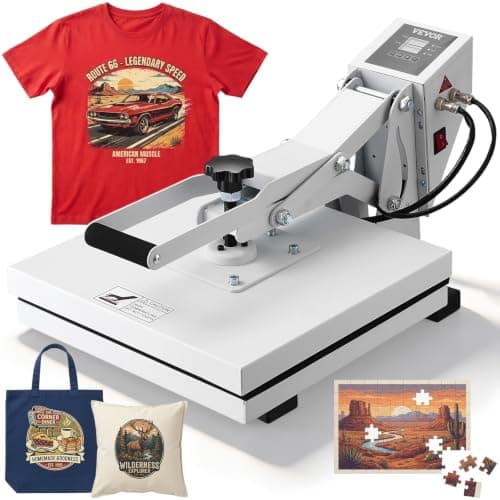
What Size Heat Press Do I Need?
How press platen size maps to real projects, why 15x15 is the usual answer, and when to size up or down.
How to Use HTV
The full HTV process from cut to peel, plus a troubleshooting section for when it does not stick.
Heat Press Temperature Guide
Published time and temperature figures by material, sourced — plus the three variables that matter more.
Back to Vinyl & Materials.