Siser EasyWeed vs EasyWeed Stretch
On paper these two are almost the same film. The real difference is what happens when the garment moves — and one of them is no longer the one Siser sells.
Heads up: Mat & Blade earns a commission from qualifying purchases made through the links on this page, at no extra cost to you. It never changes which products we recommend or how we rank them. Read the full disclosure.
Buy standard EasyWeed unless the garment stretches — and if it does, buy EasyWeed EcoStretch rather than EasyWeed Stretch, because Siser has discontinued the Stretch line. That is the short answer and it has two parts. The first is the original question: these two films are 5 microns apart in thickness and 15 degrees apart in application temperature, and the only difference that matters in practice is whether the film moves when the fabric does. The second is the part most pages answering this query have not caught up with. Siser's own product page now lists EasyWeed Stretch as discontinued, with EasyWeed EcoStretch as the current stretch material. The Amazon listings are still live, so you can buy Stretch today; you should know you are buying end-of-line stock.
Quick picks
| # | Product | Best for | Price |
|---|---|---|---|
| 1 |  Siser EasyWeed HTVThe default heat transfer vinyl for beginners: it weeds cleanly, presses at a forgiving temperature, and is... | Cotton, blends and anything that does not stretch | $39.99 · View on Amazon Price as of November 12, 2026 #ad · affiliate link · we never show a price we cannot verify |
| 2 |  Siser EasyWeed EcoStretchSiser's current stretch heat transfer vinyl and the stated replacement for the discontinued EasyWeed Stretc... | Stretchy fabric, and the film Siser actually sells now | $17.99 · View on Amazon Price as of November 12, 2026 #ad · affiliate link · we never show a price we cannot verify |
| 3 |  Siser EasyWeed Stretch HTVThe heat transfer vinyl built for fabric that moves — it stretches with a polyester jersey instead of crack... | Buying out existing stock while it lasts | $18.39 · View on Amazon Price as of November 12, 2026 #ad · affiliate link · we never show a price we cannot verify |
| 4 | 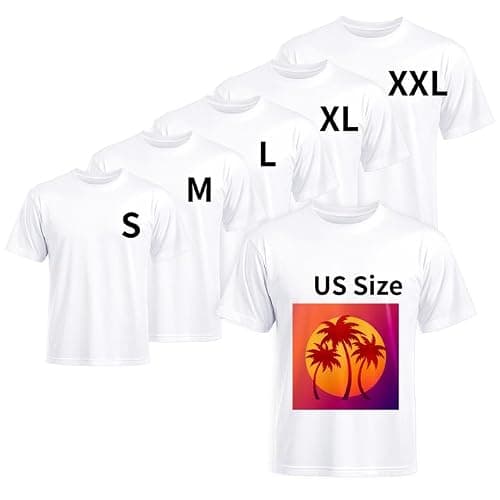 Polyester Blank ShirtsSublimation bonds to polyester and only polyester — the blank matters more than the printer, and this is th... | The garment that actually decides this | $19.99 · View on Amazon Price as of November 12, 2026 #ad · affiliate link · we never show a price we cannot verify |
| 5 | 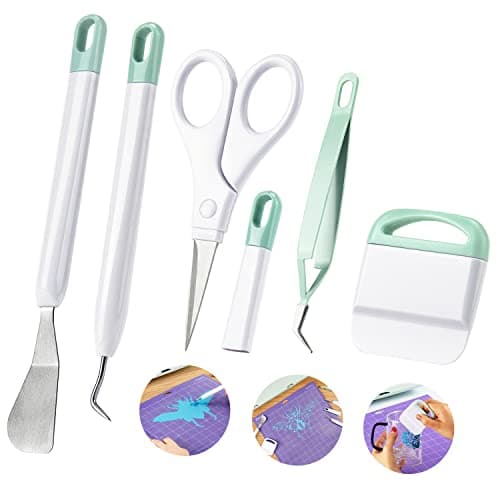 Ecraft Vinyl Weeding Tool SetThe single accessory that changes a beginner's experience most — weeding with a pin is miserable, and a hoo... | Where the thinness actually bites | $7.99 · View on Amazon Price as of November 12, 2026 #ad · affiliate link · we never show a price we cannot verify |
Tap any row to jump to the full write-up. Prices come from Amazon on the date stamped on each button and can change after that — check the listing before you buy.
The published specifications, side by side
Everything below comes from Siser's own published product information rather than retailer copy, which matters here because the retailer figures for these two films disagree with each other in several places. Where a number appears, it is Siser's.
| EasyWeed | EasyWeed Stretch | EasyWeed EcoStretch | |
|---|---|---|---|
| Status | Current | Discontinued by Siser | Current — the stretch replacement |
| Thickness | 90 microns / 3.5 mils | 85 microns / 3.35 mils | 80 microns / 3.15 mils |
| Finish | Semi-gloss | True matte | Matte |
| Application temperature | 305°F / 150°C | 320°F / 160°C | 250°F / 120°C |
| Press time | 10-15 seconds | 20 seconds | 10-15 seconds |
| Pressure | Medium | Firm | Medium |
| Peel | Hot or cold | Hot or cold | Hot |
| Rated fabrics | Cotton, polyester, poly/cotton blends, leather | Cotton, polyester, blends, leather, Lycra/spandex | Cotton, polyester, blends, spandex, Lycra |
| Layerable | Yes | Yes | Yes |
| Notable | EasyPress users add approx. 30° | EasyPress users add approx. 30° | Water-based; film and liner stated 100% recyclable |
Look at that table and notice how small the hardware differences are. Five microns separates EasyWeed from Stretch — about a twentieth of the thickness of a sheet of paper. Both are PU films, both layer, both peel hot or cold, both are rated for the same base fabrics. If you were choosing on specification alone you would struggle to tell them apart. The reason they exist as separate products is a property that does not appear in a spec sheet at all.
What the difference actually is
Stretch and rebound. Standard EasyWeed is a stable film: press it onto a cotton tee and it stays exactly the shape you pressed it. That is a virtue on a woven fabric, and a liability on a knit. A performance jersey, a legging or a ribbed tank stretches when the body inside it moves, and the fabric underneath a rigid film has to go somewhere. The edges take the stress first, then the film cracks through the middle — and no amount of extra press time prevents that, because the failure is mechanical rather than thermal.
The stretch formulations are built on a film that moves with the garment and returns, which removes the failure mode rather than delaying it. That is the whole difference, and it is a difference you cannot see on the garment until the tenth wear. It is also why the fabric, not the design, decides which film you buy: a tiny left-chest logo on a legging needs stretch film, and a huge back print on a cotton hoodie does not.
1. Best for cotton, blends and anything that does not stretch
Siser EasyWeed HTV
Siser · Currently sold · Verified 2026-09-27
Still the default heat transfer vinyl for most work, and the one to buy if you are buying one. Siser publishes it at 90 microns / 3.5 mils with a semi-gloss finish, rated for 100% cotton, 100% polyester, poly/cotton blends and leather, applied at 305°F for 10-15 seconds at medium pressure with a hot or cold peel. It weeds more cleanly than almost anything at its price, which matters more than any fabric rating on a fine script design. Honest cons: it does not stretch, so it cracks on performance knits; it is semi-gloss rather than matte, which some people dislike on a vintage-look print; and single sheets cost more per square inch than rolls.
What works
- Weeds more cleanly than almost anything else at this price
- Thin enough that a layered design does not feel like a plastic patch
- Siser publishes clear time and temperature guidance for it
- Sold in single sheets, so you can try three colors without buying three rolls
What does not
- Matte only — no gloss, glitter or specialty finish in the base line
- Sheets cost more per square inch than buying a roll
- Still needs real heat and pressure; a household iron gives mixed results
Not for you if
You want a glitter or holographic finish. That is a different Siser product line, not EasyWeed.
Key specs
- Type
- Heat transfer vinyl (HTV) — for fabric
- Fabric compatibility
- Siser rates it for cotton, polyester and cotton/poly blends
- Thickness
- Siser published 90 microns / 3.5 mils
- Application
- Siser lists 305°F for 10-15 seconds at medium pressure
- Carrier
- Pressure-sensitive clear carrier sheet
- Finish
- Semi-gloss — EasyWeed Matte is a separate Siser line
Price as of November 12, 2026
#ad · affiliate link · we never show a price we cannot verify
2. Best for stretchy fabric, and the film siser actually sells now
Siser EasyWeed EcoStretch
Siser · Currently sold · Verified 2026-10-29
This is the current stretch film in Siser's line and the stated replacement for EasyWeed Stretch, which matters more than the small spec differences. Published at 80 microns / 3.15 mils — the thinnest of the three — water-based, rated for cotton, polyester, blends, spandex and Lycra, and applied at 250°F for 10-15 seconds at medium pressure. That 250°F is the headline: thin polyester scorches and glazes at temperatures cotton shrugs off, so a lower-temperature stretch film is genuinely safer on a legging or a mesh jersey. Honest cons: hot peel only, so there is no cold-peel latitude; it costs more per square inch than standard EasyWeed; a low application temperature means an under-set press fails silently; and fewer colors are stocked on Amazon than for standard EasyWeed.
What works
- 250°F is genuinely kinder to thin polyester and spandex than any 320°F film
- The thinnest stretch film Siser currently makes, so a tank top does not feel patched
- Water-based and recyclable, which is the reason the line exists
- Siser's current line, so colors and stock are not sell-through leftovers
What does not
- Hot peel only — there is no cold-peel latitude to fall back on
- Costs more per square inch than standard EasyWeed
- A low application temperature means an under-set press is a real failure mode
- Fewer colors stocked on Amazon than standard EasyWeed
Not for you if
Everything you press is rigid cotton. Standard EasyWeed is cheaper and the stretch buys you nothing there.
Key specs
- Type
- Heat transfer vinyl (HTV) — water-based stretch formulation
- Thickness
- Published at 80 microns / 3.15 mils
- Application
- 250°F for 10-15 seconds at medium pressure, hot peel
- Fabric compatibility
- Rated for 100% cotton, 100% polyester, poly/cotton blends, spandex and Lycra
- Certification
- CPSIA certified; film and liner stated as 100% recyclable
Price as of November 12, 2026
#ad · affiliate link · we never show a price we cannot verify
3. Best for buying out existing stock while it lasts
Siser EasyWeed Stretch HTV
Siser · Prior generation · Verified 2026-10-08
Named honestly rather than recommended, because Siser's own product page now lists EasyWeed Stretch as discontinued in favor of EcoStretch. The film itself is good — Siser published it at 85 microns / 3.35 mils, a true matte finish, PU, laser-safe, layerable, CPSIA certified, rated for cotton, polyester, blends, leather and Lycra/spandex, applied at 320°F for 20 seconds at firm pressure with a hot or cold peel. If you already have a roll, use it with those settings. Honest cons: it is end-of-line, so colors and sizes will thin out; 320°F is the hottest of the three, which is the wrong direction for thin polyester; and there is no point starting a project on a film you may not be able to re-order.
What works
- Stretches with knit polyester instead of cracking when the garment does
- Thin and light enough that a tank top or onesie does not feel patched
- Weeds as cleanly as standard EasyWeed on fine detail
- Sold in both single sheets and rolls, so you can test one color first
What does not
- Discontinued by Siser — EasyWeed EcoStretch is the current stretch film
- Costs more per square inch than standard EasyWeed or budget roll HTV
- Needs 320°F and firm pressure, which is hotter than thin polyester likes
- Matte only — there is no gloss or glitter in the Stretch line
- Overkill, and an unnecessary expense, on a rigid cotton tee
Not for you if
Everything you press is standard cotton t-shirts. Standard EasyWeed is cheaper and the stretch does nothing for you there.
Key specs
- Type
- Heat transfer vinyl (HTV) — stretch formulation
- Fabric compatibility
- Siser rates it for 100% polyester, 100% cotton, poly/cotton blends and leather
- Application
- Siser lists 320°F for 20 seconds at firm pressure
- Thickness
- Siser published 85 microns / 3.35 mils — thinner than standard EasyWeed
- Peel
- Hot or cold — the carrier is forgiving either way
- Finish
- True matte
Price as of November 12, 2026
#ad · affiliate link · we never show a price we cannot verify
4. Best for the garment that actually decides this
Polyester Blank Shirts
Joyclub · Currently sold · Verified 2026-09-27
Included because the choice between these films is a fabric decision, not a vinyl decision, and the fastest way to get it right is to have the blank in your hand. A 100% polyester blank tells you immediately whether you are dealing with a stable woven or a springy knit — pull it across the chest and watch whether it rebounds. Honest cons: polyester feels different from cotton and not everyone likes it, white and very light colors only in most multipacks, and cheap blanks vary in weight between batches.
What works
- The only fabric sublimation genuinely bonds to
- Result has no hand feel at all — the design is in the fabric
- Will not crack or peel the way a vinyl transfer can
What does not
- White or near-white only — this is a hard physical limit
- 100% polyester feels different from a cotton tee
- Blends fade the design, which you may or may not want
Not for you if
You want a soft cotton shirt or a dark shirt. Use heat transfer vinyl instead — it works on both.
Key specs
- Fabric
- 100% polyester, or a high-polyester blend
- Color
- White or very light — dark fabric will not work
- Why polyester
- Sublimation ink bonds to polymer, not to cotton fiber
- Blend behavior
- A 65/35 blend gives a faded, vintage-looking result
Price as of November 12, 2026
#ad · affiliate link · we never show a price we cannot verify
5. Best for where the thinness actually bites
Ecraft Vinyl Weeding Tool Set
ecraft · Currently sold · Verified 2026-09-27
Worth the line because the thinner the film, the more the weeding tool matters. All three of these are thin by HTV standards and the stretch films are thinner still, so fine counters and thin script strokes lift more easily than they do on a thick budget roll. A hook and a decent pair of tweezers save more designs than any upgrade in vinyl. Honest cons: a cheap set has one or two tools you will never use, the points dull over time, and no tool fixes a cut that was too shallow in the first place.
What works
- Turns the most tedious step into a manageable one
- The scraper doubles as your transfer-tape burnishing tool
- Cheap, and a set lasts years
What does not
- Cheap sets have soft points that dull quickly
- More pieces than you will actually use
Not for you if
Nothing — if you cut vinyl, you need at least a hook.
Key specs
- Typical set
- Weeding hook, fine tweezers, scraper, spatula, scissors
- Used for
- Removing the vinyl you did not cut out of the design
- Also fits
- Every brand of machine — nothing here is Cricut-specific
Price as of November 12, 2026
#ad · affiliate link · we never show a price we cannot verify
The temperature difference is bigger news than the thickness
The row in that table worth reading twice is the application temperature, because it runs in the opposite direction to what people expect. EasyWeed Stretch is the hottest of the three at 320°F for 20 seconds with firm pressure. EcoStretch, the replacement, is the coolest by a wide margin at 250°F for 10-15 seconds at medium pressure. Standard EasyWeed sits between them at 305°F.
That matters because thin polyester is heat-sensitive in a way cotton is not. It scorches, it glazes, and it can take a permanent shiny press mark — and those are the fabrics a stretch film is for in the first place. A stretch material that needs 320°F is therefore slightly at war with its own use case, and a stretch material that works at 250°F is a real improvement rather than a marketing one. If you have been pressing performance fabric with EasyWeed Stretch and seeing shine marks, the temperature is the first thing to look at. Our heat press temperature guide has the wider table of settings by material.
Which one for which garment
| Garment | Film | Why |
|---|---|---|
| Cotton t-shirt | EasyWeed | No stretch to accommodate; cheapest and cleanest weeding |
| Cotton or 50/50 hoodie | EasyWeed | Lofty but stable fabric; thinness matters more than stretch |
| Canvas tote or apron | EasyWeed | Woven and rigid; a stretch film is wasted money |
| Structured cap, flat front panel | EasyWeed | The geometry is the problem, not the fabric |
| Performance jersey or mesh | EcoStretch | Knit polyester that moves, and 250°F is kinder to it |
| Leggings and spandex | EcoStretch | Highest stretch load there is; rebound is the whole job |
| Ribbed tank top | EcoStretch | Ribbing stretches far more than it looks like it will |
| Baby onesie | EcoStretch | Soft knit, frequent washing, and thin film feels better on skin |
| Sublimation-grade stable poly tee | EasyWeed | Rated for polyester and does not need the stretch premium |
| Leather or faux leather patch | EasyWeed | Both are rated for leather; EasyWeed is cheaper |
What EcoStretch gives up
It would be a poor comparison that only praised the new material, so here is the honest ledger on EcoStretch. It is hot peel only, where both of the older films peel hot or cold — which sounds minor until you are peeling a layered design and want the carrier to stay put while you line up the next layer. Its low application temperature cuts both ways: a press that is running cooler than its dial claims will under-set a 250°F film without any visible sign at the time, and you find out in the wash. Fewer colors are stocked on the single retail network this site links to than for standard EasyWeed. And it costs more per square inch than standard EasyWeed, as every stretch film does.
None of that outweighs being the film the manufacturer currently makes. Buying end-of-line stock for a project you intend to repeat is a specific kind of mistake: you match a color, you build a design around it, and then you cannot re-order. If you are pressing one gift for one person, a discontinued roll is fine. If you are learning a material you intend to keep using, learn the current one.
Weeding and layering, which are the same conversation
All three of these films are thin by heat transfer vinyl standards, and thin is the property that makes weeding pleasant and layering possible. Thickness is what ruins a layered design: stack three layers of a thick budget film and you get a stiff plate on the shirt that cracks along the fold lines, while three layers of a thin film still moves with the fabric. Siser lists all three as layerable, and at 80 to 90 microns all three are good candidates for it.
The flip side of thin film is that fine detail lifts more easily during weeding, and the two stretch films are thinner than standard EasyWeed rather than thicker. A hook and tweezers matter more here than on a thick roll. Two rules hold regardless of which film you pick: press each lower layer for only two to three seconds rather than the full time, and stop at three layers. How to weed vinyl covers the technique, and the best HTV for layering covers the stacking order.
The verdict
If you are buying one roll of heat transfer vinyl, buy standard EasyWeed. It is rated for the fabrics most people press, it weeds beautifully, it is the cheapest of the three per square inch, and 305°F at medium pressure is a forgiving setting on a press whose dial you do not entirely trust. The only thing it cannot do is survive repeated stretching, and most garments do not ask it to.
If the garment stretches, buy EasyWeed EcoStretch rather than EasyWeed Stretch. The original query is a fair one and the two films were genuinely close — 5 microns and 15 degrees apart, with rebound as the real distinction — but Siser has retired Stretch and the replacement is both thinner and, at 250°F, markedly safer on the thin polyester that stretch film exists to serve. Use up a roll of Stretch if you own one, at 320°F for 20 seconds with firm pressure. Do not start a repeatable project on it. Siser versus Oracal is the next step out if you are still choosing brands, and the best HTV for jerseys is the specific case where stretch film earns its premium.
Common questions
What is the difference between Siser EasyWeed and EasyWeed Stretch?
Is Siser EasyWeed Stretch discontinued?
What replaced Siser EasyWeed Stretch?
What temperature do you press Siser EasyWeed Stretch at?
Can you use EasyWeed Stretch on cotton?
Which Siser HTV is best for leggings and activewear?
Is EasyWeed Stretch thinner than regular EasyWeed?
Sources
- Siser EasyWeed — Siser product page — Siser's own published figures used above — 90 microns / 3.5 mils, rated for 100% cotton, 100% polyester, cotton/poly blends and leather, applied at 305°F/150°C with medium pressure for 10-15 seconds, hot or cold peel, EasyPress users add approx. 30° - checked 29 October 2026
- Siser EasyWeed Stretch — Siser product page — Siser's own page, which lists the product as discontinued and publishes 85 microns / 3.35 mils, true matte, PU, laser-safe, layerable, CPSIA certified, rated for cotton, polyester, blends, leather and Lycra/spandex, applied at 320°F/160°C with firm pressure for 20 seconds - checked 29 October 2026
- Siser EasyWeed EcoStretch — retailer specification and application sheet — Published figures for the replacement film — 80 microns / 3.15 mils, water-based, 100% recyclable film and liner, CPSIA certified, rated for 100% cotton, 100% polyester, cotton/poly blends, spandex and Lycra, applied at 250°F/120°C for 10-15 seconds at medium pressure, hot peel - checked 29 October 2026
- Siser EasyWeed EcoStretch — current retail listing — Listing confirmed live and in stock on 29 October 2026, title-checked against the Siser product name before it was added to this site's product registry
How we picked
We verify every product is currently sold by reading the manufacturer's own catalog, compare published specifications rather than marketing copy, and rank on what a first-time buyer has to decide. We do not run lab tests and we do not claim to, and commission never affects the order.
Read this next
The Best HTV Vinyl for Beginners
Which heat transfer vinyl weeds cleanly and presses forgivingly — and which to switch to later.
Best HTV for Jerseys
Which heat transfer vinyl survives a performance jersey — stretch formulations, the scorch temperature limit on polyester, and why mesh needs a different approach.
The Best Heat Transfer Vinyl for Polyester
Which heat transfer vinyl actually holds on 100% polyester and performance fabric, the heat ceiling that stops it scorching, and what dye migration does to a colored shirt.
Siser vs Oracal
Why these two brands are not really rivals, and which one your project actually needs.
The Best HTV for Layering
Which heat transfer vinyl stacks without going stiff, the press order and timings for a layered design, and why the fourth layer is usually a mistake.
How to Use HTV
The full HTV process from cut to peel, plus a troubleshooting section for when it does not stick.
Back to Vinyl & Materials.