Sublimation Ink vs Regular Ink
Same bottles, same printer, completely different chemistry — and the swap only goes one way.
Heads up: Mat & Blade earns a commission from qualifying purchases made through the links on this page, at no extra cost to you. It never changes which products we recommend or how we rank them. Read the full disclosure.
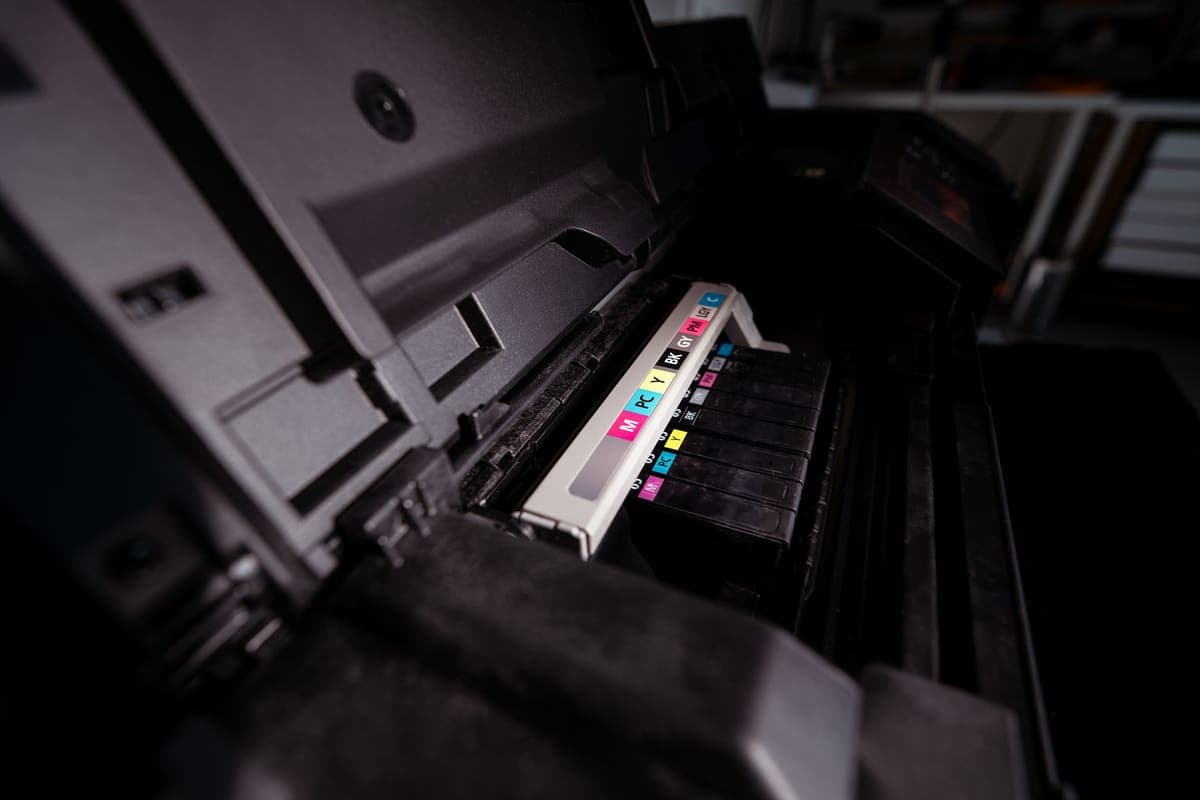
Sublimation ink and regular inkjet ink are different chemistry doing different jobs. Sublimation ink is a dye that turns to gas under heat and bonds permanently into polyester or a polymer coating. Regular inkjet ink is dye or pigment that soaks into paper and stays there — heat it and nothing transfers. They are not interchangeable in either direction, and filling a printer with sublimation ink is a permanent conversion: residual ink in the lines and print head means it can never reliably print as a normal printer again.
The comparison table
Side by side, these are two unrelated products that happen to come in the same bottles and fit the same printer.
| Sublimation ink | Regular dye ink | Pigment ink | |
|---|---|---|---|
| What it does under heat | Turns to gas and transfers | Nothing useful | Nothing useful |
| Bonds to | Polyester and polymer coatings | Paper fibres | Sits on the paper surface |
| Printed page looks | Dull and wrong until pressed | Correct straight away | Correct straight away |
| Needs special paper | Yes — coated transfer paper | No | No |
| Needs a heat press | Yes | No | No |
| Works on cotton | No | n/a | n/a |
| Water resistance on paper | Low | Low | High |
| Used for | Transfers onto blanks | Everyday documents and photos | Documents, archival prints |
| Reversible in a printer | No | n/a | n/a |
Why a sublimation print looks dull on paper
This worries nearly every first-time user, and it is the system working correctly. Sublimation ink on transfer paper is sitting on a coated surface waiting to be released, not absorbed into the sheet. Colours look washed out, muddy and shifted.
Under heat the dye sublimates — goes straight from solid to gas — passes into the polymer, and becomes the colour it was always going to be. The transformation is dramatic, and it is why you cannot judge a sublimation print by looking at the paper. It is also why the ICC colour profile matters: the profile is what tells your software to print the values that will become the right colour after pressing, rather than the values that look right now.
Why the conversion only goes one way
When you fill a refillable-tank printer with sublimation ink, the ink does not only sit in the tanks. It fills the lines, the damper, the print head and the waste pad. Draining the tanks and refilling with regular ink leaves sublimation ink throughout that path, and it comes out gradually, in the wrong places, for a long time.
The practical result is a printer that prints muddy, unpredictable colour and cannot be trusted for documents or for sublimation. There is no flush procedure that reliably clears it. Treat the decision as final: this printer is now a sublimation printer. EcoTank conversion, honestly covers the warranty side of the same decision.
Our picks in full
1. Best for converting a refillable-tank inkjet
Third-Party Sublimation Ink
Various · Currently sold · Verified 2026-09-27
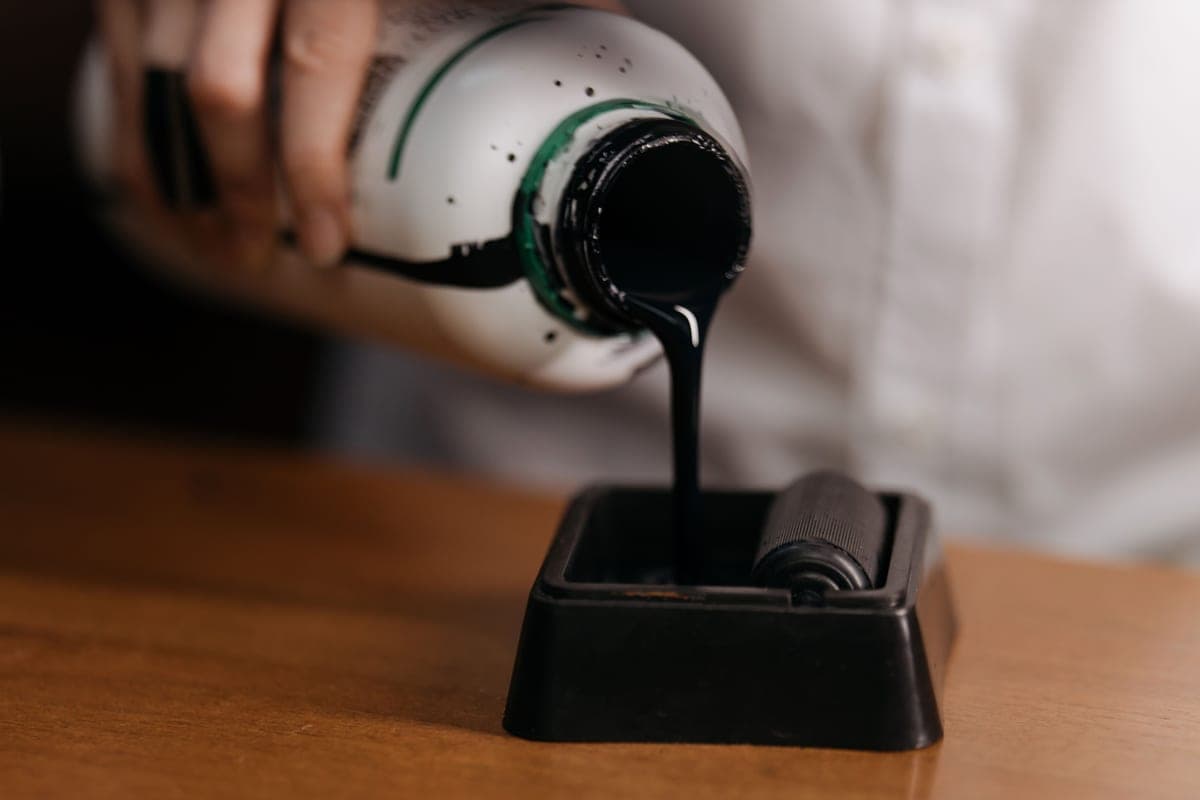
The product this comparison is about, and the thing to buy if a conversion is the route you have chosen. It is dye-sublimation ink in refill bottles, intended for refillable-tank inkjets and most commonly used in Epson EcoTanks. The detail that matters more than the brand on the bottle is the ICC colour profile the maker publishes for it — without one, printed colour and transferred colour diverge and you spend blanks finding out. The conversion is not reversible, which is the whole reason this page exists.
What works
- Turns a cheap printer into a working sublimation printer
- Far cheaper per page than cartridge sublimation ink
- Most sellers supply an ICC profile for color accuracy
What does not
- Voids Epson's coverage for damage caused by non-genuine ink
- Color accuracy varies a lot by brand without a good profile
- There is no going back to regular printing
Not for you if
The printer is also your household document printer. Once it is converted, that is over.
Key specs
- Type
- Dye-sublimation ink in refill bottles
- Used with
- Refillable-tank inkjets, most commonly Epson EcoTank
- Color profile
- An ICC profile from the ink maker matters more than the ink brand
- Reversible
- No — a converted printer stays converted
#ad · affiliate link · we never show a price we cannot verify
2. Best for the printer people convert
Epson EcoTank ET-2800
Epson · Currently sold · Verified 2026-09-27
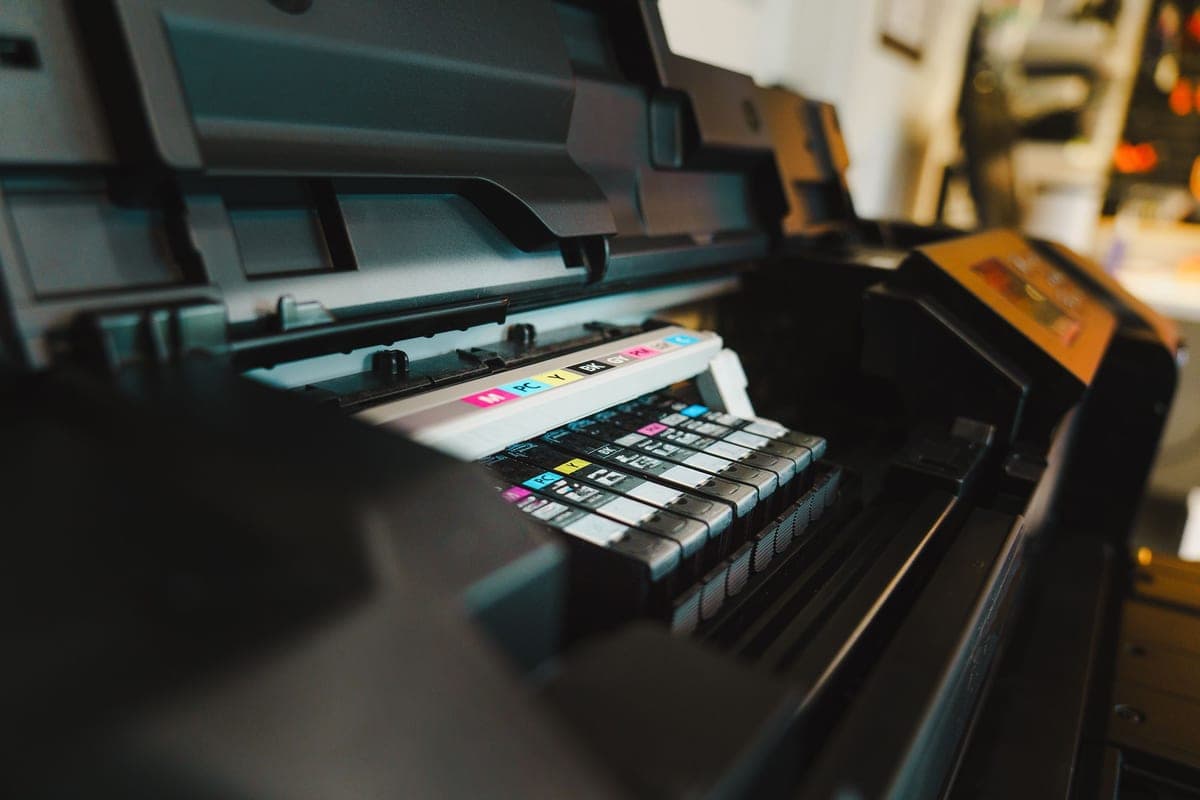
The machine at the centre of nearly every conversion, and worth understanding before you fill it. It is sold as an ordinary refillable-tank inkjet, not a sublimation printer, and its appeal is that the tanks are easy to fill with something other than Epson's ink. Letter width, four tanks. Epson's warranty covers damage caused by genuine ink and not by third-party ink, so a conversion forfeits that cover — a trade a lot of people make knowingly and some make by accident.
What works
- By far the cheapest way to start sublimating
- Refillable tanks mean low running cost once converted
- Very widely documented by the crafting community
What does not
- Converting it with third-party sublimation ink voids Epson's coverage for ink-related damage
- A converted printer cannot go back to regular ink
- 8.5 in width limits you to letter-size transfers
Not for you if
You want a supported, warrantied sublimation setup you can call for help on. Buy a dedicated sublimation printer instead.
Key specs
- Type
- Refillable-tank inkjet — sold as a regular printer
- Sublimation
- Not a sublimation printer as sold; people convert it
- Max print width
- 8.5 in (letter)
- Ink system
- Four refillable tanks
- Warranty note
- Epson's warranty covers damage from genuine ink, not third-party ink
#ad · affiliate link · we never show a price we cannot verify
3. Best for skipping the question entirely
Sawgrass SG500
Sawgrass · Currently sold · Verified 2026-09-27
The alternative if the irreversibility is what gives you pause. It ships as a sublimation printer with sublimation ink, published colour profiles and manufacturer support for sublimation use, so there is no conversion, no warranty grey area and no profile hunting. Ink comes in cartridges from one supplier at their price, which is the ongoing cost of that simplicity. For anyone who would rather have somebody to call than save on consumables, it is the straightforward choice.
What works
- No conversion, no warranty question, no community workaround
- Color profiles supplied and supported by the manufacturer
- Manufacturer support when something goes wrong
What does not
- Much higher purchase price than a converted EcoTank
- Cartridge ink costs considerably more per page than tank ink
- Same 8.5 in width limit as the cheap option
Not for you if
You are experimenting to see whether you like sublimation at all. That is a lot of money to spend on a maybe.
Key specs
- Type
- Dedicated sublimation printer
- Sold as
- A sublimation printer — no conversion involved
- Max print width
- 8.5 in (letter)
- Ink
- Sawgrass SubliJet sublimation ink cartridges
- Support
- Manufacturer support and warranty for sublimation use
#ad · affiliate link · we never show a price we cannot verify
What else is not sublimation ink
- Pigment ink. Sold for water resistance and archival printing. The pigment particles do not sublimate, so under heat nothing transfers. Not a substitute at any price.
- Eco-solvent ink. For large-format vinyl printing on solvent machines. Different printers, different materials, different job entirely.
- DTF ink. Direct-to-film printing uses its own inks plus a white layer and adhesive powder, which is precisely how DTF decorates cotton and dark fabric where sublimation cannot. Sublimation HTV versus DTF covers that comparison.
- "Sublimation-compatible" refill ink with no profile. The ink may be fine; without a published ICC profile you are colour-matching by trial and error across wasted blanks.
Choosing ink for a conversion
- Check for a published ICC profile for your exact printer model. This matters more than the brand name, and a supplier who does not publish one is telling you something.
- Buy enough to fill and prime in one go. Mixing brands mid-tank is how people end up with colour they cannot characterise or correct.
- Match the bottle format to the printer. Tank printers take bottles; cartridge printers need refillable cartridges, which is a fiddlier and less reliable path.
- Plan to print regularly. Any inkjet head clogs when idle, and a converted printer that sits for two months is a maintenance problem waiting to happen.
- Pair it with proper transfer paper. Coated sublimation paper is not optional — ordinary paper transfers a faint fraction of the image. The best sublimation paper covers it.
If you have not decided which route to take, Sawgrass versus Epson EcoTank is the direct comparison, the best sublimation printer for beginners is the roundup, sublimation printer and ink covers buying both together, and is sublimation worth it steps back to whether you should start at all.
Common questions
What is the difference between sublimation ink and regular ink?
Can I put sublimation ink in a regular printer?
Can I use regular ink for sublimation?
Why does my sublimation print look faded on the paper?
Can I convert a printer back to regular ink?
Is pigment ink the same as sublimation ink?
Sources
- Sawgrass sublimation guidance — Sublimation ink behaviour under heat, substrate requirements and SG500 ink system, verified 6 October 2026
- Epson product information — EcoTank ET-2800 tank system and warranty position on non-genuine ink, verified 6 October 2026
How we picked
We verify every product is currently sold by reading the manufacturer's own catalog, compare published specifications rather than marketing copy, and rank on what a first-time buyer has to decide. We do not run lab tests and we do not claim to, and commission never affects the order.
Read this next
The EcoTank Conversion, Honestly
What converting an EcoTank actually costs you in warranty and reversibility, stated up front.
Sublimation Printer and Ink
Convert an EcoTank or buy a dedicated sublimation printer: what each route really costs, and the paper and blanks both still need.
Sawgrass vs Epson EcoTank
Dedicated printer or converted EcoTank — cost, warranty, support and which suits which user.

The Best Sublimation Paper
Which transfer paper to buy, plus the two beginner mistakes that waste sheets and ink.
Is Sublimation Worth It?
What sublimation is genuinely worth it for, what it cannot do at any price, and the full cost of getting started.
Sublimation for Beginners
The complete beginner walkthrough: how it works, what it needs, and the first-transfer process.
Back to Sublimation.