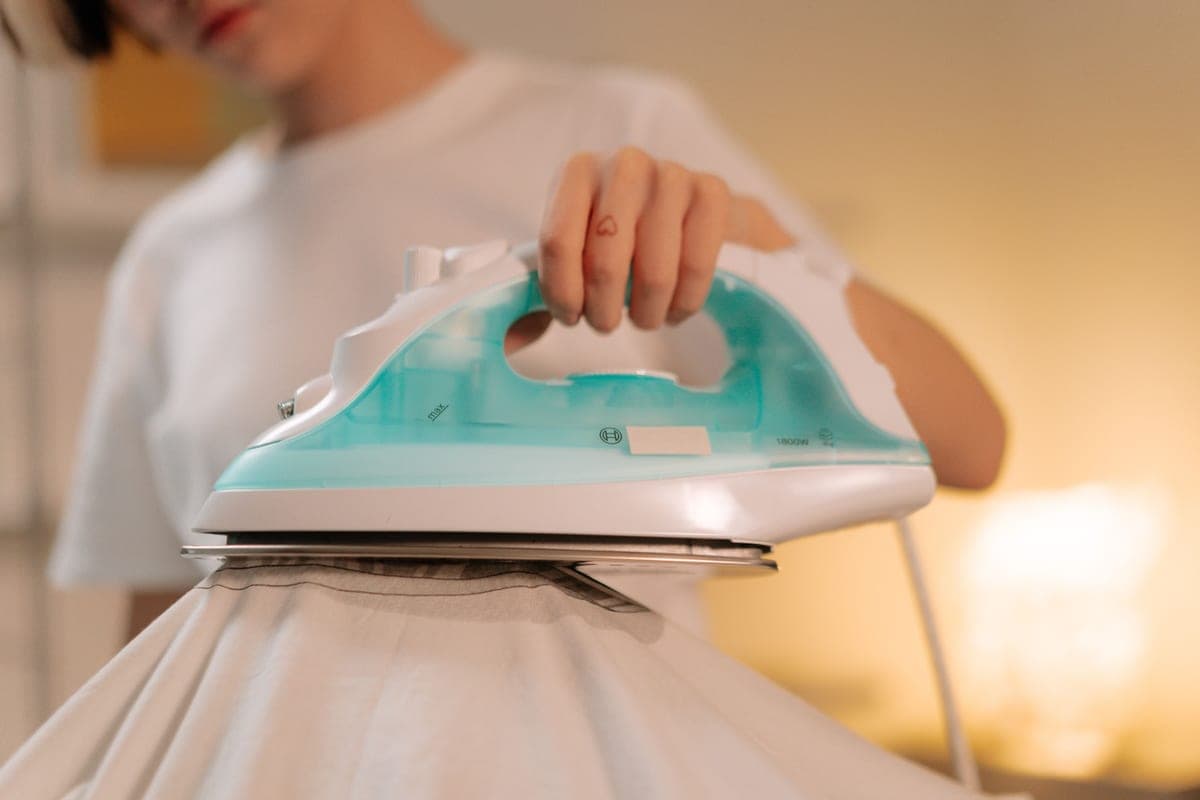
Heat Press vs Embroidery
These are not competing versions of the same thing. One presses a cut or printed design onto fabric; the other sews thread into it.
Heads up: Mat & Blade earns a commission from qualifying purchases made through the links on this page, at no extra cost to you. It never changes which products we recommend or how we rank them. Read the full disclosure.
A heat press is far cheaper to start and much faster per item; embroidery lasts longer and reads as more premium. Pressing applies a cut or printed design to fabric with heat and pressure, so it handles fine detail, photographs and gradients, and a press plus vinyl costs a small fraction of an embroidery machine. Embroidery sews thread into the garment, so it survives washing almost indefinitely and cannot do fine detail or photographic images. For a beginner, start with pressing.
| Heat press | Embroidery | |
|---|---|---|
| What it does | Bonds vinyl, sublimation or DTF to fabric with heat and pressure | Sews thread into the fabric with a needle |
| Entry machine cost | Low — handheld or basic clamshell | Several times higher for a home machine; far higher multi-needle |
| Cost per item | Low — a sheet of vinyl or a transfer | Low material cost, high time cost |
| Time per item | A timed press, typically 10-30 seconds | Many minutes of stitch time per design |
| Fine detail | Excellent — limited only by weeding or print resolution | Poor — thread has a minimum practical stroke width |
| Photographs and gradients | Yes, via sublimation or DTF | No |
| Durability | Good with correct settings; can crack or peel eventually | Excellent — outlasts the garment in most cases |
| Feel on the garment | A layer on the surface, or none at all with sublimation | Raised, textured, premium |
| Works on thin stretch fabric | Yes, with a stretch film | Difficult — puckers without backing |
| Learning curve | Low — settings and weeding | Higher — digitizing, hooping, tension, backing |
Where pressing wins
- Cost to get started. A handheld press and a roll of HTV is the cheapest route into custom apparel that exists.
- Fine detail and text. Thin lettering, intricate line art, small logos. Thread has a minimum width that detail cannot go below.
- Photographs, gradients and full color. Sublimation and DTF both do this. Embroidery fundamentally cannot.
- Speed per item. A timed press of 10-30 seconds against many minutes of stitching.
- Thin and stretchy garments. Performance tees and jerseys take a stretch film without the puckering embroidery causes.
- No digitizing step. You cut or print your artwork. Embroidery needs the design converted into stitch data first.
Where embroidery wins
- Durability. Thread sewn into fabric generally outlasts the garment. Pressed vinyl eventually cracks or lifts.
- Perceived value. An embroidered polo or cap reads as corporate and premium in a way a pressed one does not.
- Caps, bags and heavy workwear. Thick, structured items where embroidery is the expected finish.
- No peel risk. There is no adhesive bond to fail, so washing temperature and tumble drying stop being a worry.
- Texture as the point. Monograms, towels, robes — items where the raised stitch is what the customer is buying.
- Dark and heavy fabrics. No color or fabric-type restriction of the kind sublimation imposes.
1. Best for the cheapest honest way into pressed apparel
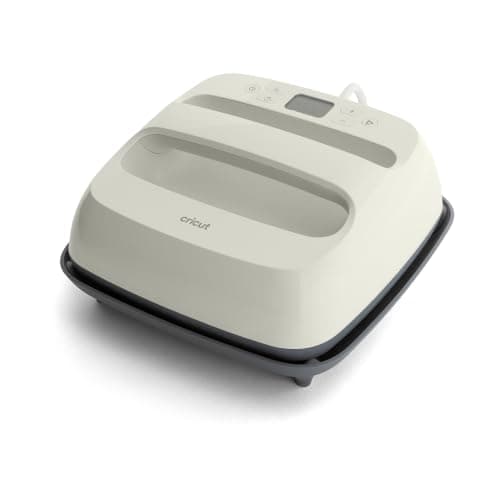
Cricut EasyPress SE
Cricut · Currently sold · Verified 2026-09-27
If the comparison is "do I start with pressing or embroidery", this is the answer on the pressing side: a handheld press that sets and holds a temperature with a built-in timer, in the SE line's 12 x 10 in and 9 x 9 in plate sizes, that stores on a shelf. Paired with a cutting machine you already own or vinyl you buy by the sheet, it gets you making shirts for a small fraction of an embroidery machine's entry price, and it stores away between projects — which an embroidery machine does not.
What works
- Holds a set temperature, which a household iron does not
- Even plate contact across the whole design
- Cricut's Heat Guide gives exact settings for it by material
- Stores away, which matters more than people expect
What does not
- You supply the pressure by leaning on it, so results depend on your technique
- Costs more than a comparably sized clamshell press
- Small plates mean multi-press passes on a big design
Not for you if
You are pressing more than a handful of shirts a week. Leaning on a handheld press twenty times an evening gets old fast — buy a clamshell.
Key specs
- Type
- Handheld heat press
- Plate sizes
- 12 x 10 in and 9 x 9 in in the SE line
- Temperature
- Set precisely; holds it, unlike a household iron
- Timer
- Built in, with an audible finish
- Storage
- Shelf or drawer — no permanent bench space
Price as of November 12, 2026
#ad · affiliate link · we never show a price we cannot verify
2. Best for a clamshell at the price of an embroidery hoop set
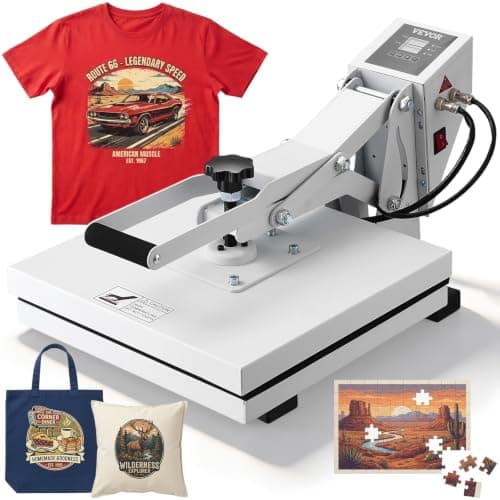
VEVOR Clamshell Heat Press
VEVOR · Currently sold · Verified 2026-09-27
Worth naming in this comparison because of the price gap it illustrates. A manual clamshell with a commonly 15 x 15 in plate and knob pressure adjustment costs a small fraction of the cheapest multi-needle embroidery machine, and a meaningful fraction less than most single-needle home embroidery machines. No auto-open and permanent bench space are the trade-offs. If the question is whether pressing is cheaper to start, this is the evidence.
What works
- Full-size plate and real clamp pressure for less than a handheld press
- Presses an adult design in a single pass
- Widely available with lots of community guidance
What does not
- Displayed temperature can differ from actual plate temperature — worth checking
- No auto-open, so a forgotten timer scorches the shirt
- Build quality is visibly budget
Not for you if
You want to set it and trust it. Check the plate temperature with an infrared thermometer before you trust the display.
Key specs
- Type
- Manual clamshell heat press
- Plate size
- Commonly 15 x 15 in
- Pressure
- Manual knob adjustment
- Auto-open
- No — it beeps, you lift
- Bench space
- Permanent
Price as of November 12, 2026
#ad · affiliate link · we never show a price we cannot verify
3. Best for pressing at the volume embroidery cannot match
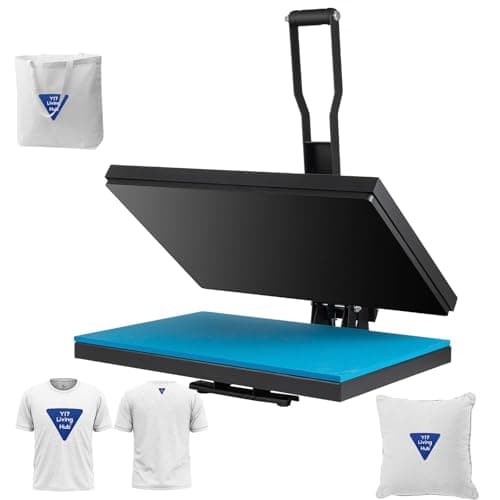
SmarketBuy 16 x 20 Clamshell Heat Press
SmarketBuy · Currently sold · Verified 2026-09-29
Throughput is where pressing genuinely wins. A 16 x 20 in high-pressure clamshell with adjustable clamp pressure runs a timed cycle per garment, which means a batch of hoodies in an afternoon — where embroidering the same batch is a stitch-time problem measured in many minutes per piece. It is a permanent bench machine at 1700 W and more footprint than a 15 x 15. Buy it when you are producing rather than experimenting.
What works
- Presses a hoodie front or an oversized design in a single pass
- Covers a full 13 x 19 transfer, which a 15 x 15 platen cannot
- Clamp pressure repeats exactly, which matters most on thick garments
What does not
- Heavy, and it needs considerably more bench space than a 15 x 15
- Overkill for standard adult front prints, which fit a smaller platen
- Takes longer to reach temperature than a small plate
Not for you if
You press standard adult t-shirt designs a few times a month. A 15 by 15 platen already covers those, for less money and less table.
Key specs
- Type
- High-pressure clamshell heat press, 1700 W
- Platen size
- 16 x 20 in
- Pressure
- Adjustable clamp — repeatable every press
- Bench space
- Permanent, and more of it than a 15 x 15
- Typical use
- Hoodies, DTF transfers, oversized prints, batch work
Price as of November 12, 2026
#ad · affiliate link · we never show a price we cannot verify
4. Best for the blanks that suit pressing
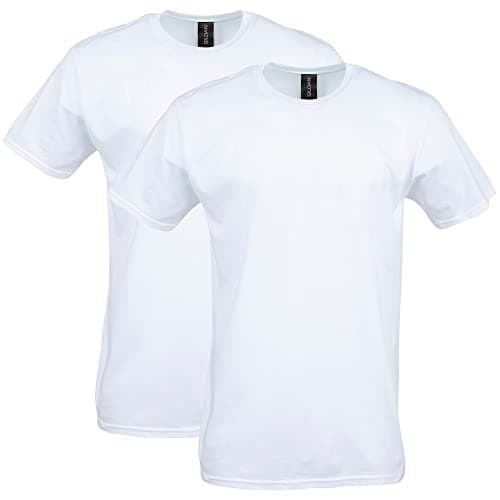
Gildan Softstyle Cotton T-Shirts
Gildan · Currently sold · Verified 2026-09-27
Pressing and embroidery want different blanks, and it is worth knowing which before you buy a box. For heat transfer vinyl, cotton or a cotton blend in a lighter weight presses flatter than heavy open-weave cotton — Gildan Softstyle G64000 is 4.5 oz ring-spun for exactly that reason. Unlike sublimation, any color works, including dark. Embroidery by contrast prefers a stable, heavier fabric that supports stitches without puckering.
What works
- Any color works, which sublimation cannot claim
- Soft and familiar to wear
- Cheap in multi-packs, so practice is affordable
What does not
- Cotton will not take sublimation ink at all
- Very heavy or textured cotton gives uneven HTV adhesion
- Needs a pre-press to drive out moisture before the design goes on
Not for you if
You are sublimating. Sublimation needs polyester, and cotton simply will not hold the ink.
Key specs
- Fabric
- Cotton or cotton/poly blend
- Works with
- Heat transfer vinyl — not sublimation
- Weight
- Softstyle G64000 is 4.5 oz ring-spun — it presses flatter than heavy open-weave cotton
- Color
- Any color, including dark — unlike sublimation
Price as of November 12, 2026
#ad · affiliate link · we never show a price we cannot verify
Which should a beginner buy first?
Pressing, in almost every case. The entry cost is a fraction, the learning curve is settings and weeding rather than digitizing and tension, and you find out whether you enjoy making apparel before committing serious money. If you later want embroidery, nothing you bought is wasted — a press is still what applies the HTV, the DTF and the sublimation you will keep doing alongside it.
The exception is if you already know your output is caps, polos or corporate workwear and you are selling into a market that expects stitching. That market sees pressed vinyl as cheap, fairly or not, and no amount of material quality changes the perception. In that case embroidery is the right first machine and a press becomes the second.
Running both
Most established apparel shops do. The split is usually: embroidery for caps, polos and anything corporate; pressing for tees, hoodies, detailed artwork and anything full-color. They are complementary rather than competing, and the press gets used for more garments even in shops whose reputation rests on stitching.
If you are weighing pressing against the other decoration methods rather than embroidery specifically, the three closest comparisons on this site are heat press versus screen printing, heat press versus DTG and the best heat press for DTF transfers — DTF being the method that most directly competes with embroidery on durability.
Common questions
Is a heat press or embroidery better?
Which lasts longer, embroidery or heat press vinyl?
Is embroidery more expensive than heat pressing?
Can a heat press do embroidery?
Can you embroider and heat press the same shirt?
Which is better for caps?
Sources
- Google Autocomplete — 'heat press vs' — 'heat press vs embroidery' returned as a live completion - checked 17 October 2026
- Cricut Heat Guide — Published press times by material, used for the per-item time comparison - checked 17 October 2026
How we picked
We verify every product is currently sold by reading the manufacturer's own catalog, compare published specifications rather than marketing copy, and rank on what a first-time buyer has to decide. We do not run lab tests and we do not claim to, and commission never affects the order.
Read this next
Heat Press vs Screen Printing
Setup cost, cost per shirt and the run size where screen printing overtakes a heat press.
Heat Press vs DTG Printing
Direct-to-garment printing compared with heat pressing on cost, color, durability and maintenance.
The Best Heat Press for DTF Transfers
Which presses handle DTF transfers properly, and the pressure and peel details that decide the result.
The Best Heat Press for Beginners
Handheld or clamshell, which suits your volume and space, and when you need no press at all.
Do You Need a Heat Press?
When a heat source is genuinely required, when it is not, and what an iron can realistically do.
Best Heat Press for Home Use
Which heat press suits a home where the table has another job — what stores away, what needs permanent space, and what you give up either way.
Back to Heat Presses.