The Best Vinyl for Wood Signs
There are two completely different wood sign projects, and they want different vinyl. Decide which one you are doing before you buy.
Heads up: Mat & Blade earns a commission from qualifying purchases made through the links on this page, at no extra cost to you. It never changes which products we recommend or how we rank them. Read the full disclosure.
Decide first whether the vinyl is the design or the stencil, because the answer changes what you buy. For vinyl that stays on the board as the finished design, use permanent ORACAL 651 — ORAFOL publishes it as a 2.5-mil solvent-based permanent film with six years of durability for standard colors. For vinyl used as a stencil that you paint over and peel away, use removable ORACAL 631, which ORAFOL explicitly lists stencils among the uses for. Either way the decisive variable is the wood: a sanded and sealed surface works, raw grain does not, and no vinyl choice compensates for skipping that step.
The two projects, and why people conflate them
Search results treat "vinyl for wood signs" as one topic. It is two, and the failure mode of each is different.
Project one: the vinyl is the design
You cut lettering, apply it to a finished board, and the vinyl is what people see. This is fast, needs no drying time, and gives perfectly crisp edges. It demands a smooth sealed surface, because adhesive needs something continuous to grip — on open grain it bonds only to the high points and lifts from the valleys. It also means the sign is only as durable as the adhesive, which is why the permanent film matters.
Project two: the vinyl is a stencil
You cut the lettering as a mask, apply it to a painted or stained board, paint over the top, and peel the vinyl away leaving painted letters. The finish is more durable than any applied vinyl because the design is paint, and it tolerates a rougher surface. The risk is paint bleeding under the mask, which is why a removable, flexible film that burnishes down well is the right material and why sealing the board first with a coat of the base color helps so much.
How we picked
We have no lab. Every durability and adhesive claim is ORAFOL's own published specification for the film in question.
- The right adhesive for the job. Permanent for applied designs, removable for stencils. Getting this backwards is the single most common mistake on wood.
- Published durability. Relevant for applied designs and irrelevant for stencils, where the vinyl leaves before the sign does.
- Conformability. Wood is rarely perfectly flat. A thinner film follows a slight cup or a shallow grain better.
- Clean release. For a stencil, the film has to come away without tearing and without pulling fresh paint with it.
- Width and format. Signs are wider than shirts. A film only sold in narrow rolls limits the board size you can letter in one piece.
- Honest downside. Every pick carries its real cons, including the ones that make it wrong for some readers.
Our picks in full
1. Best for vinyl that stays on the wood as the finished design
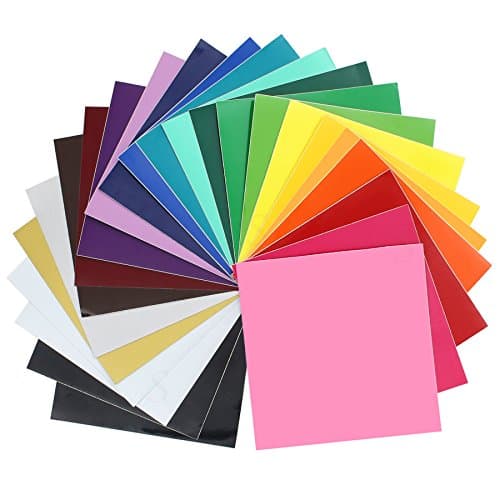
Oracal 651 Permanent Vinyl
Oracal · Currently sold · Verified 2026-09-27
If the vinyl is the design rather than a stencil, you want the permanent, solvent-based adhesive and the durability to match. ORAFOL publishes 651 as a 2.5-mil film with six years of outdoor durability for standard colors, four for metallics, which comfortably covers an interior sign and makes a porch sign realistic. The thinner 2.5-mil film also conforms slightly better to a wood grain than a thicker one. It is unforgiving of a poorly prepared surface: on raw or unsealed wood the adhesive has nothing smooth to key into and the edges lift.
What works
- The reference permanent vinyl — settings and behavior are documented everywhere
- Genuinely weather-resistant, which most craft-store vinyl is not
- Wide color range and readily available by the roll
What does not
- Permanent means permanent — removing it from paint or a wall can take finish with it
- Gloss finish is not what you want on a wall quote
- Not for fabric under any circumstances
Not for you if
You are decorating a rented wall. Use removable 631 instead and keep your deposit.
Key specs
- Type
- Adhesive vinyl — for hard surfaces, not fabric
- Adhesive
- Permanent, solvent-based
- Outdoor durability
- Oracal rates 651 for up to six years outdoors
- Finish
- Gloss (matte available in some colors)
- Typical use
- Car decals, window signs, tumblers, outdoor labels
Price as of November 12, 2026
#ad · affiliate link · we never show a price we cannot verify
2. Best for using the vinyl as a paint stencil and peeling it off
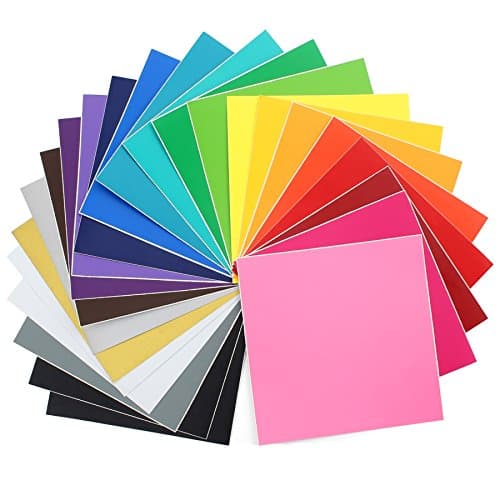
Oracal 631 Removable Vinyl
Oracal · Currently sold · Verified 2026-09-27
The better choice for the other project entirely. ORAFOL lists stencils among 631's intended uses, and the reason is the removable water-based adhesive: it holds a crisp paint line and then comes away without fighting you or tearing, which is exactly the behavior a stencil needs. It is matte and 3-mil, slightly thicker than 651, which also helps it sit flat on a sanded board. What it will not do is serve as a permanent applied design, especially anywhere damp.
What works
- Comes off walls cleanly, which permanent vinyl does not
- Matte finish looks far better than gloss on interior decor
- Makes excellent painting stencils
What does not
- Will not survive outdoors or repeated washing
- Low tack means it can lift on textured surfaces
Not for you if
The decal is going on a car, a tumbler, or anything that gets wet. That is a job for 651.
Key specs
- Type
- Adhesive vinyl — removable
- Adhesive
- Removable, low-tack
- Outdoor durability
- Oracal rates 631 for indoor use, up to around three years
- Finish
- Matte
- Typical use
- Wall quotes, temporary signage, stencils
Price as of November 12, 2026
#ad · affiliate link · we never show a price we cannot verify
3. Best for buying the vinyl in the same place as the machine
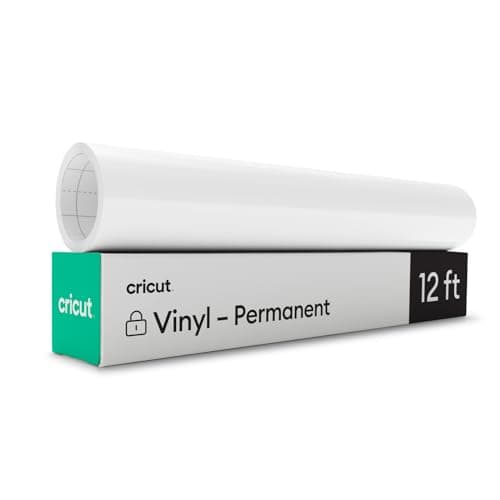
Cricut Premium Vinyl (Permanent)
Cricut · Currently sold · Verified 2026-09-27
The convenience pick, and an honest one. Cricut's permanent vinyl is sold in the same ecosystem as the machine and the mats, comes in Smart Vinyl formats that cut without a mat on compatible machines, and works for an applied wood sign design. The reason it is not the top pick is price per square foot against ORACAL, which is substantial once a project uses a 12 by 12 sheet or more. Buy it when ordering one thing from one place is worth more to you than the material cost.
What works
- Named material preset means no test cuts to find a setting
- Smart Vinyl versions cut without a mat on current machines
- Available in every shop that sells the machines
What does not
- More expensive per square foot than Oracal
- Rated for a shorter outdoor life than Oracal 651
Not for you if
You are cutting a lot of decals and cost matters. Oracal 651 is cheaper and rated to last longer outside.
Key specs
- Type
- Adhesive vinyl — permanent
- Outdoor durability
- Cricut rates Premium Permanent for up to three years outdoors
- Finish
- Gloss, matte, shimmer and specialty options
- Format
- Rolls and sheet packs, including Smart Vinyl for matless cutting
- Settings
- Named preset in Design Space
Price as of November 12, 2026
#ad · affiliate link · we never show a price we cannot verify
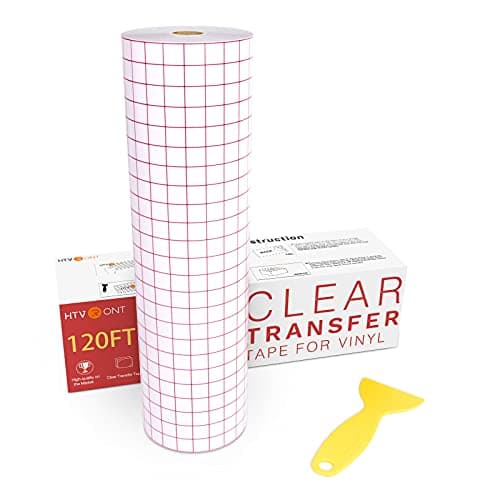
4. Best for moving a worded design onto the board in one piece
HTVRONT Transfer Tape for Vinyl
HTVRONT · Currently sold · Verified 2026-09-27
Wood signs are nearly all lettering, and lettering means separate pieces that need to stay in position relative to each other. Transfer tape lifts the weeded design off its backing with the spacing intact. On wood there is a second benefit: you can position and reposition against the board's edges with the tape holding everything, which is much harder with loose letters on a textured surface.
What works
- Turns an impossible alignment job into a single motion
- Gridded versions make straight application genuinely easy
- Cheap relative to how much frustration it removes
What does not
- High-tack tape can pull thin vinyl off its backing and tear it
- Not used for heat transfer vinyl, which has its own carrier sheet
Not for you if
You are only making shirts. HTV comes with its own carrier and needs no transfer tape.
Key specs
- Purpose
- Lifts a weeded decal off its backing and places it as one piece
- Tack
- Medium tack suits most craft vinyl
- Format
- Rolls, usually 12 in wide; gridded versions help alignment
- Reusable
- A sheet can usually be reused several times
Price as of November 12, 2026
#ad · affiliate link · we never show a price we cannot verify
The picks side by side
| Material | Adhesive | Published durability | Best wood-sign use | Main limit |
|---|---|---|---|---|
| ORACAL 651 | Clear, solvent-based, permanent | 6 years colors and transparent; 4 years metallic | Applied design that stays on the board | Needs a smooth, sealed surface |
| ORACAL 631 | Clear, water-based, removable | 3 years; ORAFOL lists stencils among its uses | Paint stencil you peel away | Not a permanent applied design |
| Cricut Premium Vinyl (permanent) | Permanent | Cricut rates it for outdoor use | Applied design, bought with the machine | Price per square foot |
Preparing the wood, which matters more than the vinyl
1Sand until the surface is genuinely smooth
Work up to a fine grit. Adhesive grips a continuous surface; open grain gives it high points only. This is the step that decides whether an applied design lasts a year or a week.
2Seal, stain or paint — and let it cure, not just dry
Vinyl applied over paint that is dry to the touch but not cured will lift the paint later. Give it the manufacturer's full cure time, which is usually days rather than hours.
3Wipe down and let it dry completely
A damp cloth, nothing else. No cleaning spray, no tack cloth with oils in it. Dust under vinyl shows as bumps and under a stencil it becomes a bleed path.
4Weed the design, then apply transfer tape
Burnish the tape down properly so the design releases from its backing and not from the tape.
5Hinge, position, then squeegee from the hinge outwards
Masking tape across the top lets you check level against the board's edges before committing. Then work outwards so air escapes at the edges.
6Burnish hard, especially on a stencil
For an applied design this is about adhesion. For a stencil it is about sealing the edge against paint. Use a squeegee and real pressure, then seal the stencil edge with a clear or base-color coat before painting.
The mistakes that get blamed on the vinyl
- Applying to raw or rough-sawn wood. The adhesive has nothing continuous to key into. Sand and seal, or switch to the stencil route and paint instead.
- Applying over uncured paint. It looks fine for a week and then lifts, taking paint with it.
- Using removable vinyl as the finished design. It is a stencil film. On a sign that lives in a porch or a kitchen it will not last.
- Using permanent vinyl as a stencil. It fights you on removal and can pull fresh paint off with it.
- Painting straight over an unsealed stencil edge. This is where bleed comes from. Seal the edge with a base-color or clear coat first.
- Skipping transfer tape on lettering. Loose letters on a textured surface will not line up, and you do not get a second attempt.
If the sign is going outdoors
An applied vinyl design outdoors is really a durability question about three things: the film, the adhesive, and the finish underneath it. ORAFOL's published six-year figure for 651 colors is for vertical exposure in its climate zone one, which is a sign on a wall rather than a board lying flat in full sun. A stencilled-and-painted sign, sealed with an exterior clear coat, will generally outlast an applied vinyl one outdoors — worth knowing before you choose the faster method.
For durability on glass, metal and curved surfaces, the best permanent vinyl goes through the full range, and the best vinyl for car decals covers the hardest outdoor case of all. If the sign is going on an interior wall rather than a board, the best vinyl for wall decals is the right page instead.
Common questions
What kind of vinyl do you use for wood signs?
Does vinyl stick to wood?
Should you use permanent or removable vinyl as a stencil on wood?
How do you stop paint bleeding under a vinyl stencil?
Will vinyl on a wood sign last outdoors?
Sources
- ORAFOL — ORACAL 651 Intermediate Cal product page — 2.5-mil thickness, clear solvent-based permanent adhesive, 6 years durability for colors and transparent and 4 years for metallic at vertical exposure climate zone 1, gloss and matte finishes, stated applications - checked 10 October 2026
- ORAFOL — ORACAL 631 Exhibition Cal product page — 3-mil matte film, clear water-based removable adhesive, 3-year durability, clean removal from most smooth sealed surfaces within three years, and stencils listed among stated applications alongside craft and home decor graphics - checked 10 October 2026
How we picked
We verify every product is currently sold by reading the manufacturer's own catalog, compare published specifications rather than marketing copy, and rank on what a first-time buyer has to decide. We do not run lab tests and we do not claim to, and commission never affects the order.
Read this next
The Best Permanent Vinyl
Permanent vinyl that genuinely lasts outdoors, plus the surfaces where it is the wrong answer.
Permanent vs Removable Vinyl
Which adhesive vinyl for which surface, with the durability ratings and the consequences of choosing wrong.
The Best Vinyl for Wall Decals
Which adhesive vinyl comes off a painted wall without taking the paint, why matte beats gloss indoors, and the low-VOC paint warning worth reading first.
The Best Transfer Tape for Vinyl
Which tack level to buy, why gridded tape is worth it, and the burnishing step that makes transfers work first time.
The Best Vinyl for a Cricut
The right vinyl for each surface — permanent, removable and heat transfer, with the reasoning.
Your First Vinyl Decal
The cheapest first project — a complete decal walkthrough with no heat source required.
Back to Vinyl & Materials.